About Starweave · a tape
I was never interested in music.Then I heard Radiohead.
for you — Diwakar
Why I made Starweave, told as a mixtape: each part comes with a song.
Before: nothing stuck
I'd hear songs on streaming apps. They were fine the first time; by the fourth or fifth listen I was bored. Everything sounded the same. No artist had anything of their own, nothing I couldn't hear in someone else's music.
I thought music just wasn't for me.
The song that changed it
I hadn't slept all night. It was 5am, the sun was just coming up, and I was looking out of the window with "How to Disappear Completely" playing.
Thom Yorke sang "I'm not here, this isn't happening," and something in me changed. It made sense.
After that it was all of Radiohead: OK Computer, Kid A, In Rainbows, each one different from the last.
One band led to another
Rate Your Music's list of the greatest albums of all time had the Cure's Disintegration in its top 25. I'd heard the Cure pioneered gothic rock, so I put it on.
Then I read that Robert Smith got ready for his wedding listening to Cocteau Twins' Treasure, and called it the most romantic music he'd ever heard. That's how I got to Cocteau Twins.
From there it was a short step to My Bloody Valentine. Shoegaze grew out of dream pop: turn the guitars up and distort them until the noise becomes a wall of sound. Cocteau Twins pioneered dream pop; My Bloody Valentine pioneered shoegaze.
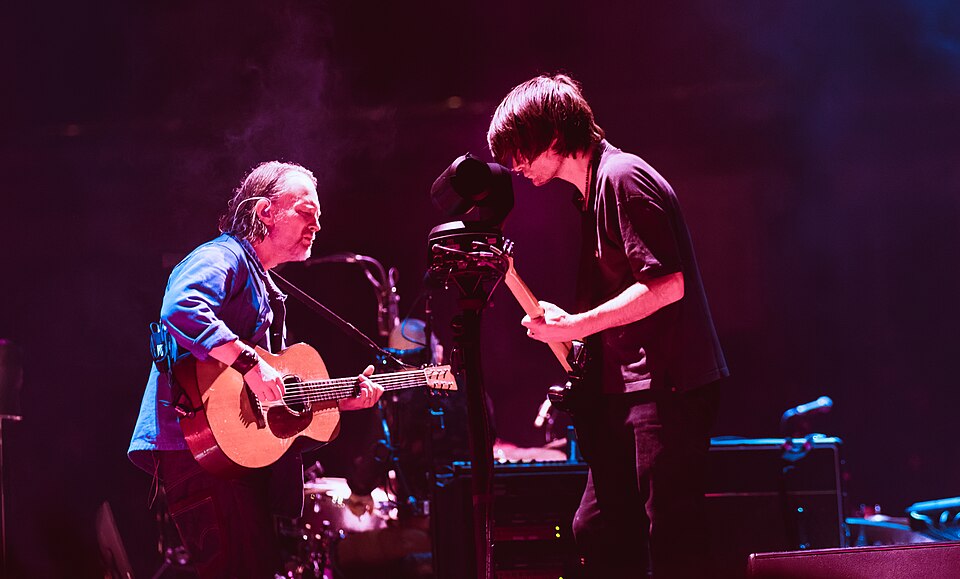 Radiohead
- via a Rate Your Music top-albums list
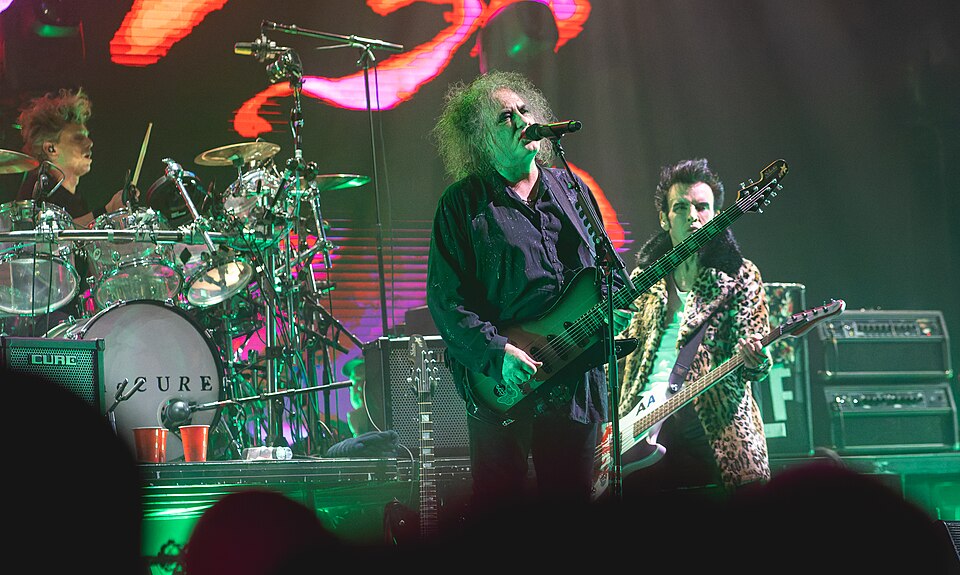 The Cure
- via Robert Smith's wedding-day record
 Cocteau Twins
- via dream pop, turned up into shoegaze
 My Bloody Valentine
My two favourite bands, and their records
My taste runs from dream pop to black metal, depending on how I feel and how I want to feel. But Cocteau Twins and My Bloody Valentine are the two I always come back to.
In both, the voice is an instrument: Liz Fraser's, and Kevin Shields' and Bilinda Butcher's. The guitars and the atmosphere come first; the voice is one more layer, melting into the song.
Liz Fraser's voice has been called the voice of God. I don't understand anything she sings, but I feel everything.
I can't choose between Heaven or Las Vegas and Loveless. Each is for a different kind of day.
the two I always come back to
Click any record going round to hear it.
Side B Why I made this map
I made this to show influence in music. In indie, it matters more than anything: the mainstream counts sales, indie counts influence. And influence can’t always be heard.
How I find new music
I don't trust the recommendations on music apps much. For every creative artist they give you, they follow with a less creative copy of them. And they narrow your taste.
I want to widen mine.
So I dig: Rate Your Music and Album of the Year, where listeners rate and review records, and Amoeba's "What's in My Bag?", videos of musicians picking records in a record shop.
- Found on Rate Your Music
 Ants From Up ThereBlack Country, New Road
Rate Your Music's top album of the 2020s.
Black Country, New Road don't have one genre: post-rock, noise, chamber pop, prog pop. Their sound changes with every record.
Isaac Wood, who sang on this one and left just before it came out, is technically a bad singer. His voice cracks, and he half-speaks his lines, the way Slint did. But it’s so emotional, and it matches the music.
They play like a classical ensemble more than a rock band: violin, piano, saxophone, flute. You rarely hear those in rock now. While people in indie try to be cool, they bring back emotion, complexity and grand, huge-sounding music.
- Found on Album of the Year
 Imaginal DiskMagdalena Bay
Album of the Year's top album of the 2020s.
A loose concept album about True, who isn't happy with her life. She sees an ad for the Imaginal Disk, put into your head to become the perfect you, the one you want to be. She gets it put in, then feels trapped: her body rejects it. Someone keeps asking for help, and I'm not sure who. Maybe her true self, not wanting to be changed.
It’s synth pop, but prog-influenced: I didn’t know synth pop could be done this way. Every song grows, layer on layer, and in the second half the songs flow into each other, with amazing transitions. Existential, but cohesive and fun, and very otherworldly. A modern classic, with one of the coolest album covers.
- Found on Amoeba: What’s in My Bag?
 Radio CityBig Star
I didn't know Big Star, but I kept seeing their records picked in "What's in My Bag?" videos. Then Todd Jones, who fronts NAILS, picked Radio City:
“I'm kind of starting to dive into a little bit of power pop stuff... The NAILS bassist, John, he always talks about Big Star, so I'm going to buy a Big Star record to check it out.”
Very interesting: NAILS make some of the heaviest, most hateful, brutal music there is, and their taste is wide enough for soft, happy power pop.
So I listened. It was ahead of its time: it doesn't sound like 1974, it sounds like an 80s or 90s indie record.
Sounding alike isn't influence
Look Alvvays up on a streaming app and you're shown bands that sound like them. You don't see the bands they actually learned from, and those are the bands I love.
sounds likeno line to them
learned froma line, with its source
 Japanese Breakfast
 Snail Mail
 Beach House
 Big Thief
 Angel Olsen
 Weyes Blood
 Clairo
 Alvvays
 The Smiths
 R.E.M.My Bloody Valentine
 The Replacements
 Yo La TengoCocteau Twins
 Camera Obscura
 Pavement
And influence isn't only sound. Fugazi shaped people with their ethics: cheap all-ages shows, doing everything themselves. Elliott Smith sounds nothing like them, and he was obsessed with them. A “similar artists” list will never tell you that.


“really super-obsessed”Benjamin Nugent's biography, Elliott Smith and the Big Nothing (2009)
How genres split, and how they merge
One day I was listening to Belle and Sebastian, and then to the Dillinger Escape Plan. Twee pop, then mathcore. And it hit me: they both came from punk. I was shocked.
I'd read that twee pop was a rebellion against punk getting faster, heavier and more aggressive. It chose to be soft, innocent, slow and comforting.
On the other side, hardcore punk met metal and became metalcore, and metalcore met math rock and became mathcore: the Dillinger Escape Plan. Fast, heavy, aggressive, complex. It sounds like having a panic attack.
One genre, split in two punk became both twee pop and mathcore
- Post-punk1978
- Indie pop1983
- Twee popnot on the map
- Hardcore punk1980
- Post-hardcore1985
- Math rock1994
- Mathcorenot on the map

 The Dillinger Escape Plan
Two genres, merged into one shoegaze and black metal became blackgaze
Shoegaze is the most beautiful genre: it sounds like heaven. Black metal is the darkest: it sounds like hell. On the surface they’re opposites; at their core they’re the same. Both build a wall of sound, one for heaven, one for hell, and in both the voice is one more layer in it: beautiful in one, brutal in the other.
Deafheaven proved it. They balance shoegaze and black metal so perfectly that their music lives in heaven and hell at once: like you’re in heaven while a fallen angel screams in pain. Equally beautiful and brutal.
- Black metalnot on the map
- Speed metalnot on the map
- Heavy metalnot on the map


Why the map has scenes
Genres divide bands by sound. Scenes bring them back together: divided by sound, united by a venue, a label, a community. Two scenes are why this map has them.
The WindmillThe Windmill Scene, Brixton, South London · 2016–now

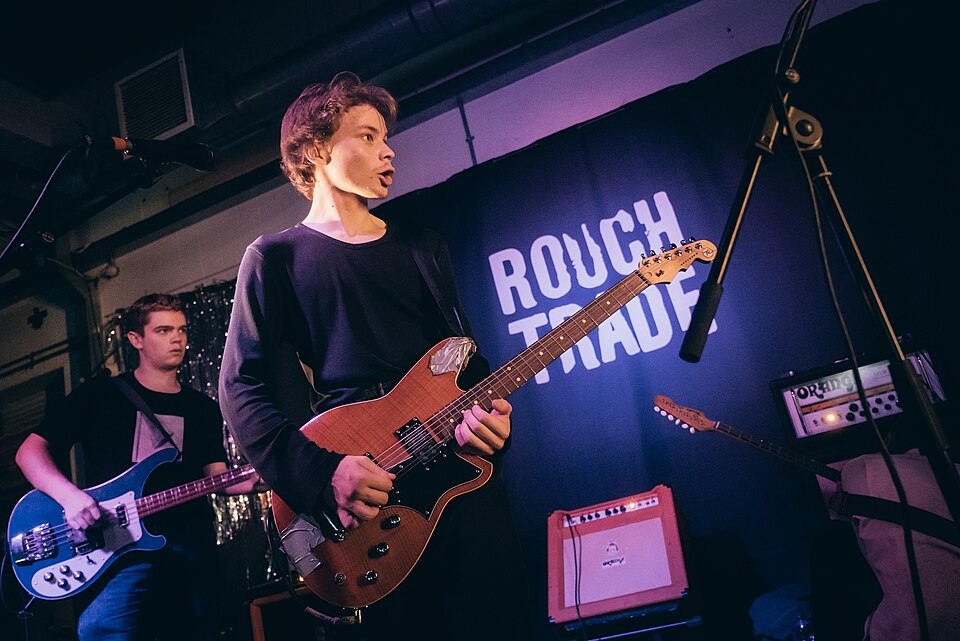

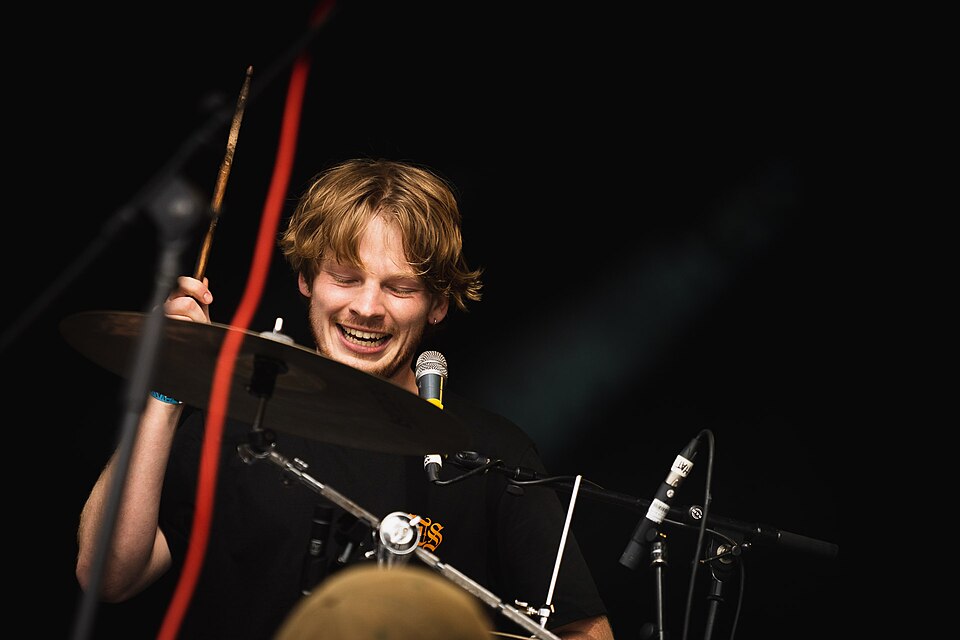
Photos of black midi and Squid: Paul Hudson from United Kingdom, CC BY 2.0
The Windmill is a small pub in Brixton, South London. Black Country, New Road, black midi, Squid and Jockstrap all came up playing there, and each sounds like no one else.
Take the two at its heart, called two of the most creative bands of this decade. Black Country, New Road are slow, emotional and orchestral (their record is in my crate). black midi are the opposite: complex, prog and math rock, and funny. The riff changes every few seconds and the song sounds like it could fall apart at any moment, but it never does. Controlled chaos.
They're close friends, and they've even played as one band, to help save the Windmill.
Georgia Ellery, Black Country, New Road's violinist, makes inventive prog pop as half of Jockstrap. Squid play Talking Heads-style post-punk.
The straight edge movementDC Hardcore, Washington DC · 1980–1993


In Washington DC there was Ian MacKaye, a legend in hardcore. At a time when drinking, smoking and drugs were what was cool, his band Minor Threat put out a 46-second song, "Straight Edge", saying he didn’t do any of them, and that being in control of yourself was the cool thing. It started the straight edge movement.
Then Fugazi, on his own label, Dischord: $5 shows, cheap records, benefit shows, and never signing to a major, even when Atlantic offered over $10 million. He showed you could make music, not starve, and stay fiercely independent. So much of indie, punk and hardcore still tries to live by that.
Hardcore is still one of the most community-based kinds of music there is: the fans are part of the music.
How the map knows who influenced whom
Every band on this map is linked to the bands that influenced them, and every link says where we know it from. Here are my two favourite bands, and everyone on the map who learned from them.
16 learned from Cocteau Twins
23 learned from My Bloody Valentine


5 learned from both
How does the map know? Here’s Alvvays, one of the seven who learned from both, in their own words.
In their own words“otherworldly beauty and also menacing at the same time”
In their own words“One thing we loved about Kevin Shields was the limitations he put on his stuff”
- 1,024 influences on the map, 1,024 of them with a named source
- 771 of those sources are the artist, in their own words
- 36 times an artist denied an influence people assume; those are kept too
The end: your turn
Somewhere on this map is your 5am song. Go find it.
Reading the map
- Every star is an artist.
- Every line runs from who shaped them to who they shaped, with its source.
- The colour is the family of sound they belong to.
- The bigger the star, the more artists name them.