
Pictured: Sonic Youth
← Today’s issueThe daily of where sound came fromp. 20
Born 1981 · Sonic Youth and Swans in New York
Noise rock
Rock instrumentation pushed toward noise — detuned or heavily processed guitars, feedback treated as a compositional element rather than an accident, and song structures that often abandon verse-chorus form entirely. Noise-rock grew directly out of no-wave's confrontational art-scene minimalism and spent the next two decades spreading into nearly every corner of American underground rock.
See it on the map →How it started


No New York (1978), Brian Eno's document of four confrontational New York bands, is the genre's actual point of origin, even though the term "noise-rock" wasn't applied until Sonic Youth and Swans took the same instincts and stretched them across full albums rather than art-scene singles in the early 1980s.
We were very energized by it... the Minutemen always represented something a little bit closer to my heart.
By the mid-to-late 1980s the sound had split in two directions at once — Chicago's Steve-Albini-produced scene (Big Black, The Jesus Lizard) pushed it toward mechanized brutality, while a wider American underground (Pixies, Dinosaur Jr., Sonic Youth themselves) folded noise-rock's dissonance into something closer to conventional song structure, feeding directly into what the mainstream would later call alternative rock.
Essential records
Start here
Daydream Nation
 Sonic Youth1988
Thurston Moore and Lee Ranaldo's guitars operate as a single extended system rather than rhythm/lead — two instruments creating interlocking drone and harmonic fields that the rhythm section navigates through rather than anchors — and the double album's seventy-plus minutes give that system room to develop in real time. 'Teen Age Riot' opens as the most fully formed example, a slow-building eight-minute piece with a guitar coda that sounds like two different songs playing simultaneously; Ranaldo's 'Eric's Trip' is the album's most purely emotional moment. It legitimized noise rock as high art in the eyes of the critical establishment — giving Sonic Youth a reputation that their major-label work both expanded and slightly complicated.
No. 2
Doolittle
 Pixies1989
The compromise between Steve Albini's raw approach on Surfer Rosa and Gil Norton's more polished production gave Doolittle the band's most commercially accessible sound without sacrificing the extremity that made Surfer Rosa essential. Black Francis's compositional approach — verses at a whisper, choruses at a scream, structures that expand and contract without warning — is most explicitly showcased on 'Here Comes Your Man' and 'Gouge Away.' Kurt Cobain cited the record directly when explaining Nirvana's quiet-loud dynamic.
No. 3
You're Living All Over Me
 Dinosaur Jr.1987
Dinosaur Jr. made the record that established J Mascis's guitar sound as a singular force in American rock — massive, distorted, melodically articulate even at full volume, owing equal debts to Neil Young and to heavy metal while belonging entirely to neither. 'Little Fury Things' is a compact hook-driven piece demonstrating Mascis's ability to write a pop song inside a noise framework; 'The Lung' is a sprawling showcase where the lead line is simultaneously a riff, a solo, and a melody. The record invented the template for 1990s lo-fi indie guitar rock, a lineage running through Pavement, Sebadoh, and Guided by Voices.
No. 4
Atomizer
 Big Black1986
Atomizer runs on a drum machine's inhuman precision, Steve Albini layering scraping, distorted guitar over its mechanical pulse until the combination feels genuinely unsettling rather than merely harsh. "Kerosene" turns small-town boredom and arson into a flat, matter-of-fact narrative, the calm of the delivery making the content more disturbing rather than less. The record's industrial-tinged noise rock set a template Albini himself would go on to help engineer for other bands. Nearly forty years later, its coldness hasn't dated at all.
No. 5
Goat
 The Jesus Lizard1991
Goat pairs David Yow's genuinely unhinged vocal presence with a rhythm section disciplined enough to make the chaos feel engineered rather than accidental. "Mouth Breather" rides a lurching, off-kilter riff from Duane Denison while David Wm. Sims's bass anchors the whole song against collapse. Steve Albini's dry, unglamorous production strips away any hint of studio polish, leaving the band's menace fully exposed. It's an album that sounds dangerous specifically because the musicianship underneath it is so tightly controlled.
No. 6
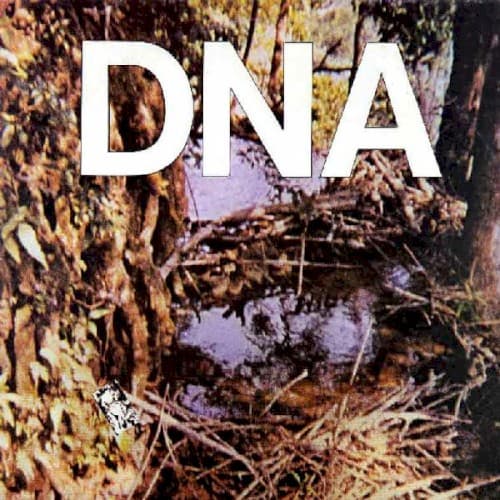
A Taste of DNA
 DNA1981
A Taste of DNA gathers DNA's scattered, hard-to-find early singles into the clearest available document of the band's radically anti-technical approach. "Blonde Red Head" is built from Arto Lindsay's deliberately untrained, atonal guitar and Ikue Mori's off-kilter drumming, the two instruments seeming to actively resist locking together rather than support each other. Lindsay's yelped, largely wordless vocal adds a further layer of instability on top. The song's title would later become a band's name entirely — Blonde Redhead — a small but direct measure of how far DNA's influence actually traveled.
No. 7
Superfuzz Bigmuff
 Mudhoney1988
Superfuzz Bigmuff crams a handful of blown-out, feedback-soaked garage-punk songs into a short, exhilarating EP that helped define Sub Pop's earliest sound. It arrived the same year as the standalone single "Touch Me I'm Sick," whose fuzzed-out riff and gleefully sick lyrics became the song most identified with the band's early run even though it never appeared on the EP itself. Together they capture Mudhoney at its rawest, treating volume and distortion as ends in themselves rather than obstacles to a hook. Taken as a pair, the two releases remain the clearest document of grunge's underground, pre-fame moment.
Who plays it
No wave origins
The four bands on 1978's No New York compilation — three of them here — did the actual founding, years before anyone called it noise-rock.
The American 80s wave
The generation that gave the genre its name, stretching no-wave's confrontation across full albums — Sonic Youth and Swans in New York, Big Black and The Jesus Lizard in Chicago, Wipers on their own in Portland.


College rock crossover
Noise-rock folded into the wider American college-rock underground — the dissonance stayed, but real pop songcraft came with it.


Where noise-rock blurs
Artists for whom noise-rock is one real ingredient among several — post-hardcore, post-rock, dream-pop, and art-rock all get fuller tellings on their own pages.




Where it came from, where it went
- Garage rock1963
- Proto-punk1967
- Punk1976
- Post-punk1978
- No wave1978
- Noise rock1981
- Where it went