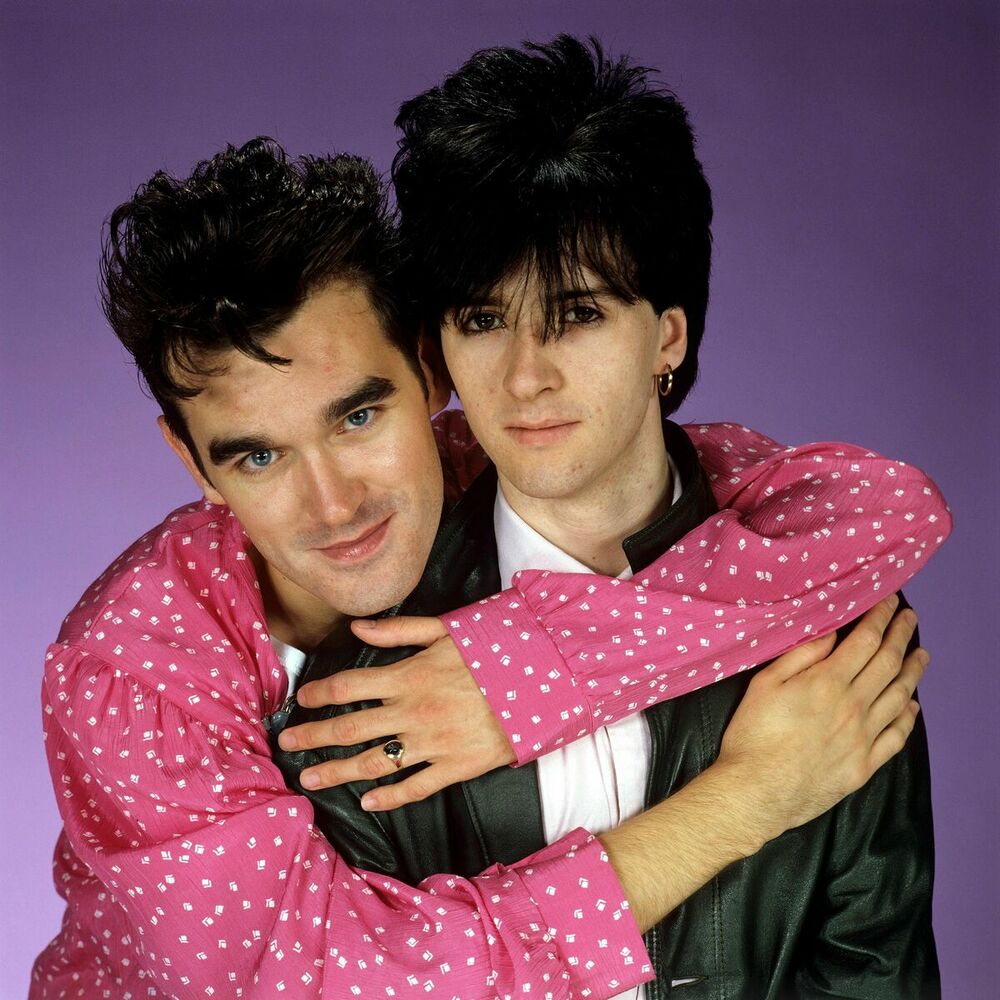
Pictured: The Smiths
← Today’s issueThe daily of where sound came fromp. 40
Born 1990 · American indie consolidating after Sub Pop
Indie rock
The word "indie" started as a description of who released a record, not what it sounded like — an independent label, outside the major-label system, however that label's actual sound varied. Indie-rock is this map's broadest genre by far, and honestly, there's no single indie-rock sound underneath the label — the narrower genres nested beneath it (lo-fi, indie-pop, noise-rock, chamber-pop, and more) are where the real sonic distinctions actually live.
See it on the map →How it started
 Violent Femmes1981
 The Smiths1982
 Guided by Voices1983
 The Stone Roses1983
 Yo La Tengo1984
 Galaxie 5001987
The word predates any specific sound — "independent" originally described a record's distribution and financing, not its genre, and stayed that way through the UK's Postcard/C86 scene and the American college-radio circuit of the 1980s. What changed around 1990 was consolidation: Sub Pop's grunge breakthrough proved an independent label could actually compete commercially, and "indie" started hardening into a recognizable identity and an implied stance — DIY infrastructure, an arm's-length relationship with the mainstream industry, guitar-based songwriting — even as major labels immediately began signing away the scene's most successful bands.
I got the first two Stooges albums immediately after I got Raw Power, and I know every note and word on them.
From there indie-rock stopped being a coherent sound and became something closer to a family tree with dozens of branches, each eventually specific enough to earn its own name and its own page on this site: lo-fi's four-track aesthetic, indie-pop's jangling melodicism, noise-rock's dissonance, chamber-pop's orchestration, and so on. What follows is the trunk those branches grew from — a genuinely enormous, thirty-year span of bands whose only reliable common thread is an independent, guitar-centered relationship to the music industry rather than any one riff, tempo, or production choice.
Essential records
Start here
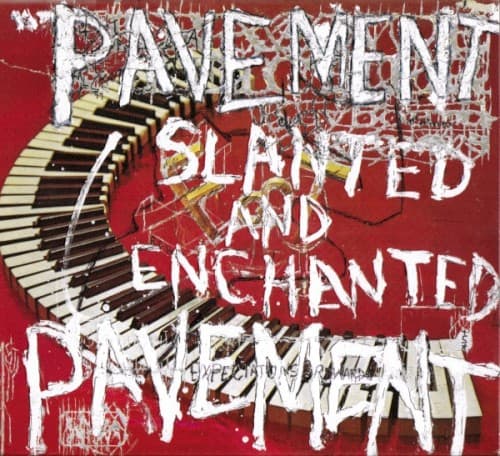
Slanted and Enchanted
 Pavement1992
Pavement's debut is deliberately fractured — verses fray into tape hiss, hooks arrive slightly out of focus, and Stephen Malkmus's guitar lines slouch instead of resolve, turning lo-fi limitation into a stylistic signature rather than an excuse. 'Summer Babe (Winter Version)' is the entry point, a woozy, melodic non sequitur that somehow still functions as a single; 'Here' and 'Trigger Cut' show the same sleight of hand — real songcraft smuggled under a scuzzy, indifferent surface. It set the template for a decade of American indie rock that treated irony and melody as compatible instincts, not opposing ones.
No. 2
In the Aeroplane Over the Sea
In the Aeroplane Over the Sea fuses Jeff Mangum's raw, distorted lo-fi production with a lyrical intensity that reads as genuinely overwhelmed rather than merely poetic. The title track lays acoustic guitar and horns under images that never fully resolve into a clear narrative, yet land with the emotional force of one — the album's central inspiration, reportedly Anne Frank's diary and Mangum's fixation on somehow rescuing her across time, is never named outright but shapes everything on the record. Nothing about the arrangements is conventionally pretty, and that roughness only deepens the intensity. Barely noticed on release, it became one of the most influential and most emphatically cited albums in American indie rock's history.
No. 3
Exile in Guyville
 Liz Phair1993
Conceived as a song-by-song answer to the Rolling Stones' Exile on Main St., Exile in Guyville keeps the same eighteen-track scale while flipping the perspective toward a blunt, specifically female account of sex and disappointment. "Fuck and Run" states its subject as plainly as the title suggests, Phair's flat, unadorned voice refusing any sense of shame or performance around it. "Divorce Song" does something similar with the end of a relationship, treating small logistical details as the real site of heartbreak. Its directness was unusual enough on release that it's still cited as a turning point for how candidly women in indie rock could write about desire.
No. 4
The Lonesome Crowded West
 Modest Mouse1997
Isaac Brock's jittery, philosophical yelp and the band's start-stop dynamics found their widest, sprawling canvas on this double album about the emptied-out spaces of the American West — trailer parks, highways, small towns hollowed out by sprawl. 'Cowboy Dan' builds from a hushed verse into one of the era's most unhinged vocal performances, Brock howling about a man who wants to shoot God. The band's mix of noise-rock abrasion and genuine tenderness never sat closer together than it does here. It remains the most beloved record in a catalog that would later go more polished and more popular.
No. 5
I Can Hear the Heart Beating as One
 Yo La Tengo1997
Yo La Tengo's fifth album was the record where their range became fully audible in a single listen — the seven-minute motorik drone of 'Moby Octopad,' the Velvet Underground-influenced pop of 'Stockholm Syndrome,' the full feedback assault of 'The Lie and How We Told It,' all without the shifts feeling discontinuous. Ira Kaplan and Georgia Hubley's vocal interplay creates an intimacy that the more aggressive tracks never fully dissipate; 'Sugarcube' became the band's closest approach to a radio hit, a deadpan guitar pop song with a hook so efficient it sounded accidental. The album demonstrated that the Velvet Underground's legacy could be developed rather than just imitated, that noise and tenderness could coexist within a single sustained artistic project.
No. 6
Yankee Hotel Foxtrot
 Wilco2002
Yankee Hotel Foxtrot wraps plainspoken, melodic songs in layers of static, tape noise, and disjointed studio effects that never quite let the listener settle. "Jesus, Etc." is the clearest example of the balance, its gentle string-and-guitar arrangement carrying lyrics about uncertainty and loss without ever tipping into melodrama. The album's experimental production was contentious enough that the band's label rejected it before release, a decision that only sharpened its eventual reception elsewhere. It remains the record that turned Wilco from a well-regarded alt-country act into something considerably harder to categorize.
No. 7
Funeral
 Arcade Fire2004
Funeral turns a period of real grief — several band members lost family while making it — into swelling, string-and-choir-laden arrangements that feel considerably bigger than the band's independent origins. "Wake Up" builds from a simple chanted melody into a genuinely anthemic communal chorus, the arrangement's scale matching the emotional urgency rather than overwhelming it. Win Butler and Régine Chassagne's shared songwriting gives the album a sense of collective catharsis rather than a single narrator's grief. It remains one of the most acclaimed indie rock debuts of the 2000s, launching Arcade Fire to a scale few of their peers reached.
No. 8
Emergency & I
Emergency & I moves between funk, dance-punk, and post-hardcore dynamics within single songs without ever losing its footing. "The City" builds a whole song's worth of tension and release out of a repeated refrain and Travis Morrison's plainspoken account of watching a life quietly come apart. The band's genre-hopping never feels like showing off — every shift serves the song's emotional arc. It's an album that sounds more structurally adventurous with each listen, and one whose influence on 2000s indie rock's more eclectic corners keeps surfacing decades later.
No. 9
You Forgot It in People
You Forgot It in People turns a revolving cast of more than twenty musicians into a single, cohesive wash of guitars, horns, and overlapping vocal lines, chaotic in personnel but never in execution. "Anthems for a Seventeen-Year-Old Girl" builds a hushed, elliptical verse into a swelling, wordless chorus that functions as pure catharsis rather than narrative. Elsewhere the record shifts from tender to raucous within a single track, treating its own unruliness as a virtue. It remains the clearest argument that a band built on chaos can still make something this unified.
No. 10
Bury Me at Makeout Creek
 Mitski2014
Bury Me at Makeout Creek marks Mitski's turn from composition-school art-pop toward full-band indie rock, the arrangements rougher and louder than anything on her earlier records but the songwriting no less exact. "First Love / Late Spring" opens quiet and swells into a chorus that reads as both devotional and slightly unhinged, Mitski's voice cracking exactly where the lyric needs it to. "Drunk Walk Home" leans further into distortion without sacrificing the melodic clarity underneath. It's the record where her classical precision and her rock instincts first fully met.
No. 11
Modern Vampires of the City
 Vampire Weekend2013
Modern Vampires of the City trades Vampire Weekend's earlier bright, preppy energy for denser, more atmospheric songwriting about mortality and faith. "Step" rides a harpsichord-sampling melody and a lyric steeped in specific, autobiographical detail into one of the band's most emotionally direct songs, the arrangement's warmth sitting against genuinely weighty subject matter. Ezra Koenig's literate, referential lyrics stay intact even as the mood turns considerably more serious. It remains the album most responsible for establishing the band as a genuinely evolving songwriting project rather than a one-note stylistic debut.
No. 12
Rat Saw God
 Wednesday2023
Rat Saw God pairs Wednesday's thick, distorted shoegaze guitar wall with Karly Hartzman's plainspoken, almost novelistic Southern storytelling. "Bull Believer" spends most of its long runtime as a slow, patiently building tension before erupting into a screamed, cathartic finale that earns its length by refusing to rush toward it. The lyrics favor sharp, specific detail over vague sentiment throughout, giving the noise something concrete and lived-in to hang onto. It remains the album that fully merged the band's atmospheric, shoegaze-indebted instincts with Hartzman's increasingly literary songwriting.


Who plays it
The UK and Irish wing
A parallel, non-American indie-rock lineage — Manchester and Glasgow's jangle-and-Britpop tradition, an art-rock/lounge strand in Stereolab, and a 2010s–2020s Irish and English revival.


The 90s American underground
The genre's actual founding generation and its widest, most varied section — lo-fi four-trackers, riot grrrl's DC/Olympia wing, alt-country's early crossover, and a scattering of college-radio bands who never fit any narrower label.


The 2000s indie wave
The post-Strokes "rock revival" and blog-rock era — New York's garage-adjacent scene, a wave of orchestral and chamber-pop-leaning bands, and a Toronto collective that became indie-rock's clearest 2000s crossover success.


The 2010s–2020s generation
The genre's most recent chapter — bedroom-pop and lo-fi-adjacent production, an alt-country-leaning Southern wing, and a math-rock-adjacent fringe — proof "indie-rock" still means something even after three decades of absorbing everything nearby.


