
Pictured: Joy Division
← Today’s issueThe daily of where sound came fromp. 12
Born 1978 · Wire's Chairs Missing; Public Image Ltd
Post-punk
Punk with the three chords replaced by dub bass, angular funk, and synthesizers — art-school seriousness applied to a form that had, by 1978, already burned through its own simplicity. Post-punk kept punk's confrontational energy and threw out almost everything else about how a rock band was supposed to sound.
See it on the map →How it started
 Devo1973
 Talking Heads1975
 Gang of Four1976
 Joy Division1976
 Siouxsie & The Banshees1976
 The Birthday Party1976
Punk's first wave collapsed almost as fast as it arrived — by 1978 the Sex Pistols had already split, and a generation of art-school and university-educated musicians moved into the space punk had cleared without any interest in repeating it. Wire's Chairs Missing and Public Image Ltd.'s early work that same year pointed the way: choppy, off-kilter guitar, dub-influenced bass pushed to the front, and a general distrust of the verse-chorus song.
He would say to me, 'Listen to this record,' and he gives me Metallic K.O. by the Stooges.
The scene organized around a handful of independent labels — Factory in Manchester, 4AD and Rough Trade in London — that let bands like Joy Division and Siouxsie & The Banshees build entire sonic worlds without a major label smoothing the edges. A parallel, less connected scene was doing something similar in New York around the same time, led by Talking Heads' nervier, funkier take on the same basic idea.
Essential records
Start here
Unknown Pleasures
 Joy Division1979
Martin Hannett separated the band's instruments into isolated sonic chambers, adding reverb, echoed drums, and tape manipulation until the record sounded like it was being transmitted from underground rather than recorded in Manchester. Ian Curtis's bass-register vocals over Peter Hook's high melodic basslines — heard most clearly on 'She's Lost Control' — is a configuration that remains unusual in rock. A statement of claustrophobic urban alienation that no subsequent act has entirely superseded.
No. 2
Pink Flag
 Wire1977
Twenty-one songs in thirty-five minutes, most of them stripped to a single riff or idea and cut off before they can repeat themselves — art-school minimalism disguised as a punk record. The band treated the album itself as a structural experiment, alternating full-throttle blasts with brief, dissonant fragments that function more like connective tissue than songs. 'Three Girl Rhumba' later resurfaced, note for note, as Elastica's 'Connection.' Its severity and economy became a direct blueprint for both American hardcore and the more cerebral wing of post-punk.
No. 3
Entertainment!
 Gang of Four1979
Gang of Four's debut is both a musical manifesto and a Marxist textbook — the funk rhythms stripped of all decorative excess, the lyrics annotating the commodity relationships inside everyday desire with a precision no other rock band has matched. Hugo Burnham's drums and Dave Allen's bass lock together like machine components while Andy Gill's guitar attacks in sharp, percussive stabs; 'Damaged Goods' is the most concentrated expression of this, four minutes of controlled aggression set to a jagged riff. Its tension — between dancing and thinking, pleasure and critique — has never been resolved because the band deliberately refused to resolve it.
No. 4
Remain in Light
 Talking Heads1980
Brian Eno and David Byrne stripped the band's rhythms to their cellular components and rebuilt them from the outside in, layering polyrhythmic African guitar patterns over Adrian Belew's alien lead work and a rhythm guitar that functions more as percussion than harmony. 'Once in a Lifetime' — a talking-blues meditation on subconscious anxiety, delivered by Byrne like a televangelist losing his nerve — is the obvious touchstone, but 'Crosseyed and Painless' hits harder as a pure rhythmic proposition. The album invented a template for the post-punk dance floor and for indie rock's engagement with African music simultaneously.
No. 5
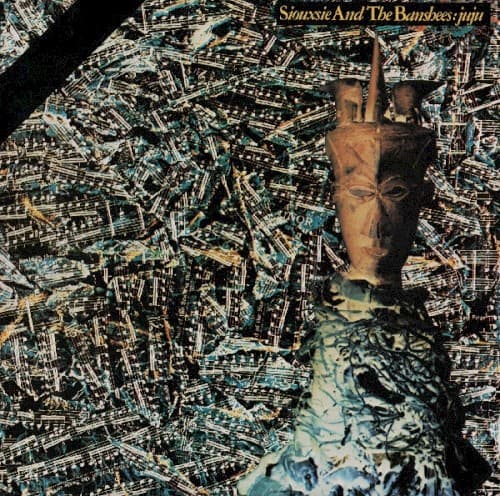
Juju
Siouxsie & The Banshees distilled everything that made their early records intense and made it more controlled and surgical — the guitars sharper, the arrangements darker and more theatrical. John McGeoch's guitar work is some of the most inventive post-punk playing ever committed to tape, moving between scraped percussive textures and full melodic leads within the same song. Juju established the template for gothic rock as a coherent aesthetic — dramatic, physical, and sophisticated.
No. 6
Hex Enduction Hour
 The Fall1982
Hex Enduction Hour opens with two drum kits hammering in tandem, a decision that turns the whole record into something closer to ritual than rock music. "The Classical" sets the tone immediately, Mark E. Smith's sneering, half-buried vocal riding a repetitive, motorik groove that refuses any conventional verse-chorus shape. The production is deliberately harsh, recorded partly in a cold Hitchin theatre and partly in Reykjavik, and the record never smooths out its own abrasiveness. It stands as the fullest statement of the Fall's belief that repetition and hostility could themselves be a kind of songcraft.
No. 7
Power, Corruption & Lies
 New Order1983
Two years after Joy Division's dissolution, New Order arrived at something unprecedented — electronic dance rhythms underneath post-punk guitar textures, polished to a surface that invites the body rather than closing off the world. 'Age of Consent' opens with Peter Hook's melodic bass in counterpoint to the guitars, a technique carried over from Joy Division but deployed here with earned optimism. It taught the entire 1980s underground how synthesisers and guitars could coexist without compromise.
No. 8
Ocean Rain
Ocean Rain wraps Ian McCulloch's baritone and Will Sergeant's chiming guitar in a full string arrangement recorded in Paris, pushing the band's usual atmosphere toward genuine orchestral grandeur. "The Killing Moon" builds from a hushed, acoustic-tinged verse into one of post-punk's most widescreen choruses, the strings never overwhelming the song's underlying tension. The album's ambition could easily have tipped into excess, but the songwriting underneath holds it together. It remains the record most responsible for Echo & the Bunnymen's reputation as one of the era's most romantically ambitious bands.
No. 9
Junkyard
A feral, blues-damaged racket built around Rowland S. Howard's serrated slide guitar and a young Nick Cave's unhinged howl, more chaotic and more violent than anything the goth scene it partly spawned would attempt. Recorded amid the band's own disintegration, it channels that collapse directly into the performances — nothing here sounds rehearsed or safe. 'Release the Bats' turned camp horror-movie imagery into a genuine art-punk anthem, its title becoming shorthand for an entire aesthetic. The band split within a year of its release, leaving Junkyard as their most extreme and complete statement.


Who plays it
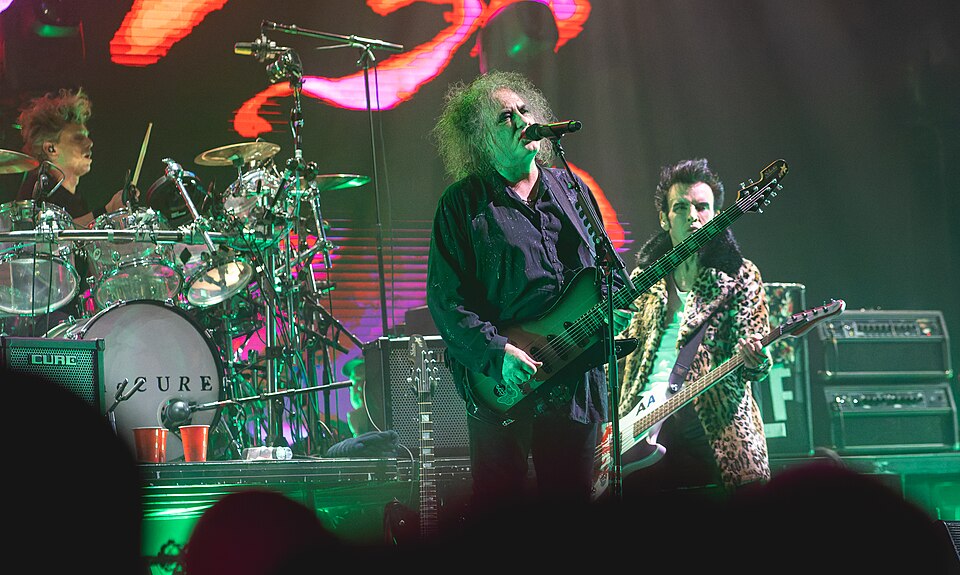
The UK wave, 1976–1984
The genre's founding scene — Manchester, London, and beyond — working out how far a rock band could bend before it stopped being one.



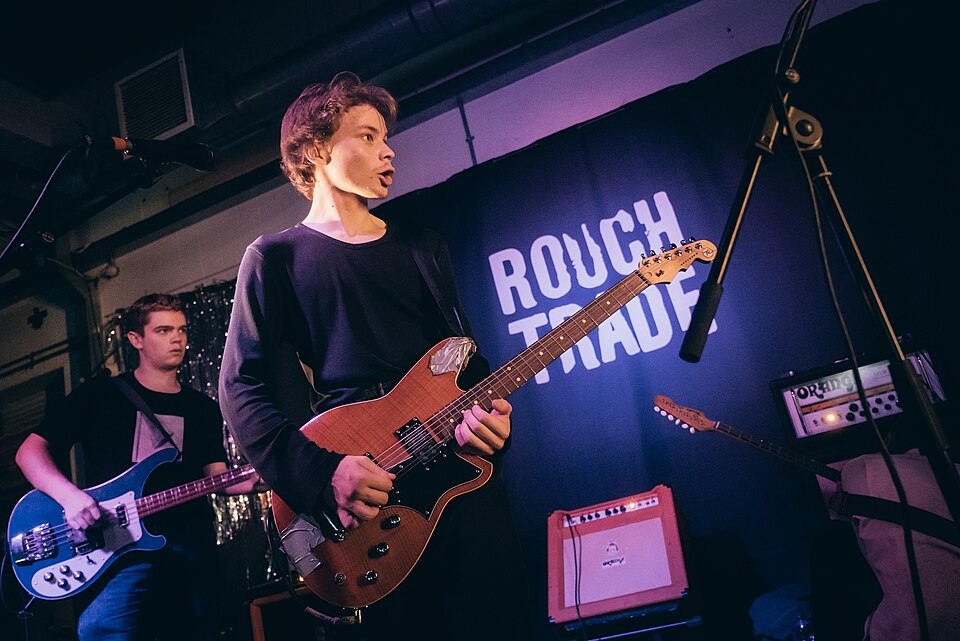
The 21st-century UK and Irish revival
Three decades on, a new generation of UK and Irish bands picked the same angularity back up — sharper production, but the same distrust of the comfortable chord change.


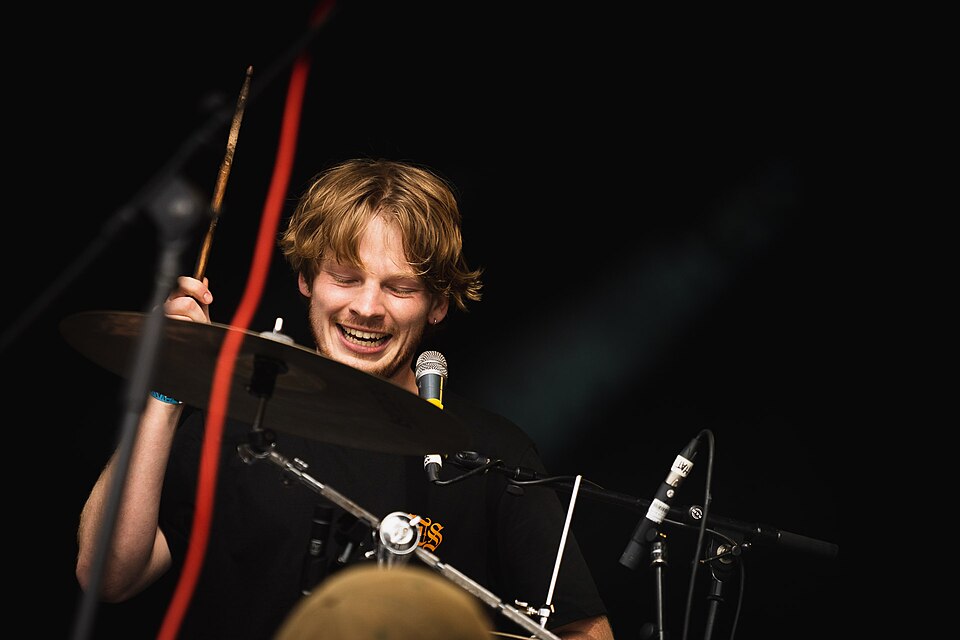

The American strand
A smaller but real American lineage, running from Talking Heads' original CBGB-era art-funk through a 2000s New York revival and into the genre's more recent noise and riot-grrrl-adjacent corners.


Where it came from, where it went
- Garage rock1963
- Proto-punk1967
- Punk1976
- Post-punk1978
- Where it went