
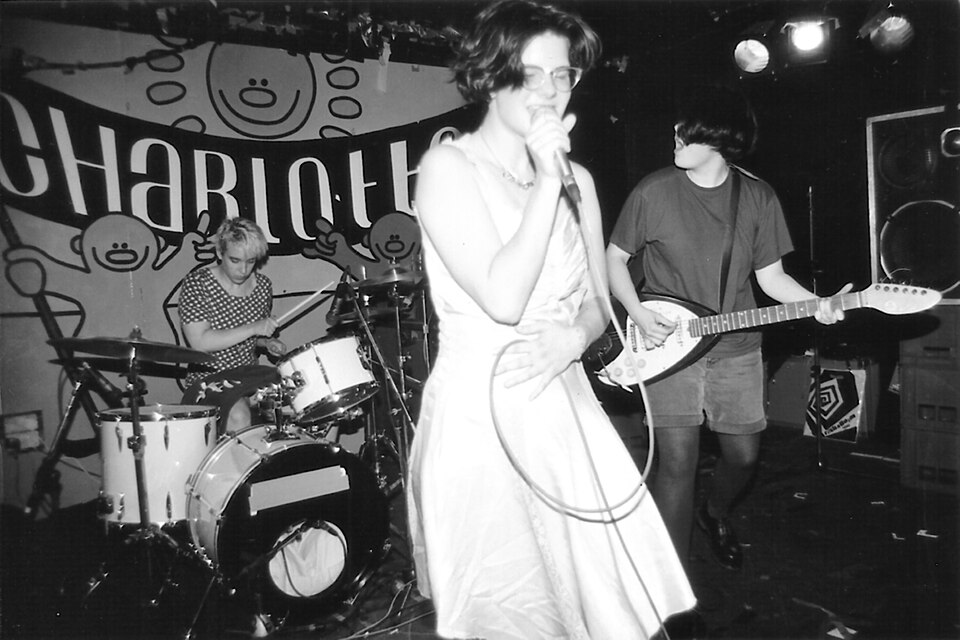
Pictured: Fugazi
← Today’s issueThe daily of where sound came fromp. 8
Born 1976 · Ramones' debut; the Sex Pistols' first gigs
Punk
Rock and roll stripped back to its studs — three chords, two-minute songs, and a sneer where a guitar solo used to go. Punk arrived in 1976 on both sides of the Atlantic within months of the other, and burned through its own novelty almost as fast as it caught on.
See it on the map →How it started


Ramones' self-titled debut, released in early 1976, did the actual stripping-back: fourteen songs in under thirty minutes, no solos, a cartoon-simple production aesthetic that made a studio album sound like a garage rehearsal. The Sex Pistols arrived that same year from a different instinct entirely — less musical minimalism than pure confrontation, built around Johnny Rotten's sneer and Malcolm McLaren's gift for provocation.
It immediately spoke to me, and I became overjoyed to find this person, and I have been overjoyed ever since.
New York's CBGB scene (Patti Smith's Horses, a year earlier in 1975, already fusing punk's rawness with beat poetry) and London's art-school and working-class scenes developed in parallel rather than in sequence — Buzzcocks brought real melody to the template, X-Ray Spex brought a saxophone. Punk's most direct descendant, hardcore, sped the tempo up and stripped the songs down even further within a few years — that story belongs to hardcore-punk's own page rather than a repeat here.
Essential records
Start here
Ramones
 Ramones1976
Ramones runs fourteen songs in under thirty minutes, each one built from the same three or four chords played faster and louder than anyone else was attempting in 1976. "Blitzkrieg Bop" opens the record with a shouted "Hey ho, let's go" that turns a football-chant hook into punk's founding anthem before the song is even a minute old. Tommy Ramone and producer Craig Leon kept the mix dry and immediate, refusing any of the era's usual studio polish. It's less a great record in the conventional sense than a complete rewriting of what a rock song needed to contain.
No. 2
Never Mind the Bollocks, Here's the Sex Pistols
 Sex Pistols1977
Never Mind the Bollocks compresses two years of tabloid outrage into twelve songs that still sound genuinely dangerous rather than merely historic. "God Save the Queen" pairs Johnny Rotten's sneering, half-spoken vendetta against the monarchy with Steve Jones's thick, overdubbed guitar wall, released to coincide with the Queen's Silver Jubilee and promptly banned by the BBC. Producer Chris Thomas gave the band's chaos a hard, compact clarity most of their peers never bothered chasing. It remains the rare punk record whose reputation for danger the songs themselves still earn.
No. 3
Pink Flag
 Wire1977
Twenty-one songs in thirty-five minutes, most of them stripped to a single riff or idea and cut off before they can repeat themselves — art-school minimalism disguised as a punk record. The band treated the album itself as a structural experiment, alternating full-throttle blasts with brief, dissonant fragments that function more like connective tissue than songs. 'Three Girl Rhumba' later resurfaced, note for note, as Elastica's 'Connection.' Its severity and economy became a direct blueprint for both American hardcore and the more cerebral wing of post-punk.
No. 4
London Calling
 The Clash1979
London Calling spreads nineteen songs across four sides and refuses to settle into any single genre, moving from the title track's tolling apocalypse through ska, rockabilly, lounge jazz and dub without ever sounding like a band hedging its bets. "London Calling" itself rides Paul Simonon's rolling bassline and Joe Strummer's half-shouted vision of flood, ice age and nuclear error into one of punk's most cinematic openings. Pennie Smith's cover photograph, Simonon smashing his bass onstage, became as iconic as anything on the record. It's the album that proved punk's energy could survive almost unlimited stylistic range.
No. 5
Horses
 Patti Smith1975
Horses opens with Smith rewriting Van Morrison's "Gloria" from the inside out, turning "Jesus died for somebody's sins but not mine" into a declaration of self rather than blasphemy. John Cale's production keeps the arrangements spare enough that Smith's voice, half-sung and half-recited, stays the whole point. "Land" stretches into a nine-minute suite that treats rock and poetry as the same discipline rather than two separate ones. Robert Mapplethorpe's stark, androgynous cover portrait of Smith became as much a statement of intent as anything on the record itself. Few debut albums have done more to argue that punk could be literature.
No. 6
Germfree Adolescents
 X-Ray Spex1978
Germfree Adolescents pairs Poly Styrene's yelped, theatrical vocal with a squalling saxophone line that gives the whole record a cartoonish, almost carnival energy other punk bands never attempted. "Identity" turns anxiety about self-image and consumer culture into a genuinely catchy chant, Styrene's voice cracking between defiance and real vulnerability. The band's tightness belies how quickly it was all over; this is the only album X-Ray Spex made in their original run. It remains one of punk's most distinctive records precisely because nothing else from the era sounds like it.
No. 7
Is This Real?
 Wipers1980
Is This Real? runs its songs through a thin, corroded guitar tone that makes even the record's most melodic moments sound slightly dangerous. "Return of the Rat" rides a driving, insistent riff that splits the difference between punk urgency and something heavier and more menacing waiting just underneath. Greg Sage recorded and largely self-produced the album on a shoestring budget, and that unglamorous rawness never gets smoothed away by studio polish. Nothing here reaches for a hook so much as a mood, urgent and slightly corroded at the edges. It's the record most directly credited with pointing punk toward the sound the Pacific Northwest would later make its own.
Who plays it
The first wave, UK
The London and Manchester scene — three chords and a confrontation, equal parts art-school irony and working-class fury.


The first wave, US
A parallel American strand, running from Detroit's proto-punk holdouts through CBGB's poetry-inflected scene to the Pacific Northwest, where Wipers were laying groundwork grunge would later borrow wholesale.

Punk's later inheritors
Hardcore — Black Flag, Bad Brains, Minor Threat, Dead Kennedys — is punk's most direct and best-known descendant, and it gets a full page of its own rather than a repeat here. This is everything else that carried punk's tag forward: riot grrrl's feminist second wave, a grunge crossover, and two artists (Fugazi, IDLES) who show up more fully on post-hardcore's and post-punk's own pages.



Where it came from, where it went
- Garage rock1963
- Proto-punk1967
- Punk1976
- Where it went