
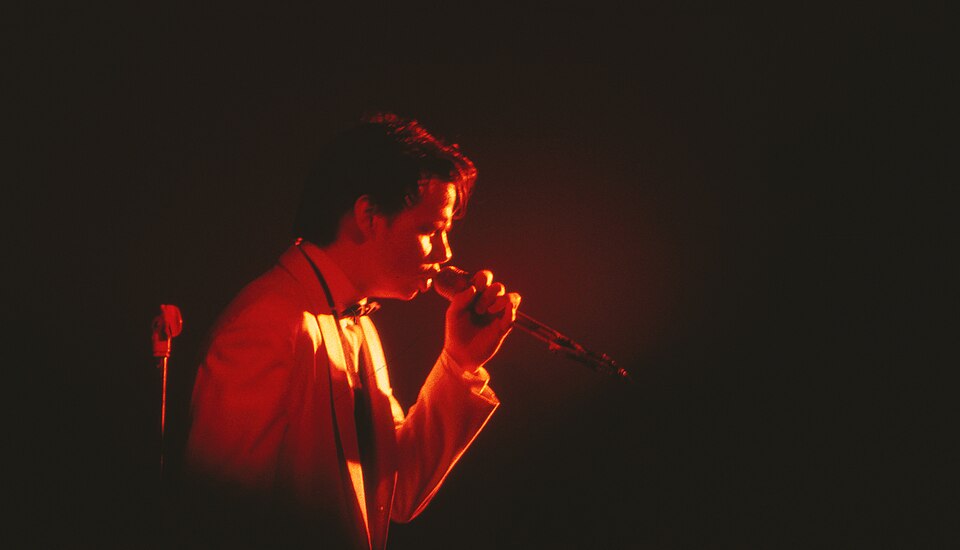
Pictured: Gang of Four
← Today’s issueThe daily of where sound came fromp. 14
Born 1979 · Gang of Four, Entertainment!
Dance-punk
Punk's rhythm section fused to disco and funk groove — bass and drums built to make a crowd move, guitar left sharp and scratchy on top. Dance-punk arrived alongside the rest of post-punk in 1979 and has resurfaced in waves ever since, whenever a generation of guitar bands rediscovers the dancefloor.
See it on the map →How it started
 Gang of Four1976
 James Chance and the Contortions1977
 !!!1996
 The Rapture1998
 Yeah Yeah Yeahs2000
 LCD Soundsystem2002
Gang of Four's Entertainment! (1979) set the actual template: a rhythm section drilled tight enough to function as disco, layered under Andy Gill's scraping, funk-inflected guitar and Jon King's political sloganeering — punk's confrontation, repurposed for a body that wanted to move rather than just pogo. James Chance and the Contortions were doing something adjacent and even more extreme in New York at almost the same moment, splicing James Brown's funk directly into no-wave's noise.
really a pilgrimage because The Velvet Underground was really the marker for me and Andy of what bands should sound like and we came back and thought we'd have a band.
The style went quiet through most of the 1980s and 90s before New York's DFA Records — James Murphy's label and production outfit — revived it wholesale around 2002, with LCD Soundsystem, The Rapture, and !!! all drawing the same line back to Gang of Four's rhythm-first template, filtered now through house and disco's own four-on-the-floor discipline. Yeah Yeah Yeahs arrived from the same downtown New York scene with a rawer, more guitar-forward version, and the sound has kept surfacing since, most recently in the UK's Windmill-adjacent scene via Squid.
Essential records
Start here
Entertainment!
 Gang of Four1979
Gang of Four's debut is both a musical manifesto and a Marxist textbook — the funk rhythms stripped of all decorative excess, the lyrics annotating the commodity relationships inside everyday desire with a precision no other rock band has matched. Hugo Burnham's drums and Dave Allen's bass lock together like machine components while Andy Gill's guitar attacks in sharp, percussive stabs; 'Damaged Goods' is the most concentrated expression of this, four minutes of controlled aggression set to a jagged riff. Its tension — between dancing and thinking, pleasure and critique — has never been resolved because the band deliberately refused to resolve it.
No. 2
Sound of Silver
 LCD Soundsystem2007
Sound of Silver is LCD Soundsystem's most emotionally direct record, pairing James Murphy's dry, list-making wit with songs that are unexpectedly moving underneath the dance-rock chassis. "All My Friends" builds a single piano riff into an eight-minute meditation on aging and friendship, gaining urgency without ever changing its basic pattern. "North American Scum" and "Someone Great" show the album's range, one a sardonic, groove-heavy jab, the other a quietly devastating song about loss disguised as a synth-pop track. It's the record that convinced listeners who'd dismissed dance-punk as a passing revival that Murphy was working toward something more lasting.
No. 3
Buy
James Chance and the Contortions1979Buy fuses no wave's hostility to a genuinely tight, danceable funk rhythm section, a combination that made James Chance and the Contortions among the most physically aggressive bands to ever also be this rhythmically disciplined. "Contort Yourself" rides a taut, popping bassline while Chance's skronking saxophone and shouted vocal push the track toward chaos without ever losing the groove underneath. The tension between the music's precision and its hostility is the whole point. It's an album that helped invent an entire lineage of dance-punk decades before that term existed.
No. 4
Echoes
 The Rapture2003
Echoes is the fullest studio statement of the dance-punk sound The Rapture helped kick into gear with their DFA-produced singles. "House of Jealous Lovers" anchors the record, Luke Jenner's yelped vocals and scraping guitar riding a four-on-the-floor beat and cowbell pattern lifted as much from disco as from post-punk. "Olio" and "Killing" show the same tension between rock instrumentation and dance rhythm applied to slower, moodier material. The album captures a specific moment when post-punk revivalism and DFA's disco-not-disco aesthetic briefly looked like the same genre.
No. 5
Myth Takes
 !!!2007
Myth Takes tightens !!!'s sprawling, percussion-heavy dance-punk into a more focused set of songs without losing the live-band physicality that set them apart from more strictly electronic acts. "Must Be the Moon" rides a loose, conga-driven groove under Nic Offer's half-sung, half-muttered vocal, treating repetition and rhythm as the song's actual hook. "All My Heroes Are Weirdos" pushes the same idea into a sparer, more skeletal arrangement. The album makes the band's underlying argument plainly: that a band built around guitars and drums could function as genuine dance music rather than a rock approximation of it.
Who plays it
The 1979 originators
The two acts who actually founded the sound within months of each other — Gang of Four's UK post-punk-funk and James Chance's New York no-wave-funk mutation.
The 2000s DFA revival
James Murphy's DFA Records brought the sound back wholesale in the early 2000s, filtered through house and disco's own rhythmic discipline — Yeah Yeah Yeahs arrived from the same downtown scene with a rawer, more guitar-first take.
Beyond New York
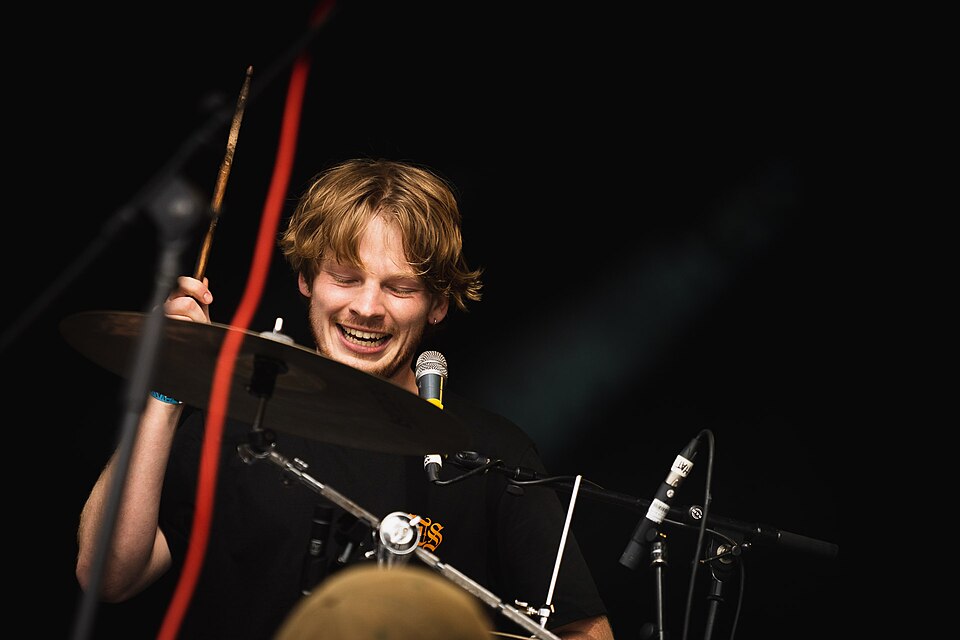
The sound's most recent resurfacing — the UK's Windmill-adjacent scene folded dance-punk's rhythm-first instinct into its own art-rock and krautrock leanings.
Where it came from, where it went
- Garage rock1963
- Proto-punk1967
- Punk1976
- Post-punk1978
- Dance-punk1979
Nothing on the map has grown out of it yet.