
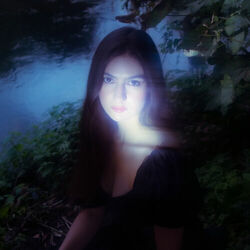
Pictured: Fiona Apple
← Today’s issueThe daily of where sound came fromp. 52
Born 1996 · Belle and Sebastian; later Sufjan Stevens
Chamber pop
Indie-rock songwriting dressed in real or synthesized orchestration — strings, horns, woodwinds, harpsichord — rather than the standard guitar-bass-drums trio. Chamber-pop treats arrangement itself as the point of ambition, closer to a small classical ensemble's palette than a rock band's.
See it on the map →How it started
 The Blue Nile1981
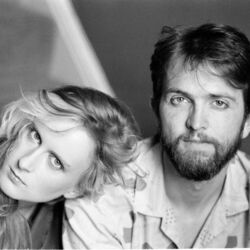 Prefab Sprout1982
 Belle and Sebastian1996
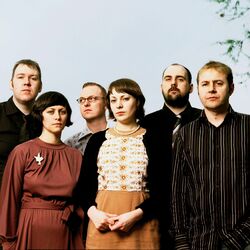 Camera Obscura1996
 Fiona Apple1996
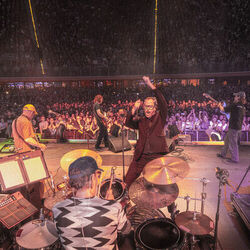 The National1999
The instinct predates the name by a decade — The Blue Nile's Hats (1989) and Prefab Sprout's Steve McQueen (1985) had already proven a British pop song could carry orchestral synth-strings and still function as pop, working in a sophisti-pop tradition that had no name of its own at the time. Chamber-pop as a genre dates to 1996, when Belle and Sebastian's earliest records paired hushed, twee songwriting with real string and horn arrangements rather than just electric guitars — a small, DIY-scaled orchestration most indie bands hadn't attempted.
New Order and Bowie and Talking Heads—these are all primal influences for many of us.
Sufjan Stevens scaled the same idea up considerably a decade later — banjo, glockenspiel, full horn and woodwind sections stacked into something closer to a chamber orchestra than a backing band — and that maximalist version is what most listeners now picture when they hear the term. From there it split two ways: full bands (Arcade Fire, The National, Black Country, New Road) who folded the orchestration into an anthemic, festival-scale sound, and individual artists (Fiona Apple, Weyes Blood, Perfume Genius) who kept it closer to art-song scale.
Essential records
Start here
Illinois
 Sufjan Stevens2005
Illinois piles up banjos, horns, and layered vocal arrangements into something closer to a folk-orchestral pageant than a conventional singer-songwriter record, moving from state history to serial killers to personal faith without ever losing its warmth. "Come On! Feel the Illinoise!" swings from a jaunty title into a hushed second half addressing Carl Sandburg directly, a structural pivot the whole album favors. "Casimir Pulaski Day," by contrast, strips everything back to banjo and a plain account of loss. Few records manage that range of scale and still feel like a single, coherent statement.
No. 2
Funeral
 Arcade Fire2004
Funeral turns a period of real grief — several band members lost family while making it — into swelling, string-and-choir-laden arrangements that feel considerably bigger than the band's independent origins. "Wake Up" builds from a simple chanted melody into a genuinely anthemic communal chorus, the arrangement's scale matching the emotional urgency rather than overwhelming it. Win Butler and Régine Chassagne's shared songwriting gives the album a sense of collective catharsis rather than a single narrator's grief. It remains one of the most acclaimed indie rock debuts of the 2000s, launching Arcade Fire to a scale few of their peers reached.
No. 3
If You're Feeling Sinister
If You're Feeling Sinister sets Stuart Murdoch's hushed, novelistic lyrics against gently orchestrated jangle-pop, each song reading almost like a short story set to a tune. "Get Me Away from Here, I'm Dying" carries that balance at its clearest, its lightly strummed verses building into a chorus that turns restlessness into something genuinely uplifting. The arrangements throughout stay understated, string and horn touches added sparingly rather than for effect. It remains the record most credited with defining an entire strand of British indie-pop that followed in its wake.
No. 4
When the Pawn...
 Fiona Apple1999
Produced by Jon Brion, When the Pawn... surrounds Apple's jazz-schooled piano with dense, sometimes orchestral arrangements that never quite settle into a predictable pop shape. "Paper Bag" swings between a jaunty verse and a lyric about disappointment and self-loathing without any tonal whiplash, Apple's phrasing bending the melody wherever the words need it to go. "Fast As You Can" ratchets the tension up further, tempo and dynamics shifting within the same verse. It's a record that treats emotional volatility as a formal principle rather than something to be smoothed over.
No. 5
Helplessness Blues
 Fleet Foxes2011
Helplessness Blues trades some of the debut's immediacy for more ambitious song structures, several tracks shifting entirely in tempo and mood midway through without ever losing the band's dense vocal-harmony core. The title track moves from a plainspoken statement of purpose into a long, wordless coda that functions almost as a separate piece of music. "The Shrine / An Argument" pushes even further, closing on a passage of skronking free-jazz saxophone that has nothing precedented in the band's earlier catalog. It's a record that expands the debut's palette without abandoning what made it work.
No. 6
Titanic Rising
 Weyes Blood2019
Titanic Rising wraps Mering's rich alto in string and synthesizer arrangements that recall 1970s soft rock without ever feeling like pure pastiche, the production full and cinematic where so much of her genre's other work stays deliberately spare. "Andromeda" builds a slow-motion ballad about romantic isolation into something that sounds genuinely orchestral by its close. "Movies" leans further into that scale, strings swelling under lyrics about the gap between cinematic fantasy and real life. It's a record that treats maximalism and vulnerability as fully compatible.
No. 7
Ants From Up There
Ants From Up There builds slowly across its runtime, chamber-pop instrumentation swelling behind Isaac Wood's raw, half-spoken lyrics until the album's emotional weight becomes almost unbearable by its close. "The Place Where He Inserted the Blade" is that closing statement, a long, cathartic build that turns Wood's anxious wordplay into something closer to a farewell than a song. The band's violin and saxophone give the arrangements a klezmer-tinged warmth that keeps the record from tipping into pure bleakness. It remains one of the most emotionally direct records to come out of its scene, made more so by arriving just as the band that made it was ending.
No. 8
Boxer
 The National2007
Boxer builds its songs slowly and quietly, trusting understatement rather than volume to carry the emotional weight. "Fake Empire" opens on a hesitant piano figure before swelling into a horn-led coda that turns quiet unease into something closer to grandeur, without ever raising its voice. Matt Berninger's dry, anxious baritone stays conversational even as the arrangements around him grow more elaborate. It's the album that established the band's meticulous, slow-burn sound as a genuine signature rather than a mood.


Who plays it
The sophisti-pop precursors
1980s British orchestral pop, years before the genre had a name of its own — synth-strings and yearning arrangement treated as seriously as any guitar part.
The founding wave
The genre's actual 1996 anchor — Belle and Sebastian and Camera Obscura's Scottish twee orchestration, and Sufjan Stevens' American baroque-folk maximalism a decade later.

2000s indie orchestral maximalism
Full bands who scaled chamber-pop's orchestration up to anthemic, festival-size arrangements without losing the genre's arranged, counter-melodic detail.
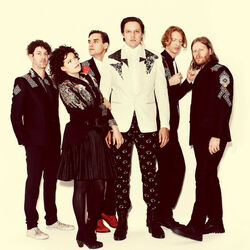


Art and confessional chamber-pop
Individual artists who kept the orchestration closer to art-song scale — theatrical, confessional, and often stranger than the full-band wing above.


Where it came from, where it went
Nothing on the map has grown out of it yet.