Tap any face to see why they're in the photo

Who shaped them

Elliott Smith

Elliott Smith

Since 1994 · United States

Elliott Smith emerged from the Portland band Heatmiser in the mid-1990s with a parallel solo career built on hushed, intricately fingerpicked acoustic songs, recorded largely alone on a four-track and released through the independent label Kill Rock Stars. Their story

See them on the map

Press ▶︎ to play

Loading…

It really plays! Press the middle

Who they shaped

Behind them, left to right: Fugazi, Bob Dylan, Built to Spill.

In front, left to right: Japanese Breakfast, Alex G, beabadoobee, Fleet Foxes, American Football, Big Thief, Phoebe Bridgers, Clairo, Bright Eyes.

The bigger the face, the stronger the proof: they said it themselvesreporteda critic, or widely accepted

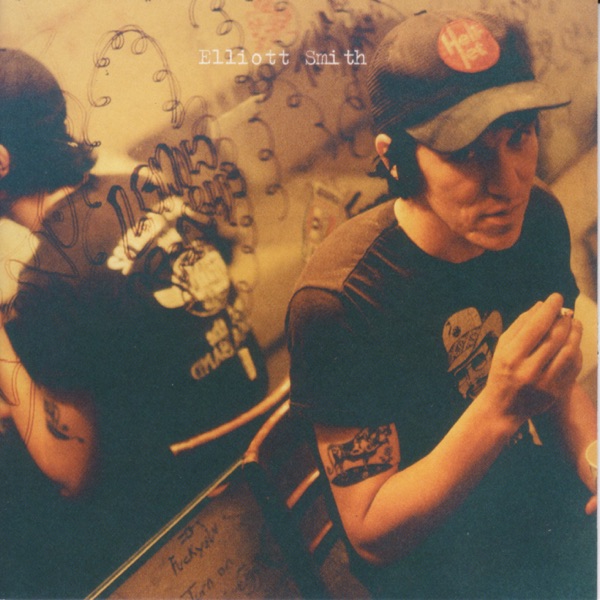
Either/Or cover

Start here

Either/Or (1997)

Either/Or sits at the hinge between Smith's earliest four-track recordings and his later, more fully arranged work, keeping the intimacy of the former while hinting at the melodic ambition of the latter. "Between the Bars" pairs a devastating lyric about addiction and codependency with a melody gentle enough to be mistaken for a lullaby, Smith's double-tracked voice barely rising above a whisper. "Angeles" does something similar with an unflinching account of the pressures of the music industry. It remains the record most commonly cited as the clearest distillation of his early style.

Sleeve notes

Elliott Smith

Either/Or · 1997

Elliott Smith emerged from the Portland band Heatmiser in the mid-1990s with a parallel solo career built on hushed, intricately fingerpicked acoustic songs, recorded largely alone on a four-track and released through the independent label Kill Rock Stars. His whispered, double-tracked vocals and melodic instincts, indebted to the Beatles and Big Star as much as to any folk tradition, gave his early records an intimacy that felt almost accidental, as though the listener had wandered into a room they weren't meant to be in.

A surprise Academy Award nomination for "Miss Misery," written for the film Good Will Hunting, brought Smith a level of mainstream attention that sat uneasily with his catalog's raw, often bleak subject matter — addiction, depression, self-doubt. He continued to develop a denser, more Beatles-influenced sound on later major-label albums before his death in 2003. His influence on subsequent generations of confessional songwriters, many of whom cite him directly, has only grown since.

Since 1994 · United States