Tap any face to see why they're in the photo

Who shaped them

Weyes Blood

Weyes Blood

Since 2006 · United States

Natalie Mering began recording as Weyes Blood in the late 2000s within noise and experimental music circles before gradually moving toward a lusher, more classically orchestrated sound indebted to 1970s soft rock and singer-songwriter records. Their story

See them on the map

Press ▶︎ to play

Loading…

It really plays! Press the middle

Who they shaped

Nobody on the map lists them as an influence yet.

Behind them, left to right: Cocteau Twins, The Velvet Underground, Joni Mitchell, Can.

Not in the photo: . Often assumed; they've said no.

The bigger the face, the stronger the proof: they said it themselvesreporteda critic, or widely accepted

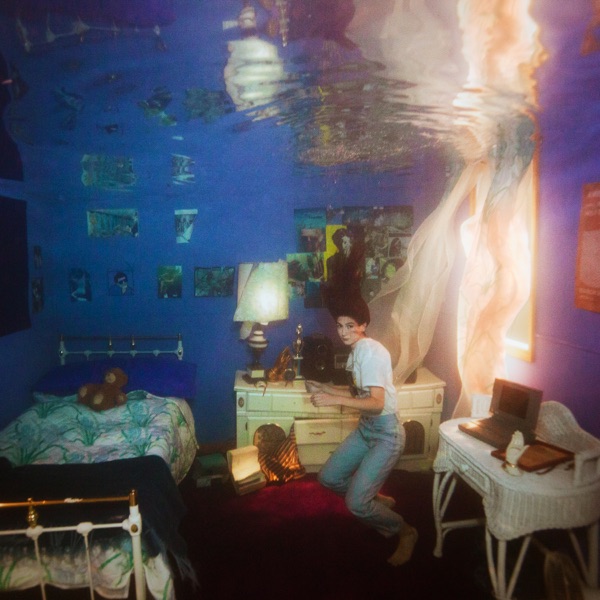
Titanic Rising cover

Start here

Titanic Rising (2019)

Titanic Rising wraps Mering's rich alto in string and synthesizer arrangements that recall 1970s soft rock without ever feeling like pure pastiche, the production full and cinematic where so much of her genre's other work stays deliberately spare. "Andromeda" builds a slow-motion ballad about romantic isolation into something that sounds genuinely orchestral by its close. "Movies" leans further into that scale, strings swelling under lyrics about the gap between cinematic fantasy and real life. It's a record that treats maximalism and vulnerability as fully compatible.

Sleeve notes

Weyes Blood

Titanic Rising · 2019

Natalie Mering began recording as Weyes Blood in the late 2000s within noise and experimental music circles before gradually moving toward a lusher, more classically orchestrated sound indebted to 1970s soft rock and singer-songwriter records. Her voice, a rich alto with an almost operatic control, sits at the center of increasingly ambitious arrangements that draw on strings, synthesizers, and vocal harmony in equal measure.

Titanic Rising (2019) marked her breakthrough, pairing that lush sound with lyrics about ecological anxiety, technology, and a longing for an earlier era, and it was widely received as a defining record of its moment — nostalgic in texture but pointedly contemporary in its concerns. Mering's combination of formal, almost baroque songcraft with deeply personal and political subject matter has made her one of the more distinctive voices in recent art-pop and folk-adjacent songwriting.

Since 2006 · United States