Pictured: David Bowie
← Today’s issueThe daily of where sound came fromp. 66
Born 1979 · Kate Bush and Talking Heads
Art pop
Pop songcraft filtered through art-school ambition — theatrical persona, unconventional structure, and a studio treated as an instrument in its own right. Art-pop isn't a sound so much as a stance: pop's hooks and pleasures, refusing to apologize for wanting to be taken seriously as art.
See it on the map →How it started
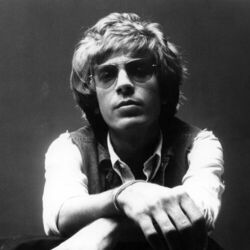
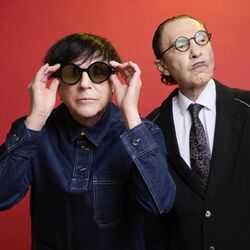


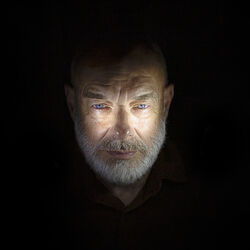

The label crystallized around 1979, when Talking Heads' Fear of Music and the emerging art-pop wing of British music (Kate Bush chief among them, working outside this map) proved that conceptual ambition and chart appeal weren't opposites. David Bowie had already spent the decade demonstrating the same thing — a different persona and sonic palette per album, glam theater applied to genuinely strange music — and Brian Eno, moving between Bowie's Berlin records and his own ambient experiments, gave the whole idea a production philosophy: treat the studio as the compositional instrument, not just the place you record one.
I think he's probably been my idol since I was a kid.
What followed wasn't a scene so much as a standing invitation — any genre could be run through art-pop's filter of persona, artifice, and structural unpredictability. That elasticity is why the artists below span glam-rock elders, orchestral British sophisti-pop, confessional singer-songwriters, and a large, distinctly 21st-century wing built entirely out of electronic production.
Essential records
Start here
The Rise and Fall of Ziggy Stardust and the Spiders from Mars
 David Bowie1972
Mick Ronson's guitar — simultaneously orchestral (his string arrangements for 'Lady Stardust') and viscerally physical (the opening riff of 'Hang On to Yourself') — gives the album a range that Bowie's theatrical concept required but couldn't guarantee. 'Starman' is the moment that changed British pop culture: Bowie's Top of the Pops performance in June 1972 functions as a before/after marker for an entire generation's sense of what rock music could do or be. The concept — rock star as extraterrestrial — created the precedent for every subsequent pop persona, from Prince to Lady Gaga.
No. 2
Homogenic
 Björk1997
Homogenic pairs sweeping, Icelandic string arrangements with hard, distorted electronic beats, the two elements meeting in a way few other pop-adjacent records of the era attempted. "Jóga," written for a friend and doubling as a tribute to Iceland's landscape, builds from a spare string figure into a genuinely overwhelming climax without ever raising its emotional register into melodrama. "Bachelorette" and "Pluto" show the album's range, one grandly orchestral, the other closer to industrial noise. It's widely considered the moment Björk's various interests — classical arrangement, electronic programming, deeply personal songwriting — resolved into a single, fully coherent artistic identity.
No. 3
Another Green World
 Brian Eno1975
The hinge point of Eno's career: the record where he turned from the art-rock songcraft of his Roxy Music years toward the ambient minimalism he'd spend decades defining. Recorded with no material written in advance, it used the studio itself as the instrument — tape loops, treated guitars, Oblique Strategies prompts — to build sound that felt composed and improvised at once. It's the blueprint for nearly everything atmospheric that follows: the use of electronic texture to paint emotion and landscape, and the permission to let mood outweigh structure.
No. 4
Hats
 The Blue Nile1989
Hats builds each song around Paul Buchanan's aching, conversational vocal, set inside synthesizer-and-strings arrangements so meticulously balanced they sound almost weightless despite the emotional density underneath. "The Downtown Lights" is the clearest distillation of that method, its slow-building arrangement letting a single image of city lights carry the whole song's sense of longing. Nothing here reaches for a hook in any conventional sense, trusting atmosphere and restraint instead. It remains the record most credited with proving that sophisti-pop's smooth surfaces could hold genuine emotional weight.
No. 5
Strange Mercy
 St. Vincent2011
Strange Mercy pairs genuinely pretty, meticulously arranged pop melodies with bursts of distorted, almost violent guitar that refuse to let the beauty go unchallenged. "Cruel" builds from a deceptively sweet vocal melody into a chorus shadowed by real menace, Annie Clark's guitar cutting through the arrangement at exactly the moments the song threatens to feel too comfortable. The tension between prettiness and abrasion never resolves in either direction. It remains one of the clearest statements of the balance that has defined St. Vincent's songwriting throughout her career.
No. 6
LP1
 FKA twigs2014
LP1 sets FKA twigs's hushed, technically demanding vocal runs against production so skeletal it sometimes threatens to disappear entirely, leaving enormous space for her voice to fill. "Two Weeks" is the album's clearest statement, its minimal, off-kilter beat carrying a vocal performance that moves between vulnerability and outright command within the same verse, the lyric itself turning patience into a kind of threat. The whole record favors negative space over density, trusting silence as much as sound. It remains the release most responsible for establishing her as one of art-pop's most technically distinctive voices.
No. 7
Visions
 Grimes2012
Visions layers looped vocals, cheap synthesizers and dense reverb into something that sounds simultaneously homemade and genuinely otherworldly, the product of an intensely isolated recording process. "Oblivion" is the clearest distillation of that method, its deadpan vocal delivery riding a driving, almost martial beat that turns a lyric about vulnerability into something that sounds strangely triumphant. The whole album favors texture and repetition over conventional song structure without ever losing its pop instincts. It remains the release most responsible for establishing Grimes as one of the decade's defining bedroom-electronic voices.
No. 8
Titanic Rising
 Weyes Blood2019
Titanic Rising wraps Mering's rich alto in string and synthesizer arrangements that recall 1970s soft rock without ever feeling like pure pastiche, the production full and cinematic where so much of her genre's other work stays deliberately spare. "Andromeda" builds a slow-motion ballad about romantic isolation into something that sounds genuinely orchestral by its close. "Movies" leans further into that scale, strings swelling under lyrics about the gap between cinematic fantasy and real life. It's a record that treats maximalism and vulnerability as fully compatible.
No. 9
Desire, I Want to Turn Into You
Desire, I Want to Turn Into You is Caroline Polachek's most maximalist record, layering flamenco guitar, bagpipes, hyperpop-adjacent production, and her own multi-tracked voice into arrangements that shift shape constantly without losing melodic clarity. "Welcome to My Island" opens the album with a scream that immediately signals bigger, stranger ambitions relative to her earlier work. "Fly to You," a duet with Grimes and Dido, shows the record's unusual instinct for cross-generational, cross-genre collaboration. Across the album, Polachek's voice — technically extraordinary, always in service of the song rather than pure display — holds together a record that could easily have collapsed under its own scope.
No. 10
Have You in My Wilderness
 Julia Holter2015
Have You in My Wilderness keeps Holter's compositional sophistication intact while foregrounding clearer melodies than her earlier, more overtly experimental records. "Feel You" builds a warm, string-laced arrangement around a vocal melody that's more immediately graspable than much of her prior catalog, without sacrificing the harmonic unpredictability underneath. "Sea Calls Me Home" drifts more freely, echoing the field-recording textures of her earlier work. It's the record where her art-song background and pop instincts met on the most even terms.

Who plays it
The glam and art-rock lineage
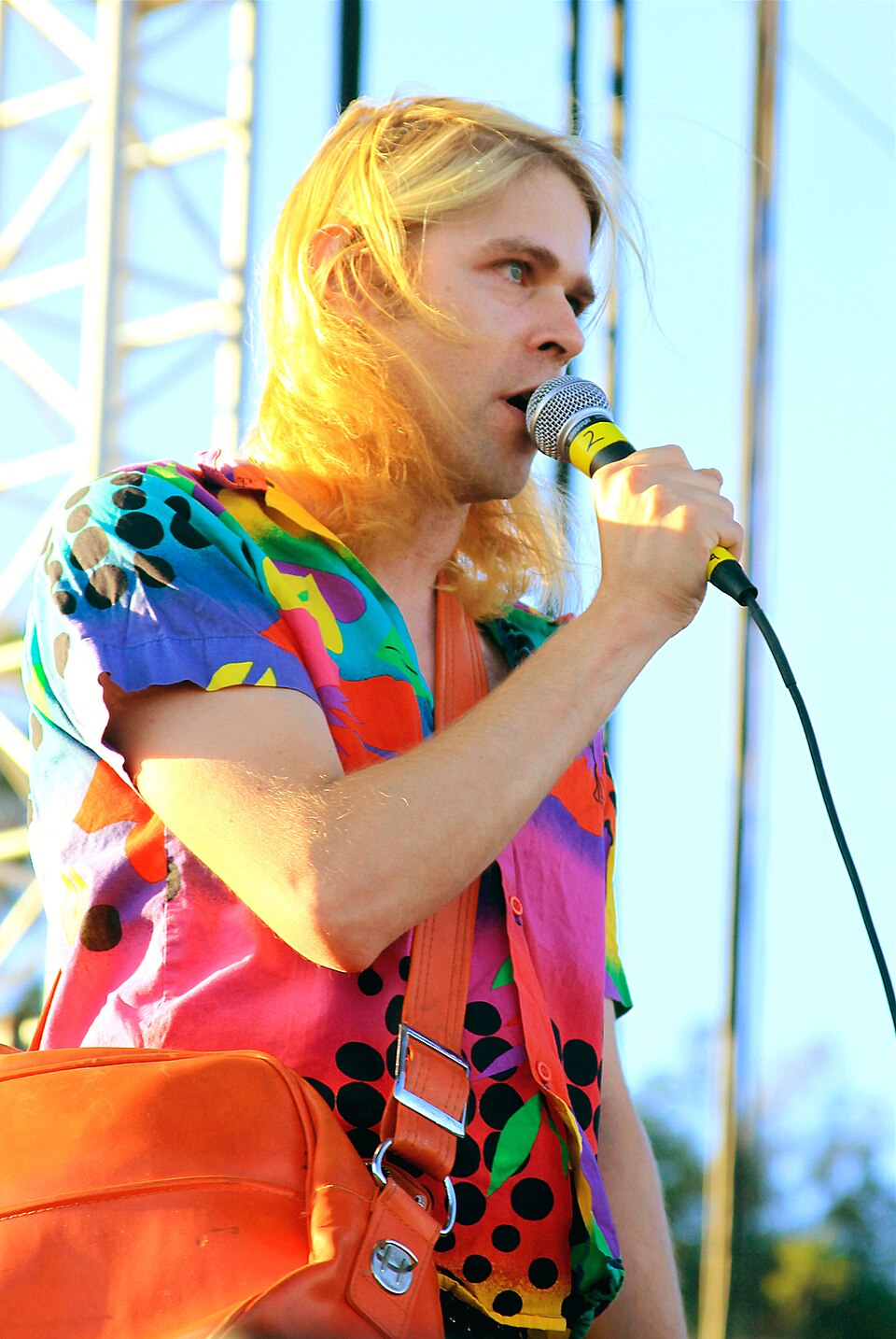
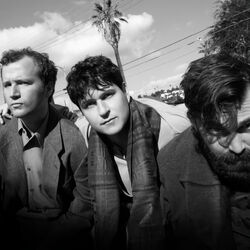
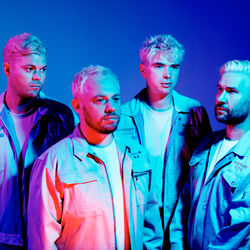
The throughline running from Bowie's persona-driven glam through Britpop's own art-school wing and into a generation of 2010s guitar bands who kept the theatrical instinct alive.




Chamber and baroque pop
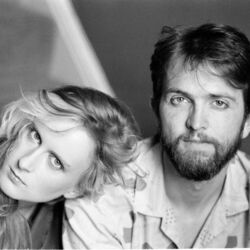
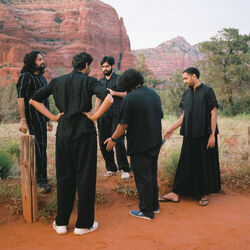
Artists working with orchestration, arrangement, and collective studio-craft rather than glam persona — sophisti-pop yearning, psych-pop collectives, and collage-built records built more like compositions than performances.

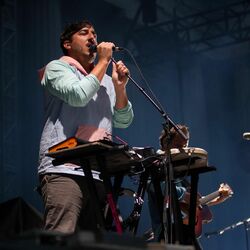



Confessional art-pop
Singer-songwriter intimacy stretched into art-pop's structural and production ambition — the confessional lyric kept, the plain-folk arrangement discarded.

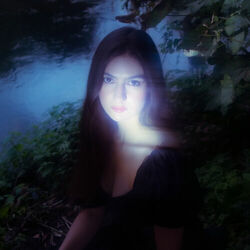

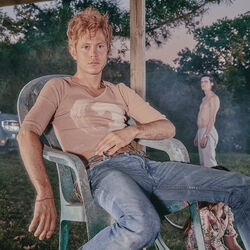
Electronic art-pop
The genre's largest and most contemporary wing — production-forward avant-pop where the studio isn't just a tool but the entire compositional starting point.