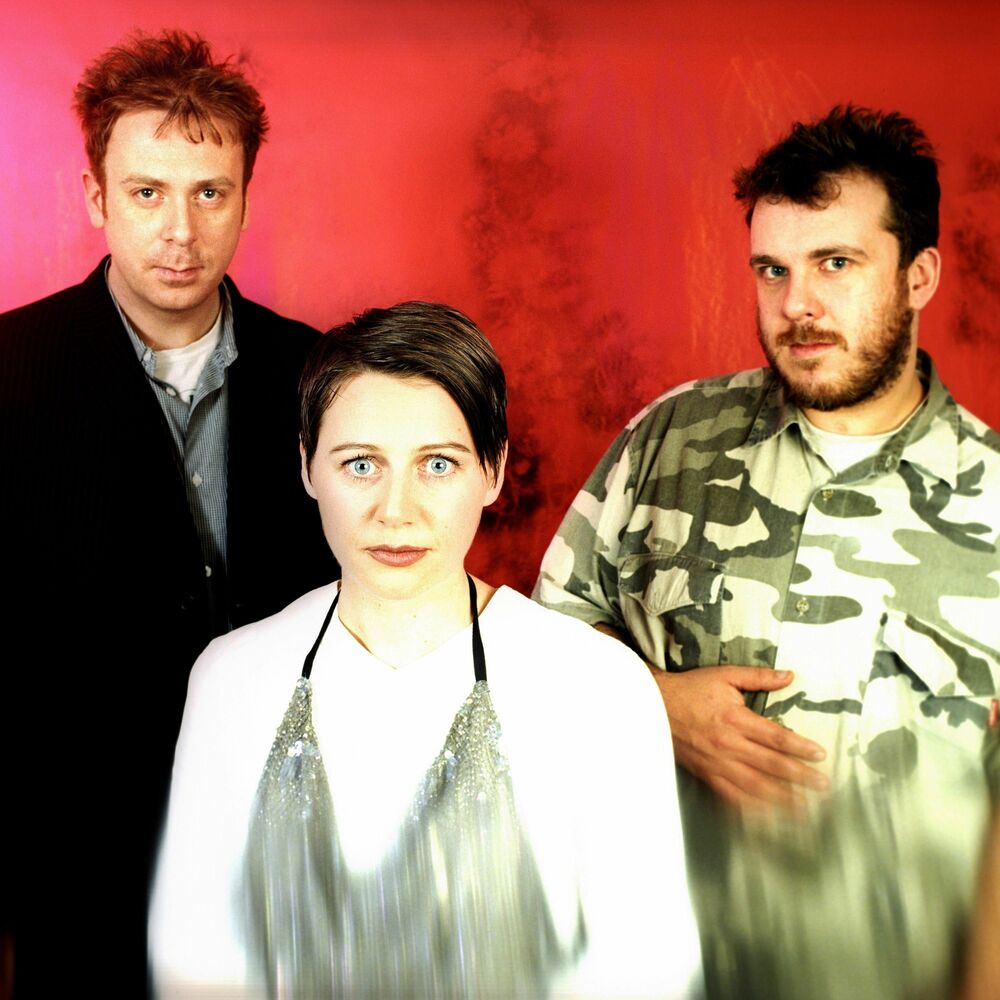
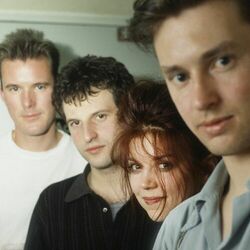
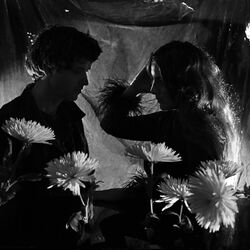
Pictured: Cocteau Twins
← Today’s issueThe daily of where sound came fromp. 24
Born 1984 · Cocteau Twins, Treasure
Dream pop
A hazier, more melodic sibling to shoegaze — reverb-drenched guitars, unhurried tempos, and vocals that float clear of the mix instead of drowning in it. Where shoegaze buries the voice in noise, dream-pop keeps it legible, just distant, like something heard underwater or half-remembered from a dream.
See it on the map →How it started



The sound predates the name. Nico's solo records in the early 1970s already had the chilled, cavernous quality the genre would later chase, and This Mortal Coil's 4AD art-project covers treated the studio itself as an instrument. But the term dates to 1984, when Cocteau Twins' Treasure paired Elizabeth Fraser's wordless, glossolalic vocals with Robin Guthrie's chorus-soaked guitar washes — voice as texture, lyrics as an afterthought.
I liked all the early punk—Buzzcocks, the Pistols and The Clash, before it all went commercial.
By the late 1980s the style had split into two audiences: a jangly, hook-forward wing (The Sundays) and a heavier, more abrasive one that would break off entirely into its own genre. Shoegaze is dream-pop's loudest descendant — the same haze turned up past the point of comfort — and it gets its own telling elsewhere on this site.
Essential records
Start here
Heaven or Las Vegas
 Cocteau Twins1990
Robin Guthrie's guitar — treated with chorus, reverb, and delay until individual notes bloomed into clouds of harmonics — constructed an entirely self-contained sonic environment around Elizabeth Fraser's voice. Fraser's vocals on the title track and 'Iceblink Luck' approach pure texture, her syllables more impressionistic sound than language, though the emotional communication remains visceral and specific. It stands as the fullest realization of dream-pop's central premise: that atmosphere itself can carry emotional weight without narrative support.
No. 2
Teen Dream
 Beach House2010
Victoria Legrand and Alex Scally recorded Teen Dream after three years developing their approach in near-total obscurity, and the album sounds like something perfected in private — every reverb tail exactly calibrated, every drum pattern precisely weighted between the deliberate and the hypnotic. 'Norway' and 'Used to Be' demonstrate Legrand's gift for vocals that seem to be remembering something rather than addressing the listener directly; 'Silver Soul' became the band's most replayed track in the decade that followed. It made Beach House unavoidable for everyone who built their record collection around Mazzy Star and the Cocteau Twins.
No. 3
So Tonight That I Might See
 Mazzy Star1993
Hope Sandoval's voice — barely more than a murmur against Dave Roback's orchestral production — is what makes this record unlike anything else in the dream-pop tradition: the volume of both vocals and accompaniment turned down so low that the emotional effect concentrates rather than dissipates. 'Fade into You' is a seven-minute wash of reverb and half-breathed delivery that has appeared in more film soundtracks than any other song from the era. The album invented a distinct subgenre — intimate, immersive, nocturnal — that runs from Grouper to Weyes Blood.
No. 4
Souvlaki
 Slowdive1993
Produced with Mark Freegard specifically to achieve clarity rather than noise, Souvlaki sounds cleaner and more spatial than Loveless — the guitars dry enough that individual chord voicings register rather than smearing into each other. 'Alison' and 'Souvlaki Space Station' demonstrate the band's gift for melody unobscured by effects; Brian Eno's contribution on three tracks pushed the album beyond conventional shoegaze into textural experimentation. Pitchfork's retrospective reassessment effectively launched the shoegaze revival of the mid-2000s.
No. 5
On Fire
 Galaxie 5001989
On Fire moves at a hushed, unhurried pace, built from simple chord changes and Dean Wareham's plaintive, untrained vocal floating over reverb-drenched guitar. The record's patience and minimalism ran directly against the noisier American underground surrounding it at the time, drawing instead on the quiet, self-titled third Velvet Underground album and Jonathan Richman's Modern Lovers as templates. Nothing on the record reaches for a hook in any conventional sense, trusting mood and repetition instead. It became the direct template for the slowcore lineage that followed, a debt Low and others have credited by name.
No. 6
It'll End in Tears
 This Mortal Coil1984
Ivo Watts-Russell assembled This Mortal Coil as a 4AD collective, inviting rotating vocalists to perform covers chosen for their resonance with the label's aesthetic — the result is less a record than a sustained mood, each track bleeding into the next in an atmosphere of tenderness and grief. The cover of Tim Buckley's 'Song to the Siren' — sung by Elizabeth Fraser — is one of the most haunting recordings in the 4AD catalog, her voice stretching over reverb-soaked arrangements so spacious the song seems to be happening at a great distance. It established 4AD's sonic identity — fragile, reverberant, emotionally extreme — more completely than any single artist release.
No. 7
Clinging to a Scheme
 The Radio Dept.2010
Clinging to a Scheme blurs guitar fuzz and drum-machine rhythm into something closer to atmosphere than conventional song structure, letting melodies surface through the haze rather than announcing themselves. "Heaven's on Fire" is the clearest moment of that balance, its warm, driving pulse carrying a vocal that stays hushed even as the track builds toward something close to euphoria. The album folds in samples of political speech elsewhere, a reminder that the band's dreaminess was never entirely apolitical. It remains the record that took the Radio Dept. from a cult Swedish act to a genuinely internationally cited one.
No. 8
Blue Rev
 Alvvays2022
Alvvays made their most sonically ambitious record by adding more noise — the guitars louder and more distorted than on their first two albums, but the melodic architecture underneath is stronger too, as if the band calculated exactly how much abrasion the hooks could absorb. 'Belinda Says' opens with a guitar figure and vocal melody that each complete and complicate the other; 'After the Earthquake' is the closest the band has come to pure noise-pop, its central riff buried under enough feedback to qualify as wall-of-sound. Molly Rankin's voice remains the record's constant — clear and almost conversational above the distortion, a technical feat that few vocalists in guitar music have matched.
Who plays it
The founding hush
Dream-pop's first generation, working before the genre had settled into a single sound — from Nico's icy chamber-drone to Cocteau Twins' glossolalia to the Sundays' sunlit jangle, and Japan's Fishmans building an entirely parallel version of the same idea.
Into shoegaze
The point where dream-pop's haze turns to noise. These artists carry both tags in the map, and most of them get fuller treatment on shoegaze's own page — this is just where the two genres actually overlap.



Pop-facing dream-pop
Artists who kept the atmosphere but foregrounded the song — clearer hooks, steadier structure, the haze as mood rather than the entire point.



Where dream-pop blurs
Artists who use dream-pop as one ingredient among several — gothic Americana, chamber-pop, no-wave noise, slowcore, hyperpop-adjacent production — rather than as a home genre.



Where it came from, where it went
- Garage rock1963
- Proto-punk1967
- Punk1976
- Post-punk1978
- Dream pop1984
- Where it went