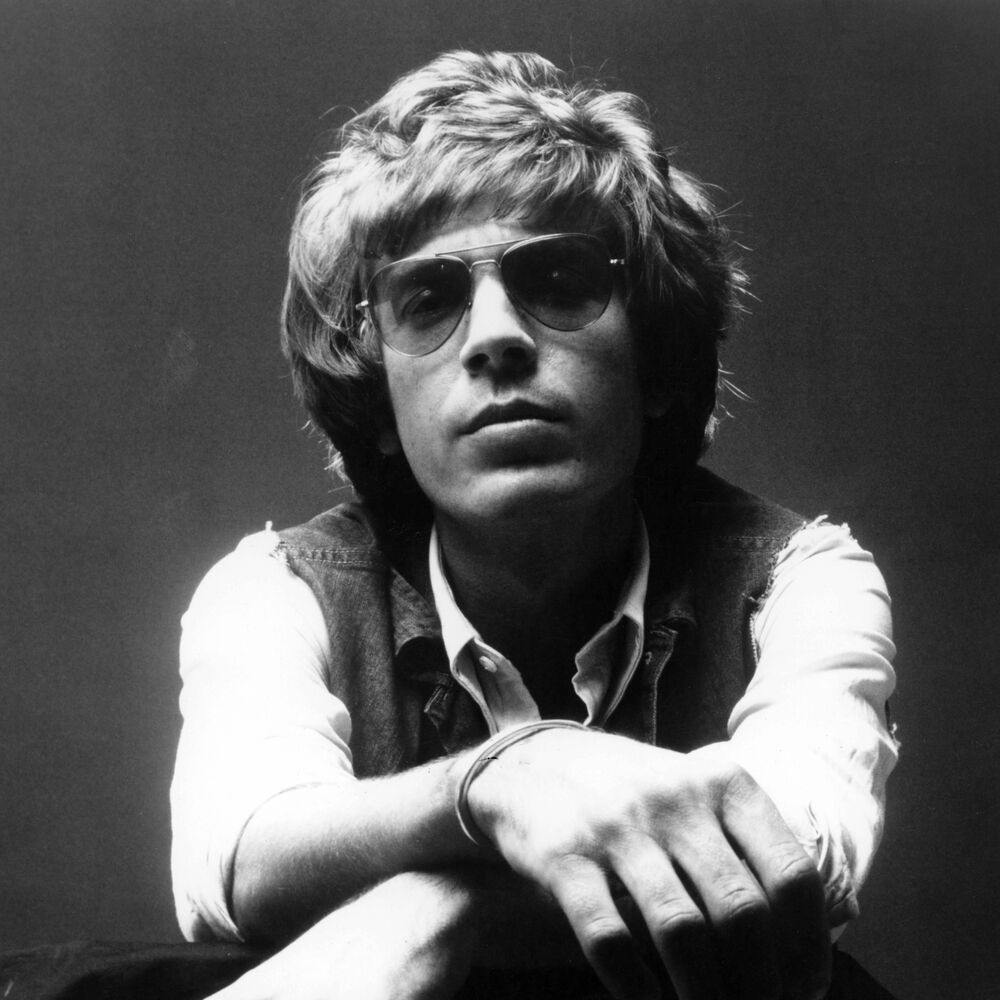
Pictured: Scott Walker
← Today’s issueThe daily of where sound came fromp. 84
Born 1996 · Stereolab and the Olivia Tremor Control
Experimental pop
Pop songcraft used as a container for whatever the artist actually wants to do with it — collage, noise, extreme production manipulation, structural left turns — without ever quite abandoning the hook. Experimental-pop keeps pop's basic promise of a memorable melody while breaking almost every other rule around it.
See it on the map →How it started



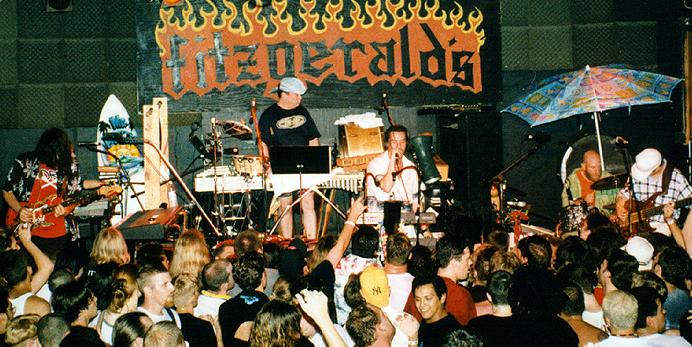
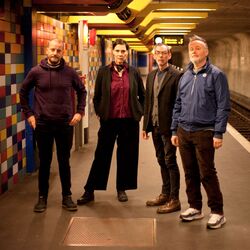
Silver Apples, building entire 1968 pop songs out of homemade oscillators years before synthesizers were an off-the-shelf instrument, is the genre's clearest early ancestor — melody and hook fully intact, the actual sound source almost unrecognizable as a rock band. But the term itself dates to the mid-90s, when Stereolab's lounge-and-krautrock collage and the Olivia Tremor Control's tape-loop maximalism (both get fuller tellings elsewhere on this site) proved a pop song could survive almost any amount of studio interference.
That and Aphex Twin really changed the course of my musical life.
Animal Collective picked up that same instinct in the 2000s, wrapping genuinely strange, layered production around real, often gorgeous melodies, and a more recent, internet-native generation — Jockstrap's genre-splicing production, Kero Kero Bonito's hyper-bright maximalism, yeule's glitch-damaged intimacy — has kept pushing the same basic bargain into stranger territory since.
Essential records
Start here
Merriweather Post Pavilion
Merriweather Post Pavilion layers dense, synthesizer-heavy production under vocal hooks catchy enough to anchor the whole record. "My Girls" builds a warm, pulsing bassline into a wash of overlapping vocal harmonies, the arrangement's density never burying the song's genuine emotional directness — a plainspoken statement about wanting security for a family. The album balances the band's experimental instincts with an accessibility their earlier, noisier records had mostly avoided. It became the record most responsible for bringing Animal Collective's dense, freak-folk-inflected electronic pop to a much wider audience.
No. 2
Dots and Loops
 Stereolab1997
Recorded partly with Tortoise's John McEntire, Dots and Loops pushed Stereolab's motorik pulse into more electronic, sample-based territory, replacing walls of guitar with marimba, vibraphone, and stuttering drum-machine loops. 'Miss Modular' glides on a bossa-nova-inflected groove that barely resembles the band's earlier records, while the seventeen-minute closer 'Refractions in the Plastic Pulse' stretches that same patience into something closer to ambient jazz. 'Diagonals' compresses the same instincts into a tighter, almost radio-friendly shape. It marked Stereolab's fullest crossover into the post-rock world that Tortoise and their Chicago peers were then defining.
No. 3
Dusk at Cubist Castle
Dusk at Cubist Castle alternates fully arranged pop songs with disorienting tape-collage interludes, treating melody and noise as tools from the same box rather than opposing instincts. "Jumping Fences" leans into the pop side of that equation, its bright, layered harmonies carrying real 1960s psych-pop craft even as the production stays gleefully lo-fi. The album's structure — song, then experiment, then song again — makes the whole record feel like a single continuous experience rather than a sequence of tracks. It stands as one of the most complete statements of the Elephant 6 collective's dual love of pure pop and genuine sonic strangeness.
No. 4
Fabulous Muscles
 Xiu Xiu2004
Fabulous Muscles pairs Jamie Stewart's most unflinching lyrics yet with arrangements that swing between skeletal electronics and sudden orchestral swells, never settling into a single texture for long. "I Luv the Valley OH!" carries that contrast at its most extreme, a tender, almost childlike melody set against lyrics that confront trauma and desire with total directness. The production throughout stays raw enough that nothing feels aestheticized or safely distanced from its subject matter. It remains the album most responsible for establishing Xiu Xiu's reputation as one of experimental pop's most confrontational and influential voices.
No. 5
I Love You Jennifer B
 Jockstrap2022
I Love You Jennifer B keeps swinging between Georgia Ellery's tender, string-laden songwriting and Taylor Skye's glitchy, maximalist production, often within the same song rather than across separate tracks. "Concrete Over Water" carries that tension especially clearly, its plaintive vocal melody riding a bed of production that keeps threatening to overwhelm it before pulling back at the last moment. The album never resolves the friction between its two halves, treating that instability as the whole point rather than a flaw to smooth over. It remains one of the most distinctive debuts to come out of its scene precisely because it refuses to sound like anyone else in it.
No. 6
Silver Apples
 Silver Apples1968
Built entirely from Simeon's homemade oscillator rig and Danny Taylor's steady, near-martial drumming, Silver Apples sounds like a rock record beamed in from a future nobody else had reached yet. "Oscillations" opens the album on a burbling, insistent pulse that functions as both melody and rhythm section — a sound with no real analog in 1968 outside experimental electronic music. "Program" pushes the duo's minimalism further, letting repetition stand in for the hooks a conventional band would have reached for. It's a record built from constraint — two men, one drum kit, one bank of oscillators — that still sounds stranger than most music made with unlimited resources.


Who plays it
Studio-as-instrument originators
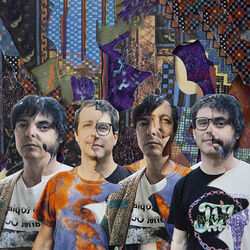
Silver Apples built the template decades before the genre had a name; Xiu Xiu, Animal Collective, and Julia Holter each found their own way to wrap genuinely strange production around real melody.


The 21st-century pop-collage generation
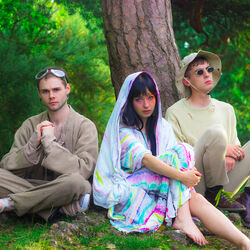
A younger, hyper-online generation pushed the same bargain toward glitch, genre-splicing, and hyper-bright maximalism.


Where it came from, where it went
- Psychedelic pop1966
- Experimental pop1996
Nothing on the map has grown out of it yet.