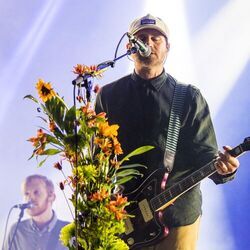
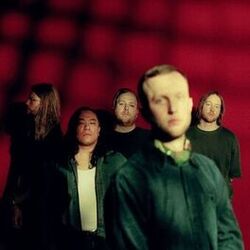
Pictured: Rites of Spring
← Today’s issueThe daily of where sound came fromp. 48
Born 1994 · Sunny Day Real Estate, Diary
Emo
Post-hardcore's melodic, confessional turn — the same DC-and-Dischord DNA, redirected from political anger toward something more personal and unguarded. Emo traded post-hardcore's clenched-fist tension for open emotional vulnerability, often over the same basic chord voicings.
See it on the map →How it started
 Rites of Spring1984
 Cap'n Jazz1989
 Sunny Day Real Estate1992
 Far Apart1995
 Jeff Rosenstock1995
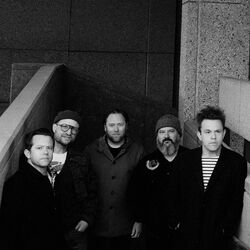 The Get Up Kids1995
Rites of Spring's 1985 Dischord EP is retroactively cited as the genre's true starting point — hardcore's speed and intensity turned toward heartbreak and vulnerability instead of politics — but the name itself didn't stick until Sunny Day Real Estate's Diary in 1994, an album that gave the emotional intensity a more melodic, less hardcore-indebted sound.
I collected Buzzcocks and Wire singles and early Scritti Politti.
A whole second generation grew up around Champaign-Urbana and Chicago in the mid-90s — American Football and Cap'n Jazz chief among them — building a specific, twinkly-guitar variant that would eventually earn its own name, midwest emo, and its own page on this site. This page stays with emo more broadly: its DC origins, its Diary-era self-definition, and the wider 2000s scene that grew out of both.
Essential records
Start here
Diary
Diary takes post-hardcore's structural tension and points it toward open catharsis instead of controlled restraint. "Seven" builds from a hushed, searching verse into a chorus where Jeremy Enigk's voice cracks open completely, the interlocking guitars of Enigk and Dan Hoerner swelling to match. Nate Mendel and William Goldsmith's rhythm section gives the songs a physical weight that keeps the emotional intensity from ever feeling indulgent. It's now regarded as one of the founding records of what would come to be called emo's second wave.
No. 2
Rites of Spring
 Rites of Spring1985
Rites of Spring takes hardcore's urgency and turns it inward, trading political fury for something closer to open vulnerability. "For Want Of" builds around Eddie Janney's melodic, almost jangling guitar lines while Guy Picciotto's vocals swing between a hardcore bark and something closer to a confession. The band broke up within about a year of forming, leaving this self-titled record as their only real statement. It's now credited, somewhat against Picciotto's own wishes, as the record where emo as a genre effectively begins.
No. 3
American Football
American Football trades the hardcore urgency of the band members' earlier projects for something quieter and more intricate: twinkling, interlocking guitar lines, jazz-inflected chords, and trumpet drifting through the mix. "Never Meant" builds a whole song out of a single conversational guitar figure, Mike Kinsella's plainspoken vocal sitting almost shyly in the mix rather than out front. The band broke up shortly after its release, with little sense the record would be remembered. Rediscovered over the following decade, it became one of the most quietly influential albums in the midwest-emo and "twinkly" post-rock scenes that followed.
No. 4
Something to Write Home About
 The Get Up Kids1999
Something to Write Home About takes emo's emotional directness and pairs it with hooks big enough to work on rock radio without losing any of the genre's urgency. "Action & Action" rides a driving, straightforward riff into a chorus built for a room singing along, Matt Pryor and Jim Suptic's dual vocals trading the emotional weight back and forth. The record's polish never comes at the expense of its intensity. It became one of the defining albums of emo's more melodic, pop-facing second wave, and one of the releases that helped define Vagrant Records' identity.
No. 5
The Devil and God Are Raging Inside Me
 Brand New2006
The Devil and God Are Raging Inside Me abandons the pop-punk hooks of Brand New's earlier records for something considerably darker and stranger. "Jesus Christ" builds a hushed, almost hymn-like verse into a chorus wrestling openly with guilt and mortality, Jesse Lacey's voice sounding genuinely unsettled rather than performing distress. The arrangements throughout favor dynamic tension over immediate catchiness, letting songs unfold rather than resolve quickly. It remains the record most credited with pushing 2000s emo toward greater ambition and darker subject matter.


Who plays it
The founding wave
The two records that define the genre's before-and-after: Rites of Spring's raw hardcore-turned-confessional EP, and Sunny Day Real Estate's Diary, the album that gave the sound its name.
The midwest emo wing
A specific, twinkly-guitar Midwestern strand grew up alongside and after the DC originators — American Football and Cap'n Jazz are its best-known names, and get a fuller telling once midwest emo has its own page. This is everything else emo grew into once the sound spread beyond DC: 2000s mainstream emo, DIY punk crossover, and the genre's heavier, more recent turns.