
Pictured: David Bowie
← Today’s issueThe daily of where sound came fromp. 108
A family of sounds
Electronic
Sixty years of artists who share almost nothing sonically — Silver Apples' homemade oscillators, Kraftwerk's man-machine minimalism, Depeche Mode's stadium synth-pop, Burial's submerged 2-step, and SOPHIE's deliberately painful hyperpop have no single "electronic sound" running between them. What actually unifies the 61 artists below is a changing relationship to the tools themselves — the instrument keeps getting reinvented, and each reinvention pulls the music in a completely different direction.
See it on the map →How it started

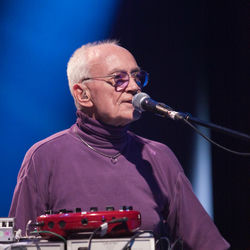
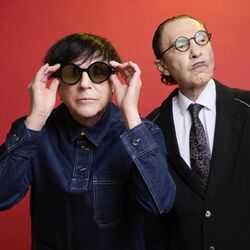

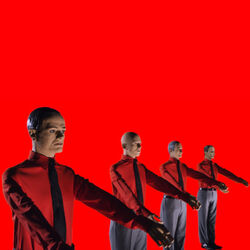
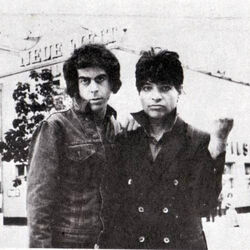
Electronic music's earliest chapter here is a story of people building the instrument before there was one to buy off a shelf — Silver Apples' Simeon Coxe wired together a homemade bank of oscillators by hand, Suicide made a synthesizer and a drum machine sound like a threat rather than a novelty, and Kraftwerk, working in Düsseldorf, made the machine itself the actual subject of the music rather than a texture layered over a rock band. Cabaret Voltaire, coming out of the same industrial moment in Sheffield, treated tape manipulation as a compositional tool in its own right — cutting, looping, and collaging sound the way a guitarist would play a riff.
I think he's probably been my idol since I was a kid.
From there the same underlying technology split into directions that barely speak to each other: synthesizers and drum machines went mainstream, turning into standard chart-pop equipment across four decades (Gary Numan and Depeche Mode's stadium runs, a 2010s–2020s generation picking the same gear back up as a deliberate throwback); the sampler, borrowed wholesale from hip-hop and dub, built an entirely separate lineage running through trip-hop's cinematic gloom, IDM's headphone-listening complexity, and a run of 2000s dance-punk bands who plugged a dancefloor's rhythm section into guitar music instead of replacing it; and, most recently, a laptop and a DAW made the whole question of equipment moot. Every one of those directions has its own fuller page in this map — synth-pop, ambient, industrial, krautrock, IDM, hyperpop, trip-hop, and drone among them — even though the tree's actual parent-child pointers run through krautrock rather than through this page directly; this one is the trunk they all ultimately trace back to, whatever the literal lineage strip above shows.
Essential records
Start here
Trans-Europe Express
 Kraftwerk1977
Kraftwerk built an entire electronic vocabulary from synthesizers, vocoders, and drum machines alone, imagining a gleaming, mechanized Europe as the album's organizing metaphor. The title track's motorik pulse and deadpan vocal delivery became a foundational reference point for synth-pop, techno, and hip-hop alike — Afrika Bambaataa lifted its melody wholesale for 'Planet Rock.' 'Showroom Dummies' extends the band's man-machine conceit into something genuinely funny and genuinely eerie at once. Few albums have shaped as many unrelated genres as thoroughly as this one.
No. 2
Selected Ambient Works 85–92
 Aphex Twin1992
Selected Ambient Works 85–92 collects tracks Richard D. James made largely alone, over several years, before electronic music had many established ambient conventions to draw on. "Xtal" opens the record on a hazy, pitched-vocal loop over a soft breakbeat, setting a tone — melodic, slightly melancholy, unhurried — that the rest of the album maintains without repeating itself. "Ageispolis" and "Green Calx" show the same instincts pushed into stranger, more abstract territory. Decades on, it still functions as a kind of entry point for ambient techno, precise and personal in a genre that can otherwise feel anonymous.
No. 3
Suicide
 Suicide1977
Suicide's debut strips rock and roll to a drum machine pulse, a two-note synth line, and Alan Vega's voice — and somehow the result feels more menacing than anything built from guitars. "Ghost Rider" compresses the whole aesthetic into three minutes of monotone dread, Vega repeating the title like a threat rather than a lyric. "Frankie Teardrop" pushes the same minimal palette to a ten-minute extreme, a bare account of a man's collapse that ends in unscripted-sounding screams. It's a genuinely frightening record, made with almost no equipment, that still unsettles decades on.
No. 4
Homogenic
 Björk1997
Homogenic pairs sweeping, Icelandic string arrangements with hard, distorted electronic beats, the two elements meeting in a way few other pop-adjacent records of the era attempted. "Jóga," written for a friend and doubling as a tribute to Iceland's landscape, builds from a spare string figure into a genuinely overwhelming climax without ever raising its emotional register into melodrama. "Bachelorette" and "Pluto" show the album's range, one grandly orchestral, the other closer to industrial noise. It's widely considered the moment Björk's various interests — classical arrangement, electronic programming, deeply personal songwriting — resolved into a single, fully coherent artistic identity.
No. 5
Music Has the Right to Children
 Boards of Canada1998
Music Has the Right to Children sounds like a childhood half-remembered — warm analog synths deliberately detuned and wobbling, drum patterns that shuffle rather than snap, samples of children's voices surfacing and receding without context. "Roygbiv" is the clearest distillation, a short, major-key piece built from a simple bassline and a haze of pitch-bent chords that manages to feel both comforting and faintly wrong. "Aquarius" pairs a stuttering vocal sample with one of the duo's most memorable melodic hooks. The album's specific brand of hazy, nostalgic dread became one of the most widely imitated textures in electronic music over the following decade.
No. 6
Untrue
 Burial2007
Untrue takes the vinyl crackle, pitched-up vocal samples, and skeletal 2-step rhythms of Burial's debut and turns them into something closer to pop songwriting, without sacrificing any of the fog the earlier record was built from. "Archangel" is the clearest case — a chopped, helium-pitched vocal sample looped over a slow, melancholic beat that somehow reads as genuinely emotional rather than as a production trick. "Ghost Hardware" and the title track extend the same palette into more skeletal, unresolved territory. It's a record that made isolation and bad weather sound like a legitimate genre unto itself, and a good deal of the UK bass and ambient-adjacent music that followed still carries its influence.
No. 7
Rounds
 Four Tet2003
Rounds is built from warm, granular samples — plucked strings, flute-like tones, found percussion — arranged with a clarity and warmth that set Kieran Hebden apart from the colder end of British electronic music at the time. "She Moves She" layers a simple vocal fragment and a loose, almost live-sounding beat into something that feels handmade despite being entirely programmed. "Hands" and "Spirit Fingers" show the same instinct for turning small, organic-sounding fragments into a full arrangement without the seams showing. The album's blend of acoustic warmth and electronic structure gave a name and a real audience to what critics were already calling folktronica.
No. 8
Swim
 Caribou2010
Swim is the record where Dan Snaith pushed Caribou's sound toward the dancefloor without abandoning the melodic, slightly wistful songwriting that had defined his earlier work as Manitoba and early Caribou. "Odessa" opens the album on a squelchy, rubbery bassline and a vocal melody that stays plaintive even as the rhythm section insists on movement. "Sun" pushes the same tension further, a repeated vocal loop riding an increasingly heavy, physical groove. Snaith has said he built the record around the specific sound of vocals and instruments processed to feel like they were recorded underwater, and that idea holds the album together as much as any single track does.
No. 9
Arca
 Arca2017
Arca's self-titled third album is her most vocally driven record, built around operatic, often multi-tracked singing in Spanish rather than the purely instrumental abstraction of her earlier work. "Piel" pairs a fragile, exposed vocal melody with production that keeps threatening to dissolve underneath it, tension between voice and instability running through the whole song. "Anoche" and "Reverie" apply the same approach at different emotional registers, one more urgent, the other closer to lullaby. It's the record where Arca's structural interest in collapse and reformation became explicitly personal rather than purely sonic.
No. 10
Replica
Replica is built almost entirely from sampled television advertisements — jingles, spoken fragments, canned emotional cues — slowed, pitched, and layered until the original source material becomes unrecognizable as commerce and starts to feel like memory. "Sleep Dealer" loops a warm, melancholic vocal fragment over a queasy, shifting bed of tones that never resolves into a conventional chord progression. "Andro" and "Nassau" work the same technique at different speeds, one hypnotic and slow-moving, the other more agitated. The album's central idea — that advertising's discarded emotional language could be repurposed into something genuinely affecting — became one of the more influential moves in 2010s ambient and experimental music.

Who plays it
From homemade oscillators to the chart machine, 1968–2024
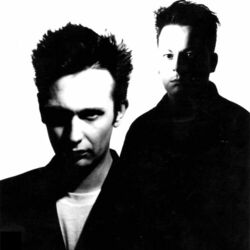
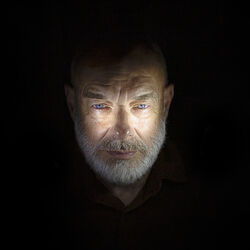
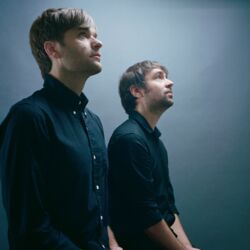
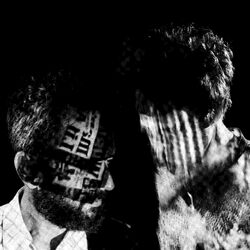
Kraftwerk making the synthesizer the entire subject of the music rather than a texture on top of it, Silver Apples and Suicide building their own oscillator rigs because nothing you could buy did what they wanted, and Cabaret Voltaire treating tape as a compositional material — then three-plus decades of the same instrument settling into standard chart-pop equipment, from Gary Numan and Depeche Mode's stadium runs to a 2010s–2020s generation picking the same synthesizers back up as a deliberate throwback.







The sampler and the dancefloor, 1988–2010s
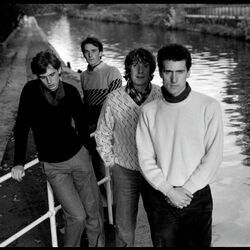
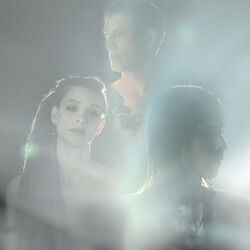
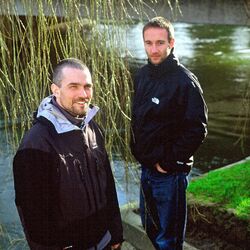
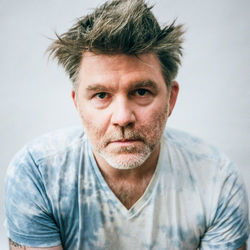
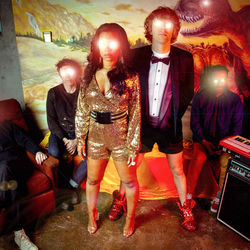
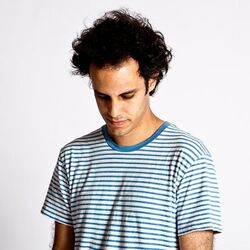
A different tool entirely — the sampler and the drum machine, borrowed wholesale from hip-hop and dub — running through genres that share equipment but rarely a mood: trip-hop's cavernous, dub-soaked productions (Massive Attack, Portishead, Tricky, Sneaker Pimps), IDM's headphone-only rhythmic complexity (Aphex Twin, Autechre, Boards of Canada, Squarepusher, Burial), and a run of rock and post-punk bands who plugged a dancefloor's rhythm section into guitar music rather than replacing it (LCD Soundsystem, !!!, The Rapture, Four Tet, Caribou).







Ambient, drone, and the room as instrument
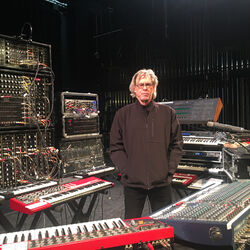
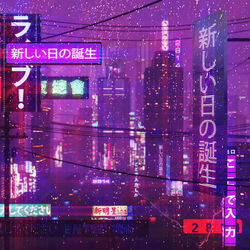
A third tool that isn't really a machine at all so much as an absence of rhythm — treating duration, reverb, and near-silence as the actual instrument. Harold Budd and Steve Roach's 1980s ambient records, Tim Hecker and Stars of the Lid's physically overwhelming drone, Grouper's tape-hissed bedroom recordings, and Oneohtrix Point Never and vaporwave duo 2814 pulling the same idea through a laptop instead of a mixing desk.


The bedroom becomes the studio: hyperpop, PC Music, and the DAW generation
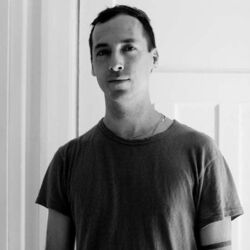
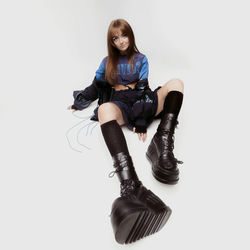
This realm's largest and most recent wave, unified by one fact rather than a sound: a laptop and a DAW replaced the need for a studio, a label, or even a band. SOPHIE and PC Music's early-2010s circle (A.G. Cook, 100 gecs, Charli XCX) pushed pitch-correction and clipping into the foreground instead of hiding them; a wider art-electronic generation (Björk, Imogen Heap, FKA twigs, Sheena Ringo, Kero Kero Bonito, Arca, Caroline Polachek, Oklou) used the same production toolkit for pop rather than provocation; and Panchiko, The Radio Dept., and Jockstrap carried an identical bedroom-laptop approach into genres — shoegaze, dream-pop, art-pop — that aren't primarily "electronic" at all.












Where it came from, where it went
- Electronic
Nothing on the map came before it: this is where its road starts.
Nothing on the map has grown out of it yet.