
Tap any face to see why they're in the photo

Who shaped them

The CurePhoto: Raph_PH · CC BY 2.0

The Cure

Since 1978 · United Kingdom

Robert Smith has been doing one of the more peculiar things in pop music for nearly five decades… Their story

See them on the map

Press ▶︎ to play

Loading…

It really plays! Press the middle

Who they shaped

Behind them, left to right: Nick Drake, Can, The Clash, David Bowie, Buzzcocks, Siouxsie & The Banshees, Sex Pistols.

In front, left to right: Converge, Sharon Van Etten, The Shins, Destroyer, Ariel Pink, Deftones, Low, Ride, Mogwai, Slowdive, Xiu Xiu, The Mountain Goats. And 4 more: Superchunk, Cat Power, The Cranberries, The Rapture.

The bigger the face, the stronger the proof: they said it themselvesreporteda critic, or widely accepted

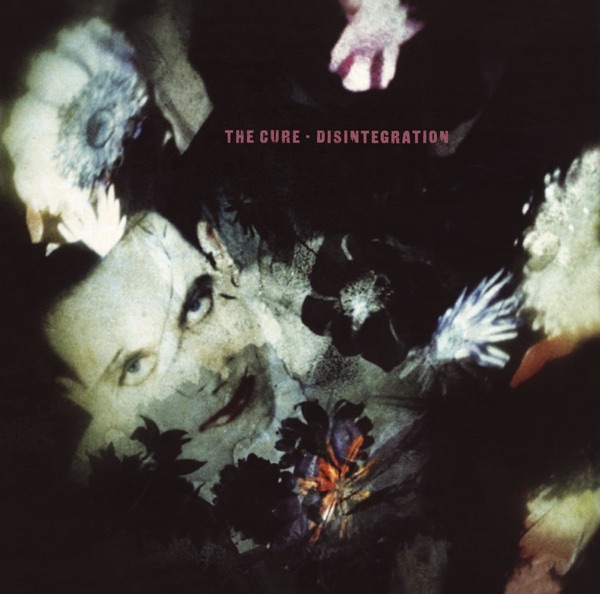
Disintegration cover

Start here

Disintegration (1989)

The album where the Cure's layered guitar aesthetic reached its fullest expression — Smith's acoustic and electric parts multiplied and panned into a shimmering density that fills the stereo image completely. 'Plainsong' opens with a synthesiser swell that takes ninety seconds to resolve into a song; 'Lovesong,' the closest the record comes to pop, reached number one in America against all odds. Disintegration defined an entire aesthetic register — big, sorrowful, beautiful — that the shoegaze generation built upon.

Sleeve notes

The Cure

Disintegration · 1989

Robert Smith has been doing one of the more peculiar things in pop music for nearly five decades: maintaining a recognizable, emotionally coherent artistic persona across a bewildering range of styles, from the angular post-punk of Three Imaginary Boys (1979) to the eight-minute gothic anthems of Disintegration (1989) to the pop gleam of Kiss Me Kiss Me Kiss Me (1987), without any of it feeling discontinuous. The Cure's secret is that Smith's voice — its liquid self-pity, its specific timbre of wounded romanticism — is consistent even when the arrangement around it changes entirely.

Pornography (1982) remains the hardest record in the catalog: a wall of distortion and despair that influenced an entire school of shoegaze and gothic doom. The Head on the Door (1985) pivoted to something more approachable without any real loss of intensity. Disintegration found the balance: orchestral, melancholic, genuinely sad, and also full of songs that have played at proms for thirty years. There is no other band quite like them.

Since 1978 · United Kingdom