
Pictured: Talk Talk
← Today’s issueThe daily of where sound came fromp. 68
Born 1991 · Talk Talk's Laughing Stock and Slint's Spiderland; Simon Reynolds coined the term in 1994
Post-rock
Rock instrumentation used to build long, largely instrumental compositions that borrow structure from classical music or electronic production rather than the verse-chorus song. Post-rock's origin story is genuinely contested — two very different 1991 albums, and a critic's term coined three years later reviewing neither of them.
See it on the map →How it started


Talk Talk's Laughing Stock and Slint's Spiderland both arrived in 1991, from opposite directions — Talk Talk had spent the 1980s as an increasingly art-damaged pop band before dissolving into something closer to free-form chamber music, while Slint (whose own fuller story belongs to post-hardcore's page) built something tense and math-rock-adjacent out of hardcore's leftover intensity. Neither record used the words "post-rock," and neither band stuck around to see what came next.
Drake was inspirational to me in thinking about the simplicity and about creating something that has genuine power and truth in it, with very simple means.
Simon Reynolds coined the actual term in 1994, reviewing Bark Psychosis's Hex — a British band self-consciously building on exactly the two records above. From there the genre split into a few real camps: a Montreal-centered, string-and-crescendo school around Godspeed You! Black Emperor; a widescreen, festival-friendly mode (Mogwai, Sigur Rós, Explosions in the Sky) that's probably what most listeners picture when they hear the term; and a more rhythmic, jazz-inflected strand (Tortoise) that owes as much to krautrock and dub as to Talk Talk.
Essential records
Start here
Laughing Stock
 Talk Talk1991
Laughing Stock treats silence as seriously as sound, built from extended improvised sessions edited down into spacious, unhurried pieces that rarely resemble conventional songs at all. "New Grass" drifts through shifting instrumental textures — organ, guitar, brushed drums — that seem to arrive and recede according to their own logic rather than any verse-chorus structure. Mark Hollis's hushed, fragmentary vocal treats words as just another texture in the mix rather than the song's focus. Barely noticed at the time, it's now recognized as one of the direct sources of the entire post-rock movement that followed it.
No. 2
Spiderland
 Slint1991
Spiderland moves at the pace of a held breath: long stretches of quiet, interlocking guitar figures suddenly broken by eruptions of noise that feel less like choruses than controlled detonations. "Good Morning, Captain" builds a spoken-word narrative of guilt and drowning toward a final scream that remains one of the most viscerally effective moments in American underground rock. Brian McMahan's murmured vocals and David Pajo's spidery guitar lines create a sense of narrative dread the band never has to spell out. Barely noticed on release, it became the foundational text for post-rock's whisper-to-roar dynamics.
No. 3
Lift Your Skinny Fists Like Antennas to Heaven
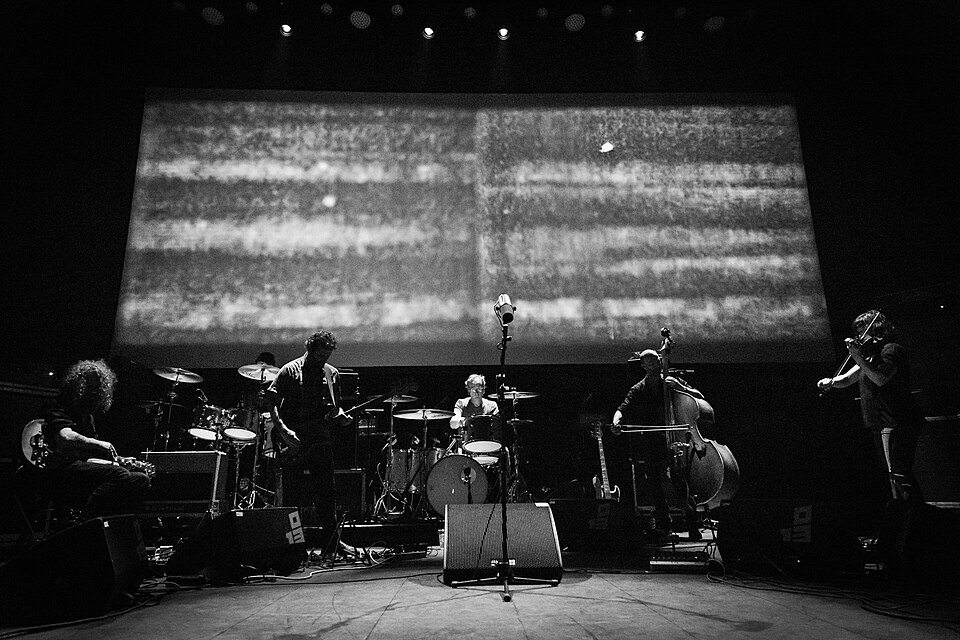 Godspeed You! Black Emperor2000
Lift Your Skinny Fists Like Antennas to Heaven unfolds across four side-long suites, each one building from near-silence to overwhelming, orchestral volume before receding again. "Sleep" rides that arc at its most extreme, a slow accumulation of strings and guitar drones that erupts into one of the band's most punishing crescendos before dissolving into field-recorded ambience. The album trusts long stretches of patience to make its eventual releases of noise feel earned rather than indulgent. Two decades on, its scale and its refusal to explain itself remain almost entirely unmatched in post-rock.
No. 4
TNT
 Tortoise1998
TNT treats a rock band's instrumentation as raw material for something closer to a jazz or electronic record, built from vibraphone, dub-inflected production space, and intricately layered percussion as much as from guitar. The title track lays out the album's whole approach in miniature — a loose, melodic theme passed between instruments over a rhythm section that never quite settles into a conventional groove. Nothing on the record announces itself with a hook; the pleasure is in the arrangement's constant, subtle motion. It's an album that expanded what "post-rock" could mean well beyond guitar-driven crescendos.
No. 5
Young Team
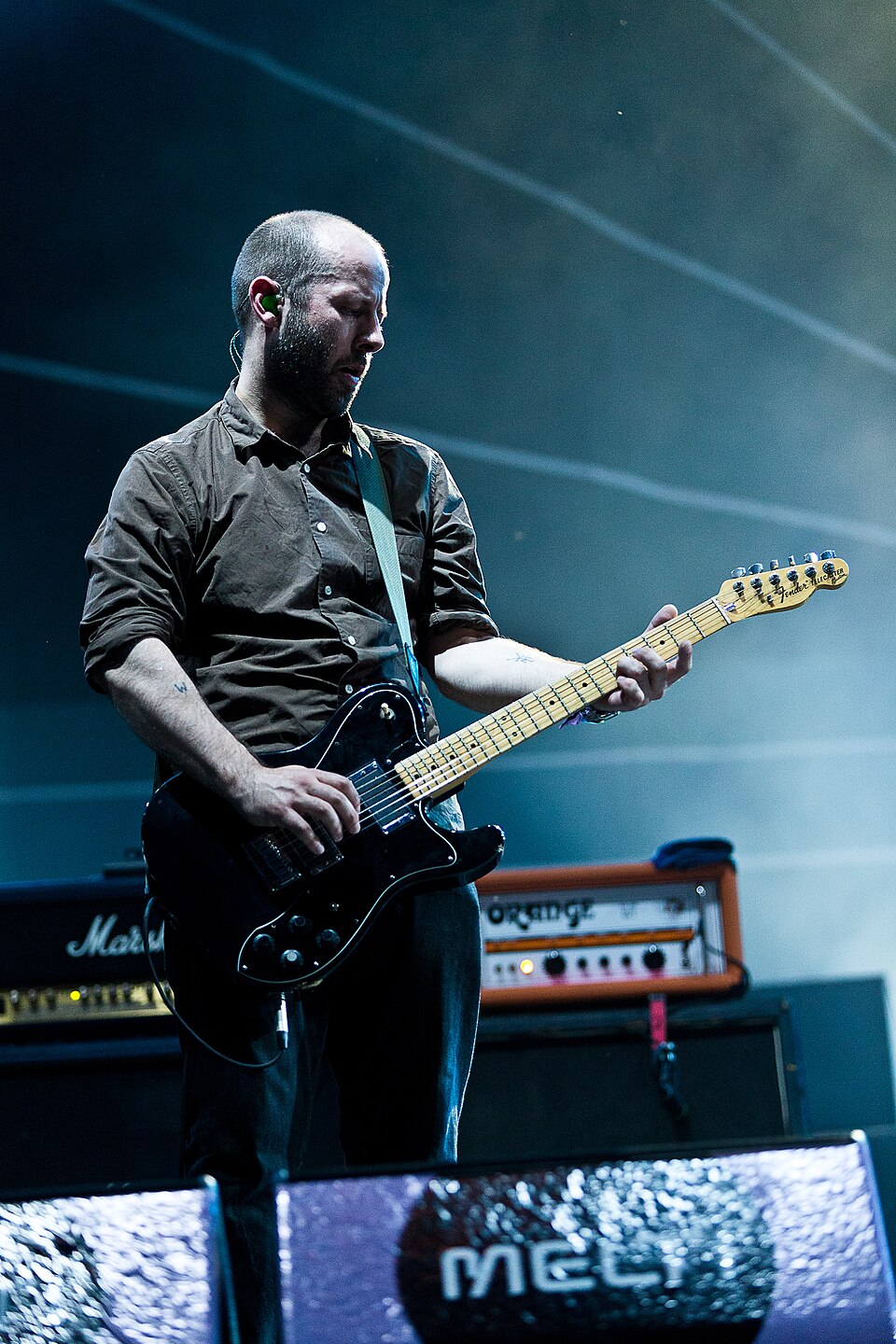 Mogwai1997
Young Team runs on a single, ruthlessly effective trick: long stretches of hushed, melodic guitar that build tension until it erupts into distortion loud enough to physically shake a room. "Mogwai Fear Satan" is the album's clearest demonstration, unfolding over more than sixteen minutes from a gentle flute-led passage into a wall of feedback and back again. The band's near-total avoidance of lyrics puts all the weight on dynamics and tone, and the strategy works precisely because the quiet parts are never just filler. It remains one of the defining documents of 1990s post-rock's quiet-loud vocabulary.
No. 6
Ágætis byrjun
 Sigur Rós1999
Ágætis byrjun moves at a glacial pace that makes its eventual swells feel genuinely monumental. "Svefn-g-englar" opens the album with a slow, bowed-guitar drone and Jónsi's falsetto rising out of it in a language of his own invention, the absence of comprehensible lyrics only heightening the sense of pure feeling. The song takes its time in a way almost no other album from the era dared, patient to the point of stillness before finally opening up. It's the record that established Sigur Rós's entire vocabulary — vast, wordless, indifferent to conventional structure — in one opening statement.
No. 7
Hex
 Bark Psychosis1994
Hex moves with a hushed, dub-inflected patience that has as much in common with ambient music as with rock. "Absent Friend" builds around Graham Sutton's restrained vocal and a slow, spacious arrangement that leaves as much room for silence as for sound, never rushing toward a payoff. The album's textures — jazz-inflected drumming, dub-style production space, guitar used more for atmosphere than riffs — helped give critics the vocabulary to name an entire genre after it. Decades later, it still sounds like the quiet, exploratory record other bands' loud catharses were reacting against.
No. 8
The Earth Is Not a Cold Dead Place
The Earth Is Not a Cold Dead Place builds its songs out of interlocking, melodic guitar lines that climb steadily toward moments of real catharsis rather than noise for its own sake. "Your Hand in Mine" is the clearest example, its central melody returning and swelling across the track until three guitars are moving in near-unison toward the same emotional peak. The record's accessibility — melody-forward, cinematic, legible without any lyrics at all — helped bring post-rock's widescreen instincts to listeners well outside the genre's usual audience. It remains the album most people picture when they picture instrumental post-rock at all.
No. 9
Soundtracks for the Blind
 Swans1996
Soundtracks for the Blind is a sprawling, two-and-a-half-hour assemblage of songs, drones, spoken-word samples, and found sound, less a conventional album than an environment to be submerged in. "Helpless Child" rides a slow, menacing pulse while Michael Gira's vocal delivers something between a lullaby and a threat, Jarboe's presence throughout the record pulling the band's sound toward the eerie and the ritualistic rather than simply the loud. The album's scale and its refusal to resolve into anything comforting make it one of the most demanding records in the band's catalog. It marked the end of Swans' original run and stands as the fullest statement of everything the band had become since its no-wave beginnings.
No. 10
Deceit
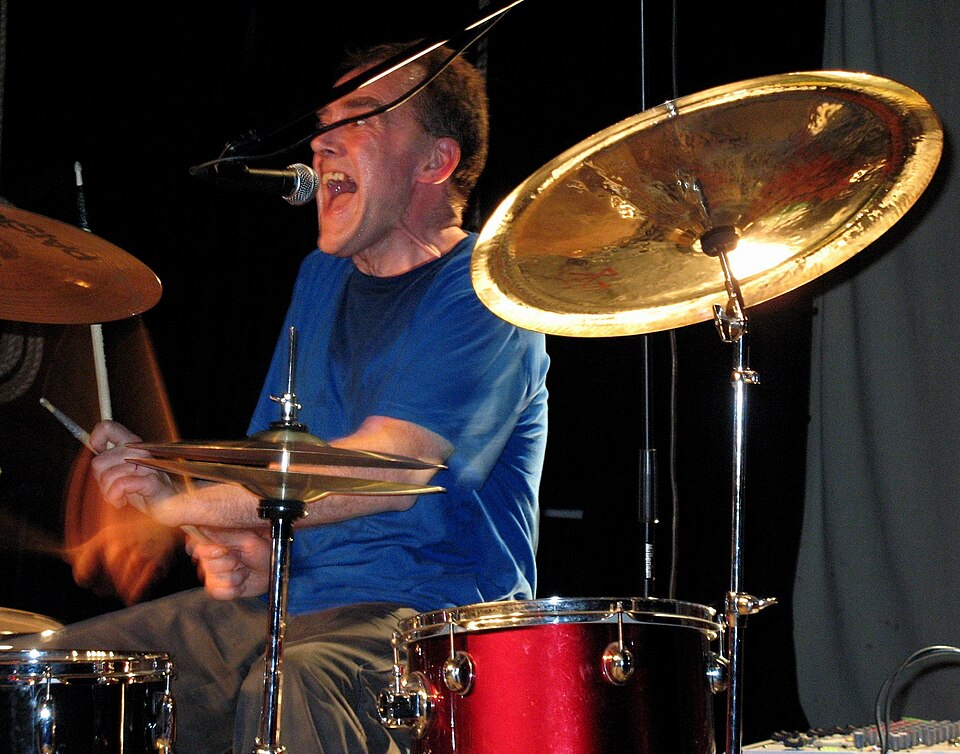 This Heat1981
Deceit pairs This Heat's tape-manipulated, dub-informed production with unusually direct, anxious songwriting about nuclear fear and social collapse. "Sleep" rides a tense, repetitive rhythm while the band's studio experiments — layered tape loops, unconventional mic placement, sounds that seem to arrive from nowhere — keep the track feeling unstable even at its most rhythmically insistent. Nothing about the record's production resembles a conventional rock album, and that's precisely the point. Decades on, its combination of political dread and studio radicalism still sounds like it's arriving from outside the usual rock timeline.

Who plays it
The originators, 1979–1994
This Heat's 1981 Deceit predates the genre by a decade; Talk Talk's Laughing Stock and Bark Psychosis's Hex — the album that gave the genre its name — did the actual founding a decade later.
Crescendo and widescreen post-rock
The mode most people picture when they hear "post-rock" — long, mostly wordless builds from near-silence to distorted catharsis, whether from Montreal's string-laden orchestras, Scotland's and Iceland's more guitar-forward versions, or Japan's own widescreen answer to both.


Rhythmic and jazz-inflected post-rock
A groove-driven alternative to the crescendo model, owing as much to krautrock, dub, and jazz as to Talk Talk's chamber-pop dissolution.


Where post-rock blurs
Artists for whom post-rock is one real ingredient rather than a home genre — space-rock, no-wave, math-rock, and chamber-pop all get fuller tellings on their own pages.

