Tap any face to see why they're in the photo

Who shaped them

Yeah Yeah Yeahs

Yeah Yeah Yeahs

Since 2000 · United States

Karen O is one of the more charismatic frontpeople in rock… Their story

See them on the map

Press ▶︎ to play

Loading…

It really plays! Press the middle

Who they shaped

Behind them, left to right: Sonic Youth, Neutral Milk Hotel, The Birthday Party.

In front, left to right: Japanese Breakfast, Wolf Alice, Geese.

Not in the photo: . Often assumed; they've said no.

The bigger the face, the stronger the proof: they said it themselvesreporteda critic, or widely accepted

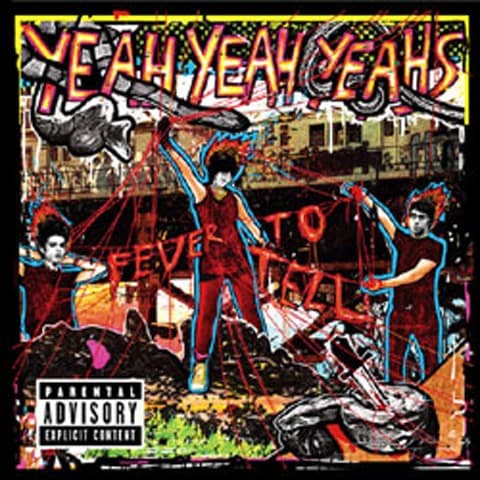
Fever to Tell cover

Start here

Fever to Tell (2003)

Karen O's vocal performance — her screams and yelps as much a musical instrument as Nick Zinner's guitar — is the record's most distinctive element, a physical presence that separates the album from its No Wave and post-punk predecessors. 'Maps' is the emotional anchor, a slow love song delivered with a directness that Karen O has said she found almost unbearably vulnerable to release; 'Y Control' is the opposite, a controlled demolition with a guitar figure that cuts through the mix like a blade. It effectively closed the post-punk revival's first wave with a statement that exceeded its peers in physical intensity.

Sleeve notes

Yeah Yeah Yeahs

Fever to Tell · 2003

Karen O is one of the more charismatic frontpeople in rock — not in the traditional sense of stage presence, which is its own genre, but in the sense of being impossible to look away from when she's performing. The Yeah Yeah Yeahs' early shows, which were genuinely confrontational, established an energy that Fever to Tell (2003) captured without diminishing. Nick Zinner's guitar — all riff, all attack, very little sustained note — gave the band its structural urgency; Brian Chase's drumming was its foundation.

The subsequent trajectory was ambitious: Show Your Bones (2006) added more formal structures; It's Blitz! (2009) took a hard turn into synth-pop, to largely positive effect. The band's willingness to try different things is admirable; the consequence is that the catalog is uneven in a way that the early records were not. Fever to Tell remains the statement: an album that sounds like it was made under pressure, by people who needed to make it.

Since 2000 · United States

Played at

Lower East Side

New York · 1999–2005

On the bill

Debuted at the Mercury Lounge in September 2000, opening for the White Stripes, and became a Brownies favourite; by Paul Banks's account, Nick Zinner knew people in Interpol and was part of a scene.

The whole scene