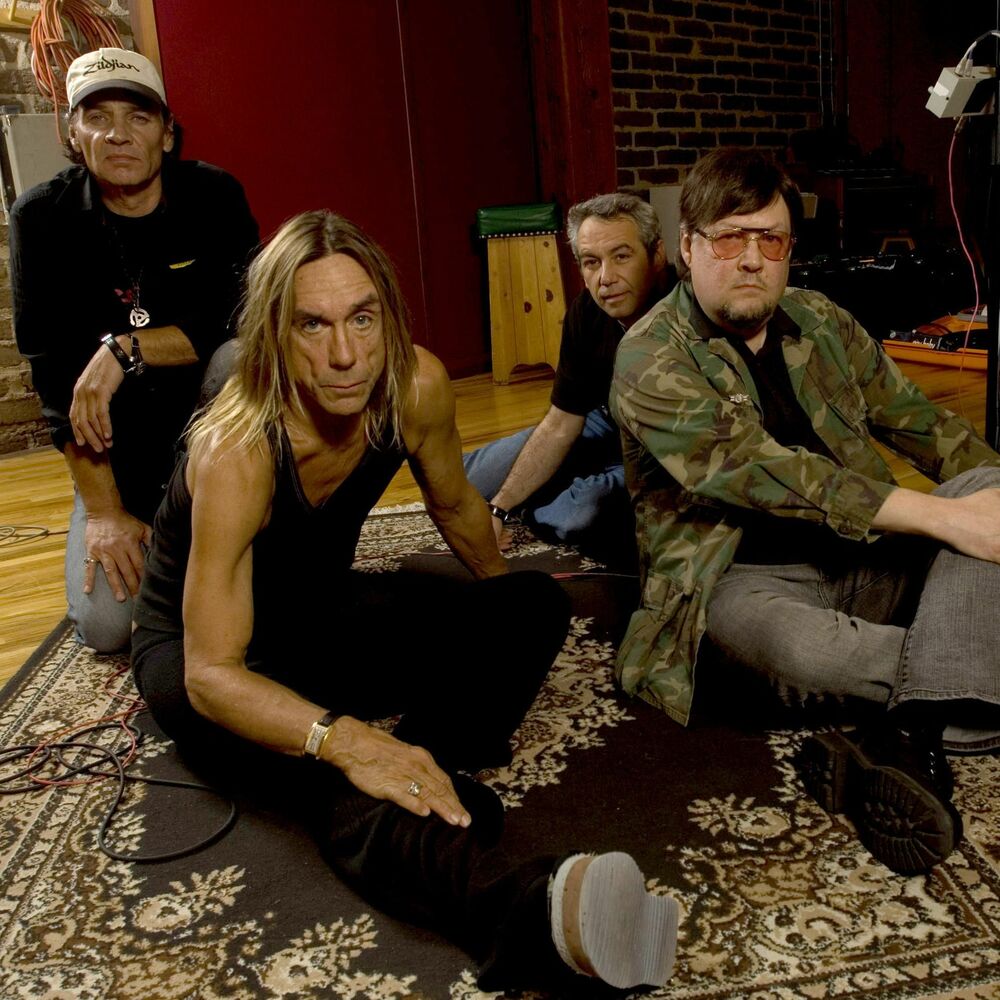
Pictured: The Stooges
← Today’s issueThe daily of where sound came fromp. 4
Born 1963 · The Kingsmen, "Louie Louie"
Garage rock
American teenage bands, cheap equipment, and a three-chord snarl — rock and roll's rawest, least ambitious wing, present years before punk or proto-punk had a name for the same impulse. Garage rock has gone quiet and come back at least twice since, each time as a reaction against whatever the mainstream had gotten too polished.
See it on the map →How it started
 MC51964
 The Stooges1967
 The Modern Lovers1970
 The White Stripes1997
 The Strokes1998
 King Gizzard and the Lizard Wizard2010
The Kingsmen's 1963 recording of "Louie Louie" — three chords, a deliberately sloppy vocal take, and a regional hit that outran its own budget — set the template teenage American bands would spend the rest of the decade copying: cheap gear, a battle-of-the-bands mentality, and a snarling energy punk would later claim as a direct ancestor. The Stooges and MC5, both Michigan bands working a few years later, pushed that same raw teenage aggression harder and louder than the original garage scene ever had, close enough to the era's proto-punk explosion that the two genres share several artists outright — proto-punk's own page gives The Stooges' founding role the fuller telling.
You mentioned Kraftwerk and Devo, that type of thing definitely has influenced Gizz a lot over the years and I think found its way into the sound of this record.
Garage rock went quiet as a going concern for almost three decades before a 2000s revival — The Strokes' Is This It and The White Stripes' White Blood Cells, both released in 2001 — brought its stripped-down urgency back as a reaction against nu-metal and post-grunge bloat. More recently, Australia's King Gizzard and the Lizard Wizard folded the same raw three-chord snarl into a wilder, more psychedelic and prolific project of their own.
Essential records
Start here
The Stooges
 The Stooges1969
A primal, three-chord blast built around Ron Asheton's fuzz riffs and Iggy Pop's confrontational sneer, arriving fully formed before punk had a name for what it was. Produced by John Cale, the album strips rock to its rawest components — repetition, volume, adolescent want — and refuses anything resembling polish. 'I Wanna Be Your Dog' reduces desire to a single sledgehammer riff and a sleigh-bell hook, while '1969' turns teenage boredom into a mantra. It gave punk its founding text years before the word existed.
No. 2
Kick Out the Jams
 MC51969
Kick Out the Jams captures MC5 live at Detroit's Grande Ballroom, feedback and crowd noise bleeding straight into songs that barely stay inside their own arrangements. The title track opens on Rob Tyner's shouted rallying cry before Wayne Kramer and Fred "Sonic" Smith's dual guitars detonate into noise closer to free jazz than rock and roll. "Rocket Reducer No. 62" and "Starship" push the same chaos even further, the rhythm section barely holding each song together. It reads less like a studio statement than a document of a band trying to start a riot, and largely succeeding.
No. 3
The Modern Lovers
The Modern Lovers strips the Velvet Underground's droning simplicity down even further, pairing a steady, motorik pulse with Jonathan Richman's plainspoken, almost childlike sincerity. "Roadrunner" rides a two-chord vamp for over four minutes, Richman's ode to driving past suburban Massachusetts radio towers turning mundane detail into genuine ecstatic feeling. Recorded years before its eventual release, the album already sounds like a blueprint other bands would spend the following decade filling in. Its steady disregard for conventional rock posturing became a direct touchstone for both American underground rock and British punk.
No. 4
Is This It
 The Strokes2001
Nick Valensi and Albert Hammond Jr.'s interlocking guitar parts — clean, relatively un-effected, drawing from Television and Lou Reed's solo work — gave the album a clarity that felt almost retro in 2001 but turned out to be as contemporary as anything released that decade. 'Last Nite' is the canonical example: a chord progression lifted from Tom Petty's 'American Girl,' recontextualized inside a New York attitude that made it feel entirely of its moment. It reinvented rock for a generation that had grown up on hip-hop and electronic music and needed the guitar translated into a register they could inhabit.
No. 5
White Blood Cells
White Blood Cells strips rock and roll down to just guitar, drums, and Jack White's blues-schooled voice, refusing anything resembling studio polish. The raw, unproduced sound stands in deliberate contrast to the more processed rock dominating radio at the time, drawing directly on White's own study of pre-war blues figures like Son House and Blind Willie McTell. Meg White's primitive, unshowy drumming gives the songs a stark, uncluttered backbone. The album's success, alongside a handful of other stripped-down garage-revival acts, helped revive interest in a more direct version of rock and roll for a new decade.
No. 6
Nonagon Infinity
 King Gizzard and the Lizard Wizard2016
Nonagon Infinity runs as a single unbroken loop, each of its nine songs crashing directly into the next with no gap, until the album's final track feeds seamlessly back into its opening. "Robot Stop" kicks the cycle off at full speed, a driving garage-rock riff and Stu Mackenzie's urgent vocal setting a pace the rest of the record never lets up. The structural conceit could easily have been a gimmick, but the songwriting underneath is tight enough to sustain it. It stands as one of the purest distillations of King Gizzard's restless, high-concept energy in a discography defined by restlessness.


Who plays it
The 1960s originators
The Stooges and MC5 pushed the original garage-band snarl into something harder and more aggressive; The Modern Lovers ran the same raw, cheap-gear approach through a quieter, more deadpan sensibility a few years later.
The revival, 2001 to now
Three decades of near-silence, then a sudden return — The Strokes and The White Stripes brought the sound back within months of each other in 2001, and King Gizzard and the Lizard Wizard have since folded it into a far more prolific, psychedelic project of their own.
Where it came from, where it went
- Garage rock1963
- Where it went
Nothing on the map came before it: this is where its road starts.