Tap any face to see why they're in the photo

Who shaped them

The National

The National

Since 1999 · United States

The National formed among a group of Cincinnati natives who relocated to Brooklyn around 1999, led by Matt Berninger's low, conversational baritone and built on the interlocking guitar and rhythm work of two sets of brothers, the Dessners and the Devendorfs. Their story

See them on the map

Press ▶︎ to play

Loading…

It really plays! Press the middle

Who they shaped

Nobody on the map lists them as an influence yet.

Behind them, left to right: Leonard Cohen, Bob Dylan, Joy Division, Nick Cave & The Bad Seeds, Violent Femmes, The Smiths, Tom Waits, Neil Young.

Not in the photo: , . Often assumed; they've said no.

The bigger the face, the stronger the proof: they said it themselvesreporteda critic, or widely accepted

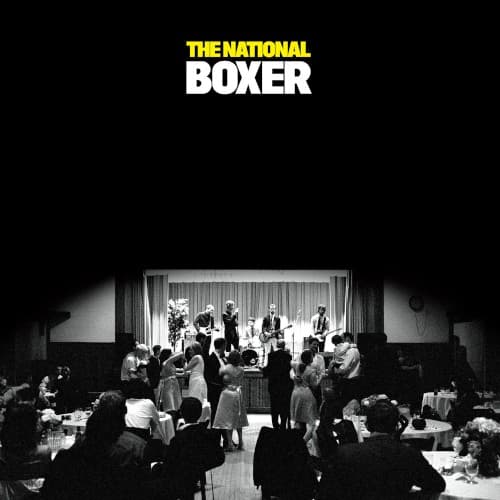
Boxer cover

Start here

Boxer (2007)

Boxer builds its songs slowly and quietly, trusting understatement rather than volume to carry the emotional weight. "Fake Empire" opens on a hesitant piano figure before swelling into a horn-led coda that turns quiet unease into something closer to grandeur, without ever raising its voice. Matt Berninger's dry, anxious baritone stays conversational even as the arrangements around him grow more elaborate. It's the album that established the band's meticulous, slow-burn sound as a genuine signature rather than a mood.

Sleeve notes

The National

Boxer · 2007

The National formed among a group of Cincinnati natives who relocated to Brooklyn around 1999, led by Matt Berninger's low, conversational baritone and built on the interlocking guitar and rhythm work of two sets of brothers, the Dessners and the Devendorfs. Berninger has named the Smiths, Violent Femmes, Tom Waits, and Nick Cave as the bands he first fell in love with, and has said the group has a genuinely hard time tracing its own influences given how widely the five members' individual tastes diverge.

Boxer (2007) refined the band's slow-building, texturally dense sound into some of its most widely heard material, pairing Berninger's dry, anxious lyricism with increasingly sophisticated arrangements that drew on the Dessners' classical training. The album became the record most responsible for expanding the band's audience beyond the New York scene it emerged from, and its combination of understated melancholy and meticulous arrangement has remained the clearest statement of the band's identity across the records that followed.

Since 1999 · United States