
Pictured: Swans
← Today’s issueThe daily of where sound came fromp. 10
Born 1978 · The No New York compilation
No wave
New York's most confrontational art-scene experiment — atonal guitar, no interest in conventional song structure, and a deliberate hostility to rock's own pleasures. No-wave was brief and small even by underground standards, but almost everything abrasive in the American underground since traces back to it.
See it on the map →How it started
 Mars1975
 Teenage Jesus and the Jerks1976
 Glenn Branca1977
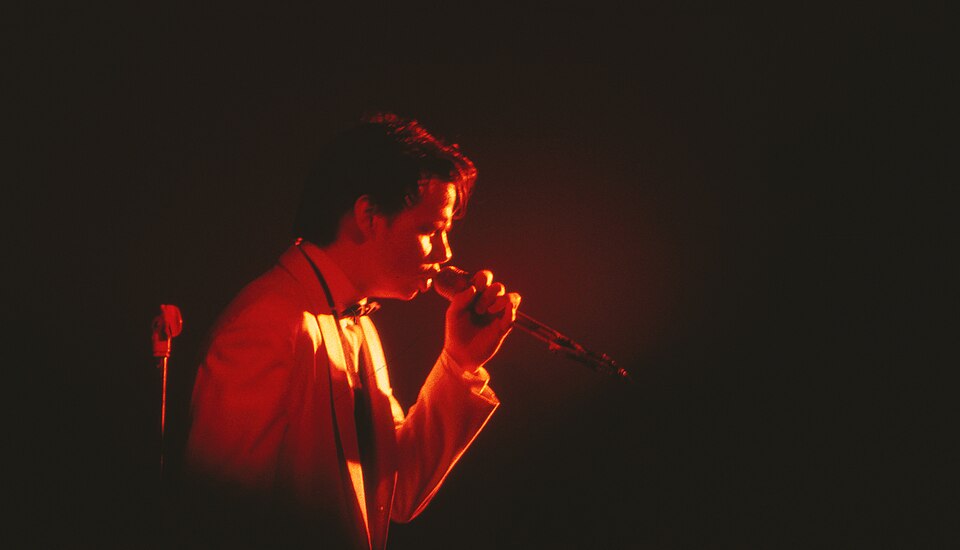 James Chance and the Contortions1977
 Rhys Chatham1977
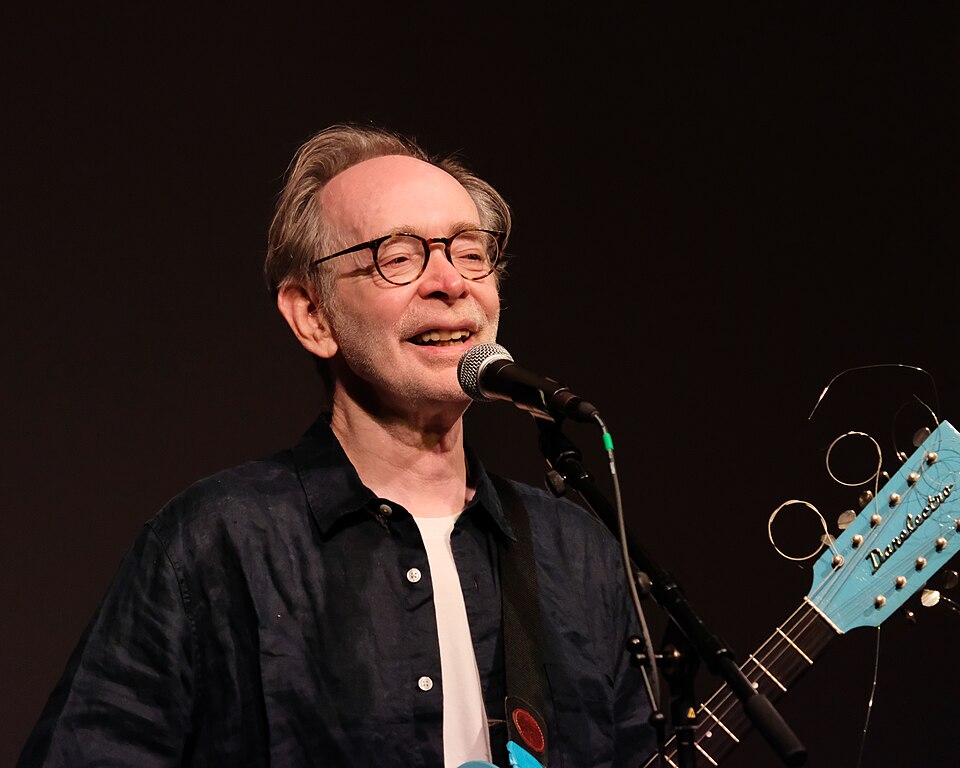 DNA1978
Brian Eno's No New York (1978), a compilation documenting four confrontational Lower East Side bands, is the genre's actual point of origin — a reaction against punk itself already feeling like a formula only two years after it broke. Teenage Jesus and the Jerks and Mars pushed toward pure dissonance and noise, while James Chance and the Contortions spliced James Brown's funk directly into the same confrontational stance, a different mutation of the same instinct.
Drake was inspirational to me in thinking about the simplicity and about creating something that has genuine power and truth in it, with very simple means.
The scene's guitar-orchestra wing ran in parallel — Glenn Branca and Rhys Chatham, both working with massed, detuned electric guitars as a compositional tool closer to minimalist composition than to rock, gave no-wave's noise a more structured, almost orchestral outlet. No-wave itself lasted barely five years as a going scene, but its confrontational DNA fed directly into noise-rock, which gets its own fuller page.
Essential records
Start here
No New York
 Teenage Jesus and the Jerks1978
No New York gathers four of the scene's defining acts onto a single compilation, and Teenage Jesus and the Jerks' contributions are among its most concentrated blasts of hostility. "Orphans" crams shrieking slide guitar and Lydia Lunch's flat, confrontational vocal into a track that refuses to last a moment longer than necessary. The production keeps the harshness raw rather than smoothing any of it over. As a document of no wave's whole ethos — brief, dissonant, deliberately off-putting — this compilation's Teenage Jesus tracks are as close to a mission statement as the scene ever produced.
No. 2
Buy
James Chance and the Contortions1979Buy fuses no wave's hostility to a genuinely tight, danceable funk rhythm section, a combination that made James Chance and the Contortions among the most physically aggressive bands to ever also be this rhythmically disciplined. "Contort Yourself" rides a taut, popping bassline while Chance's skronking saxophone and shouted vocal push the track toward chaos without ever losing the groove underneath. The tension between the music's precision and its hostility is the whole point. It's an album that helped invent an entire lineage of dance-punk decades before that term existed.
No. 3
A Taste of DNA
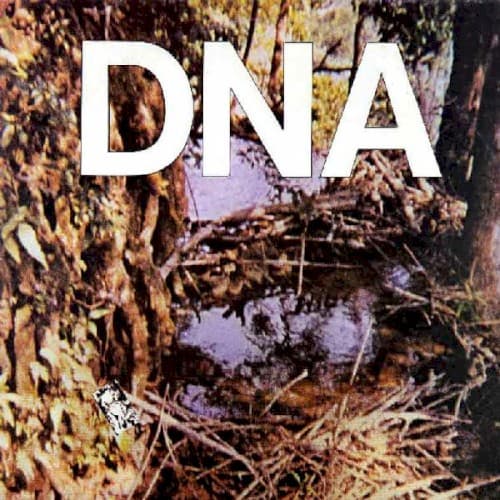
DNA1981A Taste of DNA gathers DNA's scattered, hard-to-find early singles into the clearest available document of the band's radically anti-technical approach. "Blonde Red Head" is built from Arto Lindsay's deliberately untrained, atonal guitar and Ikue Mori's off-kilter drumming, the two instruments seeming to actively resist locking together rather than support each other. Lindsay's yelped, largely wordless vocal adds a further layer of instability on top. The song's title would later become a band's name entirely — Blonde Redhead — a small but direct measure of how far DNA's influence actually traveled.
No. 4
The Ascension
 Glenn Branca1981
The Ascension treats a wall of electric guitars as raw material for something closer to minimalist orchestral composition than to rock as usually understood. "The Spectacular Commodity" builds from droning, overtone-rich guitar textures into a dense, ringing mass of sound, the massed instruments generating overtones no single guitar could produce alone. The record trades riffs and solos for pure sonic architecture, treating volume and sustain as compositional tools in their own right. It remains a foundational document for how far rock instrumentation could be pushed toward the classical avant-garde.
Who plays it
The No New York scene and its outgrowths
The four No New York bands (Teenage Jesus and the Jerks, Mars, DNA, and James Chance and the Contortions — the last two also carrying a genuine dance-punk tag for the same funk-splicing instinct), plus the guitar-orchestra wing (Glenn Branca, Rhys Chatham) and Swans, who emerged from the same Lower East Side scene a few years later before leaving no-wave behind entirely for industrial and drone.

Where no-wave echoes today
A real chronological outlier: Xiu Xiu formed in 2002, decades after the original scene dissolved, and absorbed its dissonance and confrontation as an inherited influence rather than as a participant in it.

Where it came from, where it went
- Garage rock1963
- Proto-punk1967
- Punk1976
- Post-punk1978
- No wave1978
- Where it went