Tap any face to see why they're in the photo

Who shaped them

Galaxie 500

Galaxie 500

Since 1987 · United States

Galaxie 500 formed in Boston in the mid-1980s around Dean Wareham, Damon Krukowski, and Naomi Yang, building a hushed, reverb-drenched sound out of simple chord changes, unhurried tempos, and Wareham's plaintive, untrained vocal, drawing directly on the Velvet Underground's third, quieter album as a template alongside Jonathan Richman's Modern Lovers and Big Star. Their story

See them on the map

Press ▶︎ to play

Loading…

It really plays! Press the middle

Who they shaped

Behind them, left to right: Big Star, The Velvet Underground, New Order.

In front, left to right: Deerhunter, Low, Black Tambourine, Beach House.

The bigger the face, the stronger the proof: they said it themselvesreporteda critic, or widely accepted

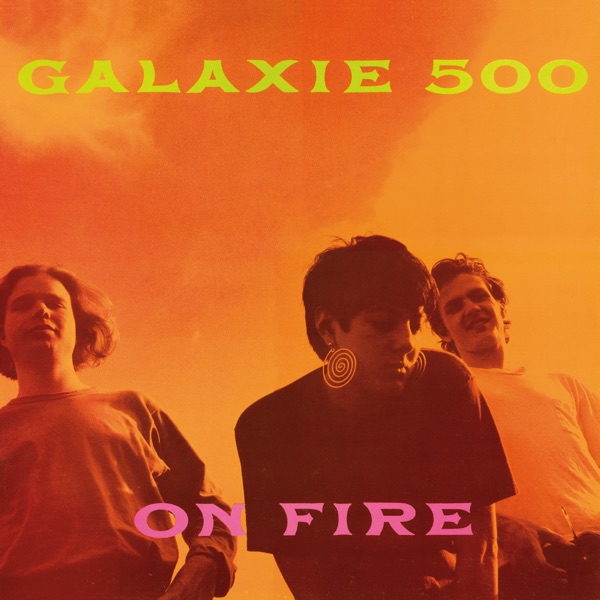
On Fire cover

Start here

On Fire (1989)

On Fire moves at a hushed, unhurried pace, built from simple chord changes and Dean Wareham's plaintive, untrained vocal floating over reverb-drenched guitar. The record's patience and minimalism ran directly against the noisier American underground surrounding it at the time, drawing instead on the quiet, self-titled third Velvet Underground album and Jonathan Richman's Modern Lovers as templates. Nothing on the record reaches for a hook in any conventional sense, trusting mood and repetition instead. It became the direct template for the slowcore lineage that followed, a debt Low and others have credited by name.

Sleeve notes

Galaxie 500

On Fire · 1989

Galaxie 500 formed in Boston in the mid-1980s around Dean Wareham, Damon Krukowski, and Naomi Yang, building a hushed, reverb-drenched sound out of simple chord changes, unhurried tempos, and Wareham's plaintive, untrained vocal, drawing directly on the Velvet Underground's third, quieter album as a template alongside Jonathan Richman's Modern Lovers and Big Star. The band's patient, minimal approach ran directly counter to the noisier American underground rock surrounding them in the late 1980s, and it laid much of the groundwork for what would later be labeled slowcore.

On Fire (1989), the band's second album, is generally considered their fullest realization of that hushed aesthetic, its unresolved, deliberately unhurried songs establishing a direct line to slowcore acts that followed — Low have specifically credited Galaxie 500 with showing them how to pare a song down to just the Velvet Underground and the Modern Lovers' bare essentials. The band dissolved acrimoniously in 1991, but its patient, minimal template proved durably influential on Codeine, Red House Painters, and the wider slowcore lineage that took shape in its wake.

Since 1987 · United States