Tap any face to see why they're in the photo

Who shaped them

Nobody on the map came before them: they're where this line starts.

Kraftwerk

Kraftwerk

Since 1970 · Germany

Kraftwerk formed in Düsseldorf in 1970 around Ralf Hütter and Florian Schneider, emerging from the same fertile West German avant-garde scene that produced Can and Neu!… Their story

See them on the map

Press ▶︎ to play

Loading…

It really plays! Press the middle

Who they shaped

In front, left to right: Massive Attack, The Postal Service, Depeche Mode, New Order, Orchestral Manoeuvres in the Dark, Everything Everything, Cabaret Voltaire, Xiu Xiu, Autechre, Joy Division, Four Tet, The Pastels. And 11 more: King Gizzard and the Lizard Wizard, Have A Nice Life, The Radio Dept., Swans, Siouxsie & The Banshees, LCD Soundsystem, Aphex Twin, A.G. Cook, David Bowie, The Sound, Coil.

Not in the photo: . Often assumed; they've said no.

The bigger the face, the stronger the proof: they said it themselvesreporteda critic, or widely accepted

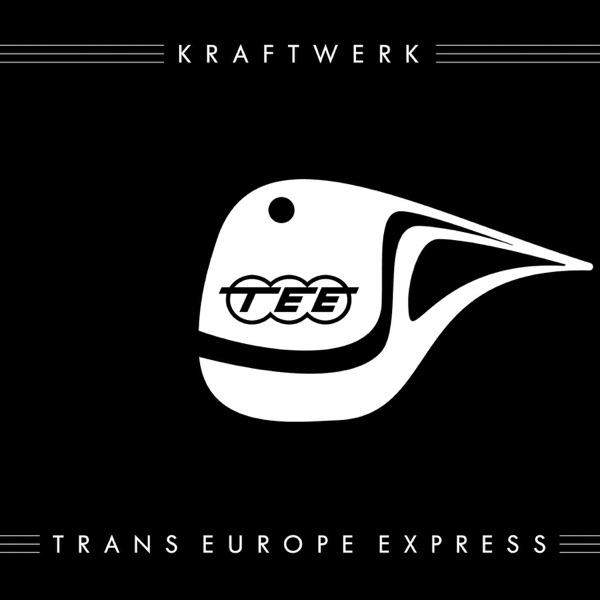
Trans-Europe Express cover

Start here

Trans-Europe Express (1977)

Kraftwerk built an entire electronic vocabulary from synthesizers, vocoders, and drum machines alone, imagining a gleaming, mechanized Europe as the album's organizing metaphor. The title track's motorik pulse and deadpan vocal delivery became a foundational reference point for synth-pop, techno, and hip-hop alike — Afrika Bambaataa lifted its melody wholesale for 'Planet Rock.' 'Showroom Dummies' extends the band's man-machine conceit into something genuinely funny and genuinely eerie at once. Few albums have shaped as many unrelated genres as thoroughly as this one.

Sleeve notes

Kraftwerk

Trans-Europe Express · 1977

Kraftwerk formed in Düsseldorf in 1970 around Ralf Hütter and Florian Schneider, emerging from the same fertile West German avant-garde scene that produced Can and Neu! — though Kraftwerk's early, more exploratory records gave little indication of where the group was headed. Autobahn (1974), with its twenty-two-minute title track compressed into a hit single, was the turning point: an all-electronic sound built to evoke the experience of driving, and the first sign that a fully synthetic pop music was possible.

Trans-Europe Express (1977), The Man-Machine (1978), and Computer World (1981) refined that vision into something austere, funny, and totally controlled — Hütter and Schneider presenting themselves as interchangeable components in their own machine, performing behind mannequins built in their likeness. The group's insistence that the synthesizer, the vocoder, and the drum machine were not novelties but a complete musical language reshaped synth-pop, techno, electro, and hip-hop; Afrika Bambaataa's "Planet Rock" lifted Trans-Europe Express wholesale, and it is difficult to find a strand of electronic music since that doesn't run back through this one band.

Since 1970 · Germany

Played at

Düsseldorf–Cologne

Düsseldorf · 1968–1974

On the bill

Started as one more long-form Düsseldorf experiment and left as something else entirely; Autobahn (1974) both ends this scene and begins the lineage most of the map's electronic side descends from.

The whole scene