
Pictured: Neil Young
← Today’s issueThe daily of where sound came fromp. 110
A family of sounds
Folk
Folk began as a tradition-bearing form — songs collected from oral tradition and passed down, essentially authorless — and the word now means close to the opposite: one person's specific, often painfully personal life, sung in the first person over an acoustic guitar. That reversal, not any shared sound, is what actually unifies the 39 artists below; in this map, "folk" mostly means confession, not tradition.
See it on the map →How it started
 Karen Dalton1960
 Bob Dylan1961
 Joni Mitchell1964
 Roy Harper1964
 Bert Jansch1965
 Incredible String Band1965
The word originally described a process, not a sound or an author — songs gathered from rural, oral tradition and passed down through generations, revised and re-sung by whoever carried them next, with no single writer to credit. Britain's folk revival (Bert Jansch's fingerstyle guitar, the Incredible String Band's psych-folk, Vashti Bunyan's pastoral debut) still carried a trace of that original sense — interpreting older material, or writing new songs steeped in the older tradition's modal harmony and communal address — even as the ground was shifting under it.
It didn't bother me at all. I loved the combination of the electric with the folk. Nobody had done that at the time.
The American singer-songwriter generation that emerged alongside it — Bob Dylan, Joni Mitchell, Leonard Cohen, Nick Drake — took the same acoustic vocabulary and pointed it inward: the songs were now unambiguously about the writer's own life, not a tradition being carried forward. That turn never reversed. Everything that followed — alt-country's regional inheritors, a 2000s freak-folk revival, and a wide 2010s–2020s indie and bedroom lineage — kept the confessional stance and, in most cases, dropped the tradition-bearing half of the word's original meaning almost entirely. Folk has five real descendants of its own in this map (singer-songwriter, alt-country, freak-folk, indie-folk, folk-punk), each chasing a different piece of what's left of the original tradition; this page is the trunk they all grew from.
Essential records
Start here
Pink Moon
 Nick Drake1972
Recorded in two sessions with almost no overdubs, Pink Moon strips Drake's sound to just voice and guitar, the intricate fingerpicking of "Place to Be" and "Know" left completely exposed. The title track runs barely two minutes, its five-note piano line the only addition to the whole record, and says more in that time than most albums manage across a side. It sounds less like a folk album than a private ritual accidentally left running. Its influence — on Elliott Smith, on an entire generation of hushed singer-songwriters — is now impossible to separate from the myth of the record itself.
No. 2
Blue
 Joni Mitchell1971
Blue is often described as the confessional singer-songwriter record other confessional singer-songwriter records get measured against, and the description holds up: dulcimer and piano arrangements left almost bare, lyrics that name specific people and specific failures without any protective distance. "A Case of You" turns romantic devotion into something almost bottomless, its melody stretching further than the chord changes seem to allow. "River" reworks "Jingle Bells" into a lament so effective the connection barely registers on first listen. It remains a reference point for anyone writing about love and its aftermath in the first person.
No. 3
Songs of Leonard Cohen
 Leonard Cohen1967
Cohen's debut arrives already at full maturity: spare acoustic arrangements, occasional strings, and a voice that treats every line like it has been considered for years. "Suzanne" turns a walk by the river into something closer to scripture, its melody almost an afterthought next to the specificity of the images. "Sisters of Mercy" and "So Long, Marianne" show the same gift for turning a real relationship into something that reads as universal. It set the template — literary, unhurried, emotionally exact — that Cohen would spend the next four decades refining rather than abandoning.
No. 4
Highway 61 Revisited
 Bob Dylan1965
Highway 61 Revisited is the sound of Dylan fully electric and fully unfiltered, backing his surreal, accusatory lyrics with a loose, blues-rock band that never quite resolves into a groove the way a pop record would. "Like a Rolling Stone," six minutes long against every radio convention of the time, opens with a snare shot Bruce Springsteen once compared to a starting gun and never lets up. "Desolation Row"'s closing sprawl shows the album's other pole, a talking-blues surrealism with no chorus at all. It reset what a rock lyric was allowed to attempt.
No. 5
After the Gold Rush
 Neil Young1970
After the Gold Rush moves between hushed piano ballads and ragged full-band rock without ever feeling like two different records, Young's cracked tenor holding both ends together. Its plainspoken melodic directness — the same vein "Heart of Gold" would draw from two years later on Harvest — runs straight through the title track and "Only Love Can Break Your Heart." The title track's apocalyptic imagery, delivered over almost nothing, is stranger than the record's reputation for gentleness suggests. It's the sound of a songwriter working in miniature and still sounding enormous.
No. 6
Bert Jansch
 Bert Jansch1965
Recorded alone on a borrowed tape machine, Jansch's debut has a rawness that its enormous influence on more polished players tends to obscure. "Needle of Death," a plainspoken elegy for a friend lost to addiction, pairs an unflinching lyric with fingerpicking that never once resorts to decoration for its own sake. "Angie" (an arrangement of Davey Graham's tune) shows the technical side of his playing that so many guitarists tried to reverse-engineer. It's a quietly radical record disguised as a modest one.
No. 7
Just Another Diamond Day
 Vashti Bunyan1970
Recorded with musicians from the Incredible String Band's circle, Just Another Diamond Day sounds exactly like what it was: songs written on a slow journey by horse and cart, arranged with recorder, fiddle, and the barest possible touch. The title track's melody is almost a lullaby, Bunyan's voice pitched so quietly it asks the listener to lean in rather than the record reaching out. Nothing on it aims for a hook in any conventional sense, and that refusal is exactly what later musicians responded to decades after its release. It remains one of the gentlest records in the British folk revival's catalog.
No. 8
In My Own Time
 Karen Dalton1971
In My Own Time pairs Dalton's cracked, blues-worn voice with full, sometimes horn-inflected arrangements that were reportedly not entirely to her own taste — and the tension between her rough instrument and the record's polish is exactly what makes it so unsettling. "Something on Your Mind" stretches a simple melody until it sounds like grief itself, her phrasing arriving just behind or ahead of where a more conventional singer would land. Her version of "Katie Cruel" turns a traditional song into something closer to a threat. It's a record that sounds like almost no one else's, before or since.
No. 9
Stormcock
 Roy Harper1971
Stormcock consists of just four songs, several running past eight minutes, built around Harper's acoustic guitar and David Bedford's orchestral arrangements rather than any conventional verse-chorus structure. "Me and My Woman" spends nearly thirteen minutes moving through shifting movements, closer to a suite than a song, without ever losing its emotional center. "Hors d'Oeuvres" opens the record with a satirical bite that undercuts any sense of pure prettiness. It's a record built entirely around patience, and it rewards the listeners willing to give it that patience back.
No. 10
Ys
 Joanna Newsom2006
Ys consists of just five songs, several running past ten minutes, each a dense, orchestrated journey arranged by Van Dyke Parks around Newsom's harp and increasingly assured voice. "Emily," written for and about her sister, moves through years of memory and astronomy within a single unbroken structure, never settling into anything as simple as a chorus. "Monkey & Bear" tells something closer to a fable, sung with a directness that cuts through the record's formal complexity. It remains one of the most ambitious folk albums of its decade, built on a scale almost no one else was attempting.
No. 11
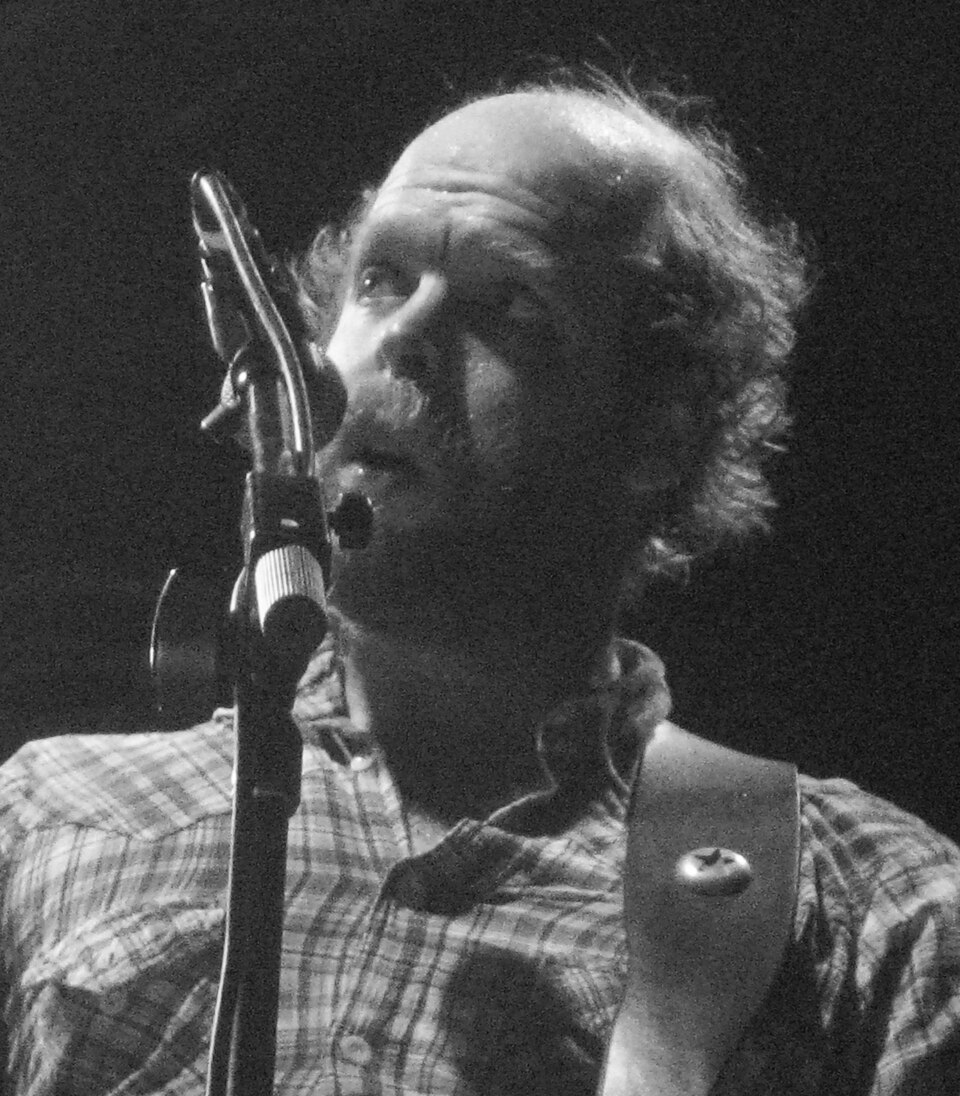
I See a Darkness
I See a Darkness strips songwriting down to voice, acoustic guitar, and unflinching subject matter, mortality and dread delivered without a trace of melodrama. The title track sits at its center, a plainspoken meditation on depression and death delivered in a voice too frail and unguarded to read as performance. That refusal to dress up the bleakness is what gives the record its power — nothing here asks to be admired, only heard. It remains the album most responsible for establishing Oldham as a foundational voice in confessional and freak-folk songwriting alike.
Who plays it
The turn to the first person, 1965–1974
The generation that took a tradition-bearing form — songs collected and passed down, essentially authorless — and turned it into a vehicle for one specific person's life: Dylan's turn from protest-song interpreter to confessional surrealist, Joni Mitchell and Leonard Cohen writing directly about their own relationships and interior lives, and a British folk-revival wing (Bert Jansch, Incredible String Band, Vashti Bunyan, Roy Harper) still closer to the older, tradition-interpreting sense of the word even as the American branch pulled away from it.


Extending the tradition: heartland and alt-country heirs, 1985–2020
A second wave that kept the first-person confession but changed its regional accent — Tom Waits' junkyard theatricality, Lucinda Williams' Southern narrative songwriting, and a run of American indie artists (Silver Jews, Kurt Vile, The Mountain Goats, Waxahatchee, Songs: Ohia) who kept "folk" as a genre tag mostly by virtue of an acoustic guitar and a first-person lyric, not by any real relationship to a folk tradition.


Freak-folk and the 2000s revival: tradition as texture, confession as content
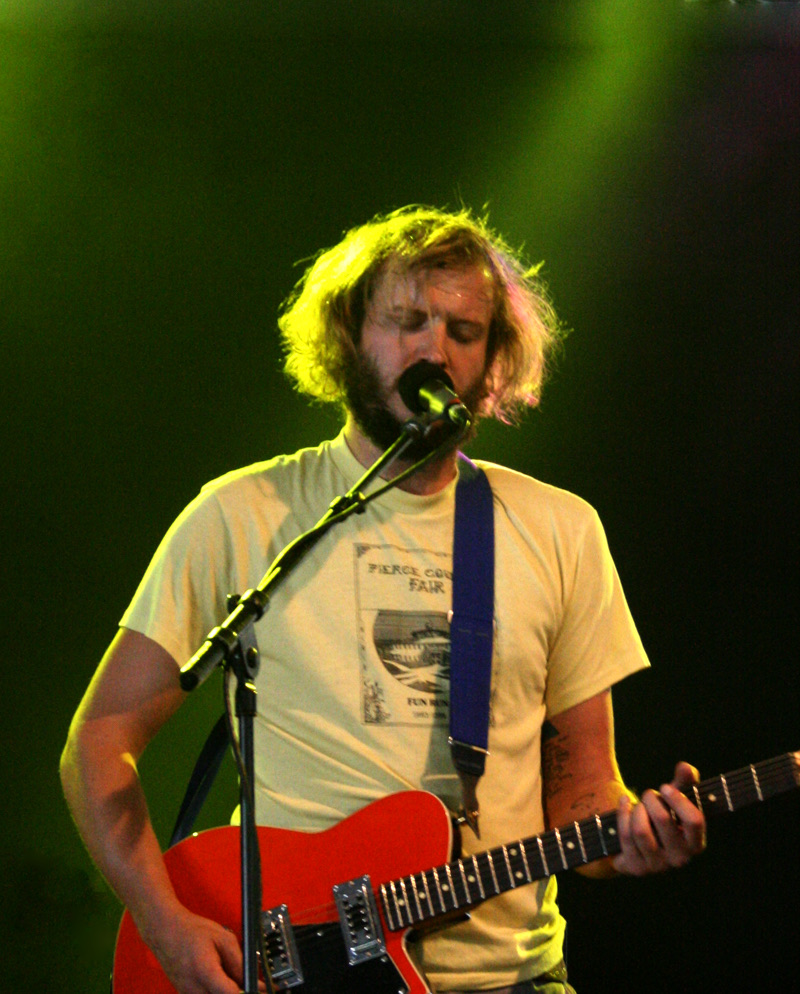
A 2000s wave that borrowed the older tradition's surface — hand percussion, harp, chamber arrangement, an invented-mythology lyricism (Joanna Newsom) — while writing lyrics as personal as anything the confessional wing produced; Bon Iver, Fleet Foxes, Big Thief, Adrianne Lenker, and Bright Eyes all reach for folk instrumentation in service of intensely first-person songwriting, not communal or traditional material.



Folk as confession, full stop
By the 2010s "folk" in this map has almost nothing to do with the word's original meaning — it means a quiet, first-person, often acoustic-adjacent mode of direct emotional address, whether that's Elliott Smith's whispered confession, Mitski's and Phoebe Bridgers' generation of it, or Grouper's confession dissolved into tape hiss and reverb until the words are barely legible at all. This is the opposite of tradition-bearing folk music, and the word survives here mostly as genre-tag inertia rather than a real description.


Where it came from, where it went
- Folk
Nothing on the map came before it: this is where its road starts.
Nothing on the map has grown out of it yet.