Tap any face to see why they're in the photo

Who shaped them

Nobody on the map came before them: they're where this line starts.

Sparks

Sparks

Since 1968 · United States

Sparks are the Los Angeles brothers Ron and Russell Mael, who formed the band that became Sparks in the early 1970s and found more success in Britain than in their own country almost immediately. Their story

See them on the map

Press ▶︎ to play

Loading…

It really plays! Press the middle

Who they shaped

In front, left to right: New Order.

The bigger the face, the stronger the proof: they said it themselvesreporteda critic, or widely accepted

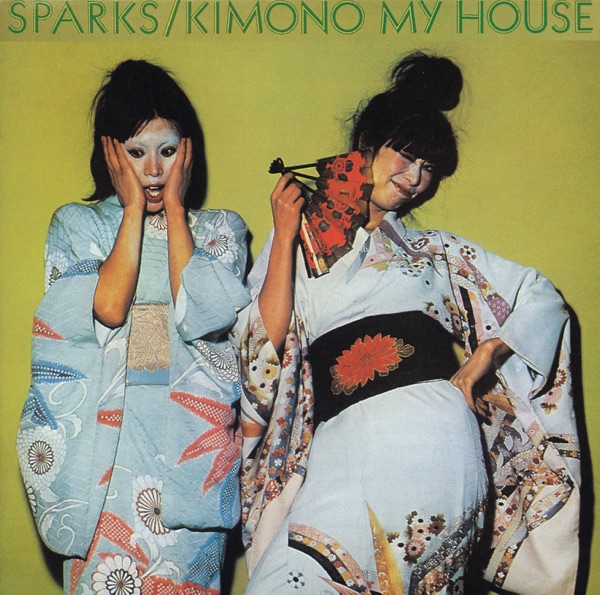
Kimono My House cover

Start here

Kimono My House (1974)

Kimono My House is Sparks at their most immediate — glammy, theatrical rock songs delivered at a nervous, breathless pace that few other bands of the era attempted. "This Town Ain't Big Enough for the Both of Us" is the record's centerpiece, Russell Mael's falsetto vaulting over a galloping arrangement while Ron's lyrics turn a breakup into something closer to a farce. "Amateur Hour" and "Talent Is an Asset" apply the same wit to smaller targets, funny in a way that never undercuts the songs' actual craft. It's the sound of a band treating pop music as a stage for character acting rather than self-expression, and it made them stars in Britain almost overnight.

Sleeve notes

Sparks

Kimono My House · 1974

Sparks are the Los Angeles brothers Ron and Russell Mael, who formed the band that became Sparks in the early 1970s and found more success in Britain than in their own country almost immediately. Ron's clipped, mordantly funny lyrics and stone-faced stage presence paired with Russell's operatic falsetto to make a genuinely odd kind of glam pop that owed as much to musical theater as to rock and roll.

Kimono My House (1974), made after the brothers relocated to London, was their commercial breakthrough and remains the record most listeners associate with the band. Sparks kept reinventing their sound across the decades that followed, including a pivot toward electronic disco with Giorgio Moroder in 1979 that anticipated synth-pop's rise by several years. The brothers have continued recording new material well into their seventies, a longevity eventually documented in Edgar Wright's 2021 film The Sparks Brothers. Even by that point in their career the brothers were still writing and recording new material rather than simply touring on the strength of an existing catalog, a work rate unusual for a band by then several decades into its run.

Since 1968 · United States