Tap any face to see why they're in the photo

Who shaped them

Nobody on the map came before them: they're where this line starts.

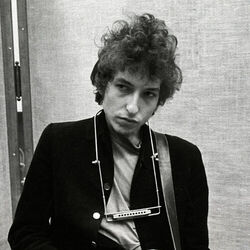
Bob Dylan

Bob Dylan

Since 1961 · United States

Bob Dylan arrived in New York in 1961 as a folk revivalist steeped in Woody Guthrie, and within a few years had rewritten what a folk song could carry… Their story

See them on the map

Press ▶︎ to play

Loading…

It really plays! Press the middle

Who they shaped

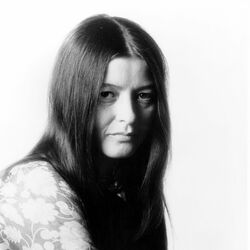
In front, left to right: Patti Smith, PJ Harvey, King Gizzard and the Lizard Wizard, of Montreal, Lucinda Williams, Nick Cave & The Bad Seeds, The White Stripes, Gang of Four, The National, Neil Young, Cat Power, Joanna Newsom. And 11 more: Vashti Bunyan, Kurt Vile, Elliott Smith, Townes Van Zandt, Nick Drake, Sufjan Stevens, Fleet Foxes, Prefab Sprout, Tom Waits, Jeff Buckley, Jockstrap.

Not in the photo: . Often assumed; they've said no.

The bigger the face, the stronger the proof: they said it themselvesreporteda critic, or widely accepted

Highway 61 Revisited cover

Start here

Highway 61 Revisited (1965)

Highway 61 Revisited is the sound of Dylan fully electric and fully unfiltered, backing his surreal, accusatory lyrics with a loose, blues-rock band that never quite resolves into a groove the way a pop record would. "Like a Rolling Stone," six minutes long against every radio convention of the time, opens with a snare shot Bruce Springsteen once compared to a starting gun and never lets up. "Desolation Row"'s closing sprawl shows the album's other pole, a talking-blues surrealism with no chorus at all. It reset what a rock lyric was allowed to attempt.

Sleeve notes

Bob Dylan

Highway 61 Revisited · 1965

Bob Dylan arrived in New York in 1961 as a folk revivalist steeped in Woody Guthrie, and within a few years had rewritten what a folk song could carry — political address, surreal imagery, private confession, sometimes all in the same verse. His decision to plug in an electric band for 1965's Highway 61 Revisited, after building his reputation on acoustic records, was treated by parts of the folk audience as a betrayal; in retrospect it looks like the moment rock lyrics caught up to what poetry could do.

The decades since have seen Dylan move through gospel, country, and rockabilly-inflected phases without ever settling into a single identity, releasing albums well into his eighties that still command serious critical attention. His influence on songwriting as a literary form — on the idea that a rock lyric could bear the weight of real ambiguity and allusion — extends across nearly every genre that followed him, folk and otherwise.
Since 1961 · United States

Played at

Greenwich Village

New York · 1961–1965

On the bill

Arrived in New York in 1961 steeped in Woody Guthrie and spent five years outgrowing the revival that made him, plugging in for Highway 61 Revisited in 1965 while parts of the folk audience treated it as a betrayal.

The whole scene