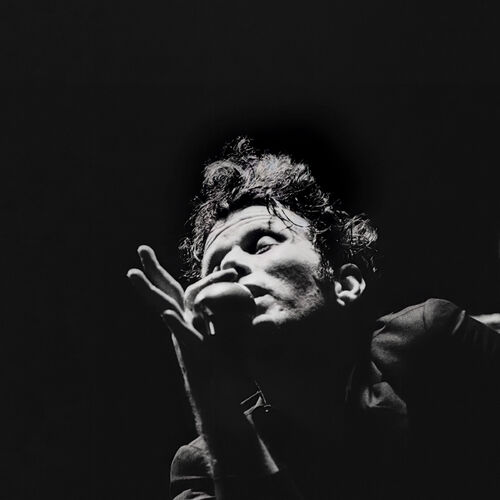
Tap any face to see why they're in the photo

Who shaped them

Tom Waits

Tom Waits

Since 1971 · United States

Tom Waits began his career in the early 1970s as a boozy lounge-jazz balladeer, a persona built on Beat-writer affectations and a graveled voice that only grew rougher over the following decade. Their story

See them on the map

Press ▶︎ to play

Loading…

It really plays! Press the middle

Who they shaped

Behind them, left to right: Bob Dylan.

In front, left to right: The National.

The bigger the face, the stronger the proof: they said it themselvesreporteda critic, or widely accepted

Rain Dogs cover

Start here

Rain Dogs (1985)

Rain Dogs assembles clattering junkyard percussion, marimba, and Tom Waits's ruined-gravel voice into a sound that belongs to no other record before or since. "Time" pulls back from the album's noisier experiments into something closer to a devastated ballad, Waits's voice finding real tenderness underneath all the rasp. Elsewhere the record lurches between tango, blues, and something closer to carnival music without ever losing its own internal logic. It remains the clearest single document of Waits's transformation from lounge crooner into one of American music's most idiosyncratic storytellers.

Sleeve notes

Tom Waits

Rain Dogs · 1985

Tom Waits began his career in the early 1970s as a boozy lounge-jazz balladeer, a persona built on Beat-writer affectations and a graveled voice that only grew rougher over the following decade. Bob Dylan was an early and formative touchstone; Waits kept handwritten transcriptions of Dylan's lyrics on his bedroom wall, though his own influences ran at least as deep into blues, jazz, and Captain Beefheart's junkyard experimentalism as into any songwriter tradition.

Rain Dogs, released in 1985, arrived in the middle of Waits's decisive turn away from that early lounge persona toward the scrap-yard experimentalism he developed alongside his wife and collaborator Kathleen Brennan. The album consolidated a body of work built from found sounds, Beat-inflected storytelling, and an increasingly theatrical sense of composition, cementing Waits's reputation as one of American songwriting's most singular and least imitable figures, a reputation that has only grown since.

Since 1971 · United States