Tap any face to see why they're in the photo

Who shaped them

Nobody on the map came before them: they're where this line starts.

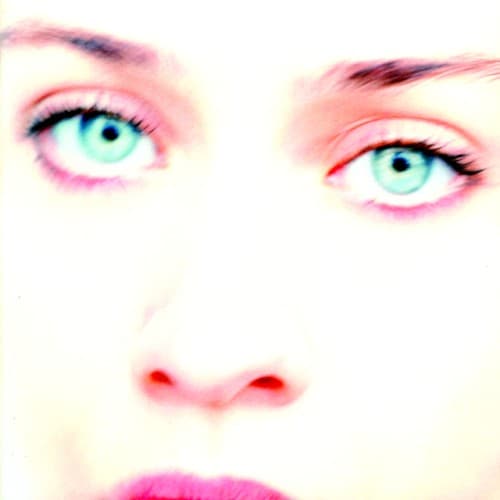
Fiona Apple

Fiona Apple

Since 1996 · United States

Fiona Apple was eighteen when Tidal (1996) made her a star, its blend of jazz-inflected piano, orchestral pop, and unusually candid lyrics about trauma and desire drawing both acclaim and intense media scrutiny of her public persona. Their story

See them on the map

Press ▶︎ to play

Loading…

It really plays! Press the middle

Who they shaped

In front, left to right: Snail Mail, Caroline Polachek, Magdalena Bay, Waxahatchee.

The bigger the face, the stronger the proof: they said it themselvesreporteda critic, or widely accepted

When the Pawn... cover

Start here

When the Pawn... (1999)

Produced by Jon Brion, When the Pawn... surrounds Apple's jazz-schooled piano with dense, sometimes orchestral arrangements that never quite settle into a predictable pop shape. "Paper Bag" swings between a jaunty verse and a lyric about disappointment and self-loathing without any tonal whiplash, Apple's phrasing bending the melody wherever the words need it to go. "Fast As You Can" ratchets the tension up further, tempo and dynamics shifting within the same verse. It's a record that treats emotional volatility as a formal principle rather than something to be smoothed over.

Sleeve notes

Fiona Apple

When the Pawn... · 1999

Fiona Apple was eighteen when Tidal (1996) made her a star, its blend of jazz-inflected piano, orchestral pop, and unusually candid lyrics about trauma and desire drawing both acclaim and intense media scrutiny of her public persona. She responded on her second album, formally titled with a long poem but universally known as When the Pawn..., by doubling down on lyrical density and specificity rather than retreating from the attention.

Apple has released records only sporadically since, each one — Extraordinary Machine (2005), The Idler Wheel... (2012), Fetch the Bolt Cutters (2020) — marked by a further stripping away of conventional pop production in favor of percussive, unpolished arrangements built around piano and voice. That refusal to smooth her music into something more commercially palatable has made her one of the most respected and closely watched songwriters of her generation.

Since 1996 · United States