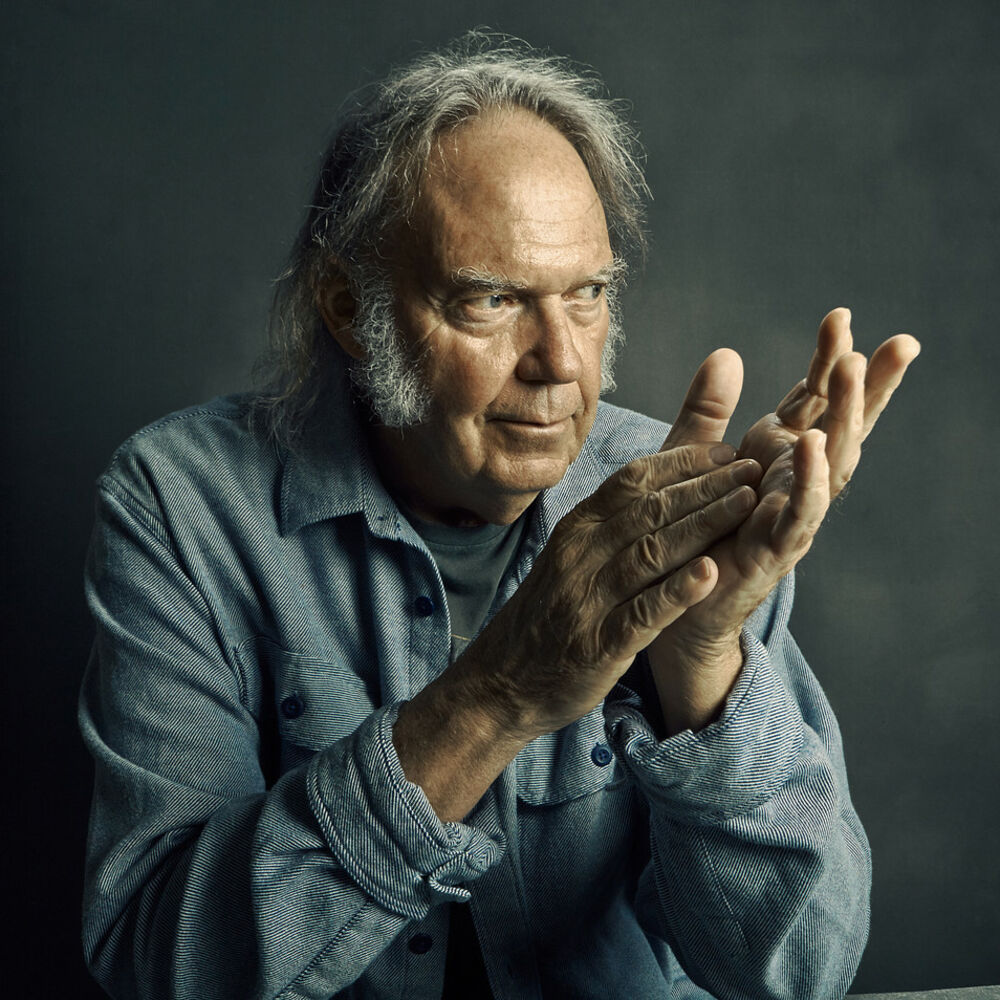
Pictured: Neil Young
← Today’s issueThe daily of where sound came fromp. 90
Born 1967 · Leonard Cohen, Joni Mitchell, Nick Drake
Singer-songwriter
One person, one guitar or piano, and lyrics written in the first person — the most enduring, least genre-bound tradition in this map. Singer-songwriter isn't defined by a sound so much as by an authorial stance: the writer is presumed to be singing about their own life.
See it on the map →How it started


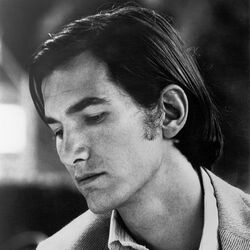
The mode crystallized around 1967 — Leonard Cohen's debut turning a poet's craft toward song, Joni Mitchell's earliest writing doing something similar from inside the folk clubs — though its most mythologized document, Nick Drake's hushed, guitar-and-string Pink Moon, didn't arrive until 1972, by which point Bob Dylan (Highway 61 Revisited, 1965) and the British folk-baroque scene around Bert Jansch had already been working the same basic idea from opposite ends: Dylan toward electric, image-dense wordplay, Jansch toward intricate acoustic fingerstyle.
It also made me want to be a wandering singer myself.
The template proved durable enough that it barely needed reinventing — Townes Van Zandt and John Prine brought a plainer, more narrative American vernacular to it in the same handful of years, and it survived nearly intact through decades of surrounding genres rising and falling. Its most direct later descendants — Elliott Smith in the 1990s, then Sharon Van Etten and Adrianne Lenker — inherited the same first-person confession, just recorded with a rock band's dynamics or, in Lenker's case, almost no production at all.
Essential records
Start here
Blue
 Joni Mitchell1971
Blue is often described as the confessional singer-songwriter record other confessional singer-songwriter records get measured against, and the description holds up: dulcimer and piano arrangements left almost bare, lyrics that name specific people and specific failures without any protective distance. "A Case of You" turns romantic devotion into something almost bottomless, its melody stretching further than the chord changes seem to allow. "River" reworks "Jingle Bells" into a lament so effective the connection barely registers on first listen. It remains a reference point for anyone writing about love and its aftermath in the first person.
No. 2
Highway 61 Revisited
 Bob Dylan1965
Highway 61 Revisited is the sound of Dylan fully electric and fully unfiltered, backing his surreal, accusatory lyrics with a loose, blues-rock band that never quite resolves into a groove the way a pop record would. "Like a Rolling Stone," six minutes long against every radio convention of the time, opens with a snare shot Bruce Springsteen once compared to a starting gun and never lets up. "Desolation Row"'s closing sprawl shows the album's other pole, a talking-blues surrealism with no chorus at all. It reset what a rock lyric was allowed to attempt.
No. 3
Songs of Leonard Cohen
 Leonard Cohen1967
Cohen's debut arrives already at full maturity: spare acoustic arrangements, occasional strings, and a voice that treats every line like it has been considered for years. "Suzanne" turns a walk by the river into something closer to scripture, its melody almost an afterthought next to the specificity of the images. "Sisters of Mercy" and "So Long, Marianne" show the same gift for turning a real relationship into something that reads as universal. It set the template — literary, unhurried, emotionally exact — that Cohen would spend the next four decades refining rather than abandoning.
No. 4
Pink Moon
 Nick Drake1972
Recorded in two sessions with almost no overdubs, Pink Moon strips Drake's sound to just voice and guitar, the intricate fingerpicking of "Place to Be" and "Know" left completely exposed. The title track runs barely two minutes, its five-note piano line the only addition to the whole record, and says more in that time than most albums manage across a side. It sounds less like a folk album than a private ritual accidentally left running. Its influence — on Elliott Smith, on an entire generation of hushed singer-songwriters — is now impossible to separate from the myth of the record itself.
No. 5
After the Gold Rush
 Neil Young1970
After the Gold Rush moves between hushed piano ballads and ragged full-band rock without ever feeling like two different records, Young's cracked tenor holding both ends together. Its plainspoken melodic directness — the same vein "Heart of Gold" would draw from two years later on Harvest — runs straight through the title track and "Only Love Can Break Your Heart." The title track's apocalyptic imagery, delivered over almost nothing, is stranger than the record's reputation for gentleness suggests. It's the sound of a songwriter working in miniature and still sounding enormous.
No. 6
Either/Or
 Elliott Smith1997
Either/Or sits at the hinge between Smith's earliest four-track recordings and his later, more fully arranged work, keeping the intimacy of the former while hinting at the melodic ambition of the latter. "Between the Bars" pairs a devastating lyric about addiction and codependency with a melody gentle enough to be mistaken for a lullaby, Smith's double-tracked voice barely rising above a whisper. "Angeles" does something similar with an unflinching account of the pressures of the music industry. It remains the record most commonly cited as the clearest distillation of his early style.
No. 7
John Prine
 John Prine1971
Prine's debut arrived fully formed, its plain acoustic arrangements leaving no distance between his conversational delivery and the songs' considerable emotional weight. "Angel from Montgomery," written from the perspective of an aging woman looking back on a disappointing life, shows the empathetic character work that would define his whole catalog. "Sam Stone," about a veteran's addiction and death, does the same for a subject most songwriters of the era treated with far less specificity. It remains one of the strongest, most economical debut albums in American songwriting.
No. 8
Townes Van Zandt
 Townes Van Zandt1969
Townes Van Zandt re-recorded much of his thinly-produced debut with fuller, string-touched arrangements, and the songs are strong enough to survive either treatment. "Waiting Around to Die" opens the record with a matter-of-fact bleakness — poverty, addiction, a life sliding toward its end — delivered in a plain baritone that never asks for sympathy. "Colorado Girl" and "For the Sake of the Song" show the same directness turned toward tenderness. It's the clearest early statement of a catalog built almost entirely on that unflinching first-person voice.
Who plays it
The originators, 1965–1972
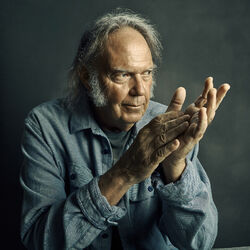
A remarkably tight cluster — American and British folk clubs, working within a handful of years of each other, that defined the entire mode almost on the first try.




Later inheritors
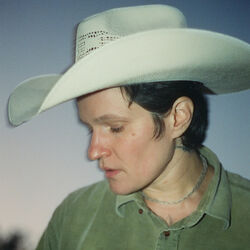
A real gap — decades, not years — separates these three from the originators above, but the stance carries over unchanged: the same first-person confession, recorded in very different studio contexts.


Where it came from, where it went
- Singer-songwriter1967
- Where it went
Nothing on the map came before it: this is where its road starts.