Tap any face to see why they're in the photo

Who shaped them

Pulp

Pulp

Since 1978 · United Kingdom

Pulp formed in Sheffield in the late 1970s around Jarvis Cocker, spending well over a decade in relative obscurity before finding wider recognition during the Britpop era of the mid-1990s. Their story

See them on the map

Press ▶︎ to play

Loading…

It really plays! Press the middle

Who they shaped

Nobody on the map lists them as an influence yet.

Behind them, left to right: Big Thief, Devo, The Velvet Underground, Leonard Cohen, Scott Walker, Big Star, David Bowie.

The bigger the face, the stronger the proof: they said it themselvesreporteda critic, or widely accepted

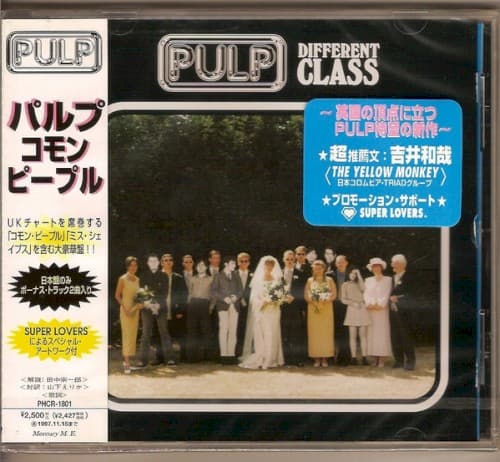
Different Class cover

Start here

Different Class (1995)

Different Class pairs Jarvis Cocker's wry, class-conscious lyricism with the sharpest, most danceable arrangements Pulp had yet attempted. "Common People" builds a driving synth-and-guitar pulse under a lyric that turns a specific social observation into a genuine pop anthem, the tension between the song's bitterness and its infectiousness never resolving. The album's mix of satire and real craft set it apart from much of the Britpop it's often filed alongside. Decades later, it remains the record most identified with Pulp's brief run at the center of British pop culture.

Sleeve notes

Pulp

Different Class · 1995

Pulp formed in Sheffield in the late 1970s around Jarvis Cocker, spending well over a decade in relative obscurity before finding wider recognition during the Britpop era of the mid-1990s. Cocker has named Scott Walker and Leonard Cohen as his chief influences, describing a formative encounter in which Cohen personally warned him to be careful exploring what Cocker calls the "sacred mechanics" of songwriting — advice Cocker has said he has followed across his career — alongside a broader debt to the Velvet Underground, the Kinks, and the glam-era theatricality of David Bowie and T. Rex.

Different Class (1995) became the album most responsible for Pulp's commercial and critical peak, pairing Cocker's wry, class-conscious lyricism with a sharper, more danceable version of the band's sound than their earlier, more marginal records had attempted. The album's mix of social observation and genuine pop craft set Pulp apart from many of their Britpop contemporaries, and its songs remained the ones most associated with the band's identity long after the initial wave of attention had passed.

Since 1978 · United Kingdom