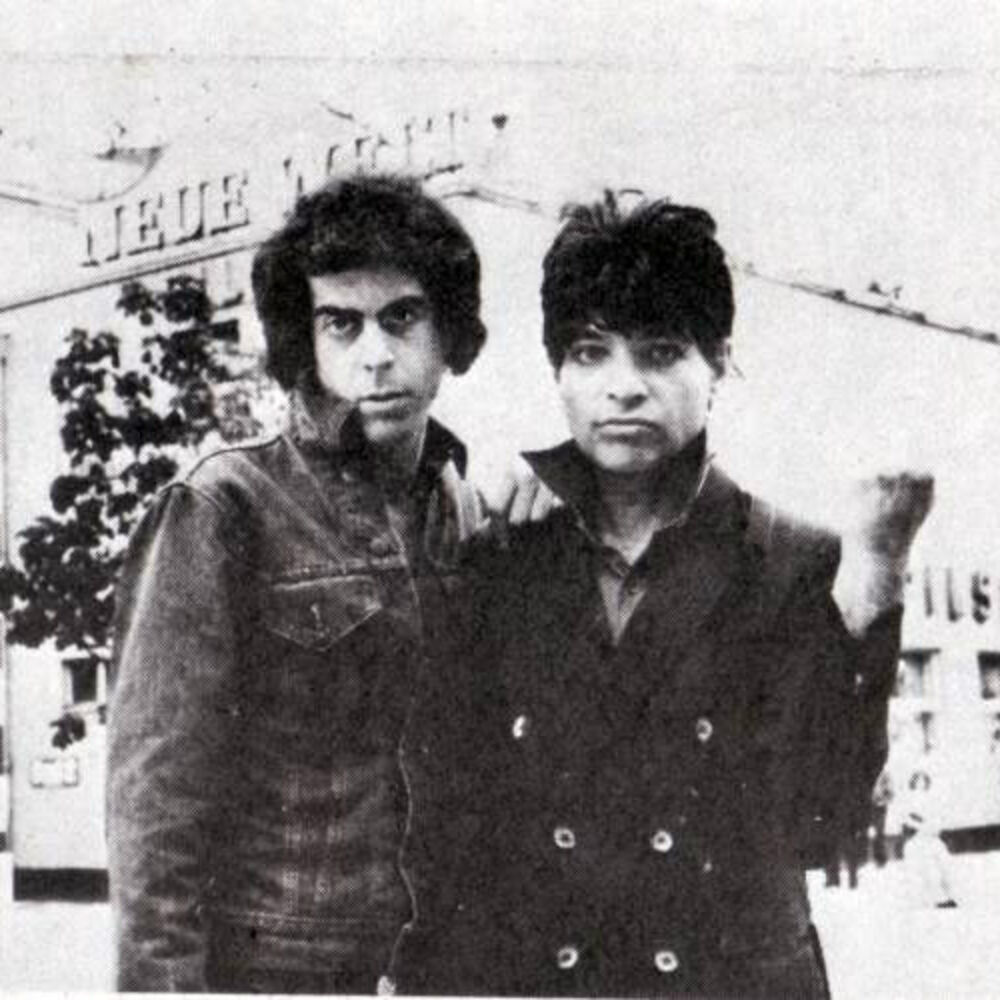
Pictured: Suicide
← Today’s issueThe daily of where sound came fromp. 62
Born 1975 · Throbbing Gristle form in Hull
Industrial
Music that treats the factory floor as an instrument — scrap metal, tape loops, and synthesizers pushed toward deliberately harsh, mechanized noise. Industrial took punk's confrontation and stripped out anything that could be mistaken for entertainment.
See it on the map →How it started


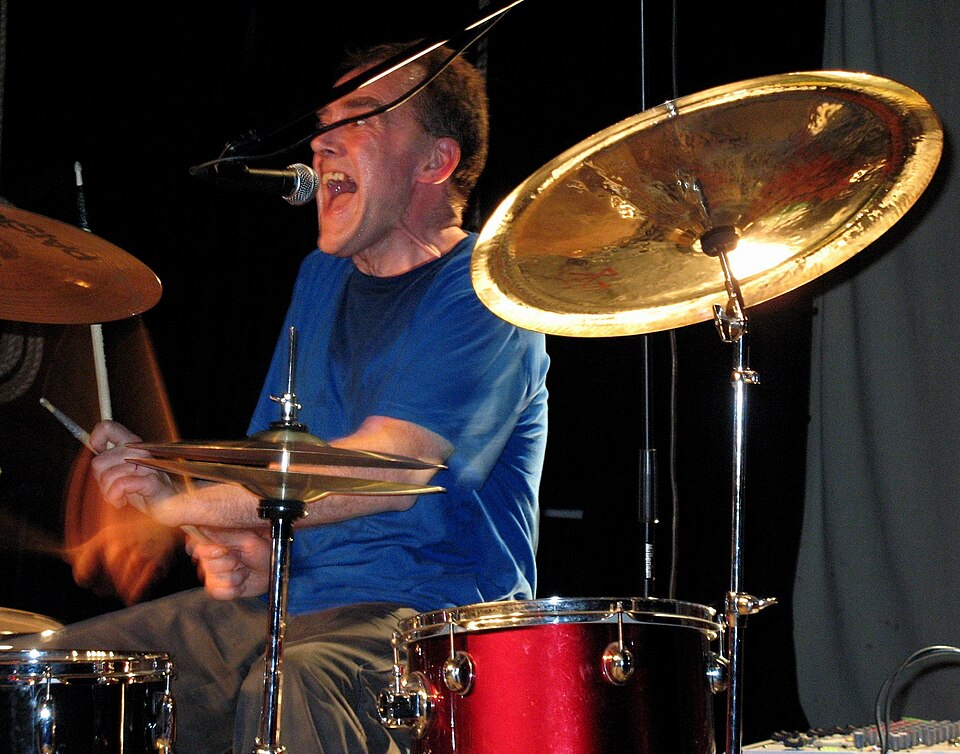


Throbbing Gristle, forming in Hull in 1975 and coining the term itself via their own Industrial Records label, treated the studio as a machine for producing calculated unpleasantness — tape manipulation, distorted electronics, and deliberately abrasive live performance art rather than songs in any conventional sense. Throbbing Gristle isn't on this map, but the scene's basic instinct — noise as confrontation, the factory rather than the stage as the guiding image — runs through every artist below.
Drake was inspirational to me in thinking about the simplicity and about creating something that has genuine power and truth in it, with very simple means.
Suicide, working in New York around the same years with nothing but a drum machine and a synthesizer, arrived at a parallel minimal, menacing electronic-punk sound with no direct link to the UK scene; Cabaret Voltaire in Sheffield split the difference, closer to Throbbing Gristle's tape-collage instinct but with more of a groove underneath it. By the mid-80s the term had loosened enough to cover anything that treated distortion and repetition as compositional tools rather than texture, which is how a British free-improv-adjacent band like This Heat and a much later, stranger project like Coil both ended up carrying the tag.
Essential records
Start here
Suicide
 Suicide1977
Suicide's debut strips rock and roll to a drum machine pulse, a two-note synth line, and Alan Vega's voice — and somehow the result feels more menacing than anything built from guitars. "Ghost Rider" compresses the whole aesthetic into three minutes of monotone dread, Vega repeating the title like a threat rather than a lyric. "Frankie Teardrop" pushes the same minimal palette to a ten-minute extreme, a bare account of a man's collapse that ends in unscripted-sounding screams. It's a genuinely frightening record, made with almost no equipment, that still unsettles decades on.
No. 2
Red Mecca
 Cabaret Voltaire1981
Red Mecca is Cabaret Voltaire at their coldest — tape loops, treated voice, and a rhythm section that sounds like machinery rather than musicians, made amid a genuinely tense mood in the band's home city. "Split Second Feeling" and "Sluggin' Fer Jesus" build dread out of repetition rather than melody, voices looping and degrading until they stop resembling language. There's no relief built into the record — no chorus, no release — which is exactly the point of an album more interested in atmosphere than songcraft. It remains one of the starkest documents of early British industrial music, years before the term had settled into a genre.
No. 3
Horse Rotorvator
 Coil1986
Horse Rotorvator builds its dread out of real instruments as often as machines -- brass, strings and bone-dry percussion arranged with a formality that makes the horror feel ceremonial rather than chaotic. "Ostia (The Death of Pasolini)" sets the murder of the Italian director to a slow, almost stately arrangement, John Balance singing it as elegy instead of shock. The record's industrial machinery is audible throughout but subordinated to composition, which is what separated Coil from the scene they came out of. It is the album that most fully realised their idea of industrial music as ritual, and the one critics reach for when the genre's canon is drawn up.
Who plays it
The founding wave, 1975–1981
Suicide's stripped-down synth-punk menace and Cabaret Voltaire's tape-collage electronics arrived from opposite ends of the Atlantic within a few years of Throbbing Gristle coining the term itself.
Industrial's harsher descendants
Swans took the scene's mechanized repetition into full-band, physically punishing extremes; Coil, decades later, pushed the same source material toward something stranger and more occult.
Where it came from, where it went
- Art rock1967
- Krautrock1968
- Industrial1975
Nothing on the map has grown out of it yet.