Tap any face to see why they're in the photo

Who shaped them

Siouxsie & The Banshees

Siouxsie & The Banshees

Since 1976 · United Kingdom

Siouxsie Sioux and Steve Severin formed the Banshees as confrontational performance artists who happened to make music… Their story

See them on the map

Press ▶︎ to play

Loading…

It really plays! Press the middle

Who they shaped

Behind them, left to right: Kraftwerk, Can, David Bowie, Neu!, The Velvet Underground.

In front, left to right: Slowdive, The Cure, Lush, FKA twigs, The Jesus Lizard, My Bloody Valentine, The Knife, Cat Power, Cocteau Twins, Depeche Mode, St. Vincent, The Cranberries.

Not in the photo: . Often assumed; they've said no.

The bigger the face, the stronger the proof: they said it themselvesreporteda critic, or widely accepted

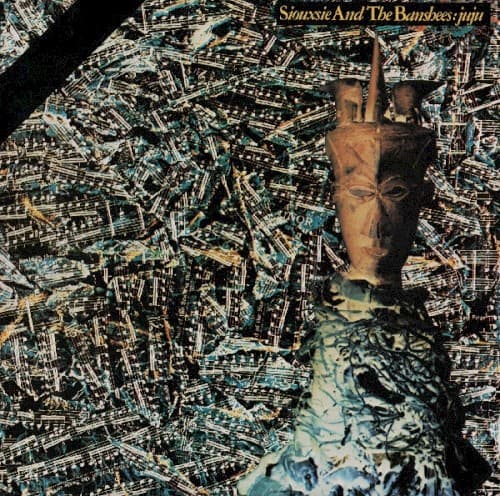
Juju cover

Start here

Juju (1981)

Siouxsie & The Banshees distilled everything that made their early records intense and made it more controlled and surgical — the guitars sharper, the arrangements darker and more theatrical. John McGeoch's guitar work is some of the most inventive post-punk playing ever committed to tape, moving between scraped percussive textures and full melodic leads within the same song. Juju established the template for gothic rock as a coherent aesthetic — dramatic, physical, and sophisticated.

Sleeve notes

Siouxsie & The Banshees

Juju · 1981

Siouxsie Sioux and Steve Severin formed the Banshees as confrontational performance artists who happened to make music — their first "gig" at the 100 Club Punk Festival in 1976 was twenty minutes of improvised noise involving a drummer who had never played drums and Siouxsie reciting the Lord's Prayer over a guitar riff. By the time they released The Scream (1978), the noise had acquired structure and their version of post-punk was formally the most unusual of any of their contemporaries: John McKay's guitar was a maze of non-rock tunings and angles; Kenny Morris's drumming arrived at the beat from odd directions.

What followed — Join Hands, Kaleidoscope, Juju, A Kiss in the Dreamhouse — constitutes one of the most consistently interesting catalogs in post-punk, each album reorganizing the band's sound around new obsessions. Siouxsie's voice, which could be ice-cold or operatically theatrical, became the template for goth femininity in a way that was actually more complicated than the aesthetic it inspired. The Banshees' guitar textures — those eerie arpeggiated lines on "Spellbound" or "Slowdive" — run directly through shoegaze and dream-pop in ways that remain under-acknowledged.

Since 1976 · United Kingdom