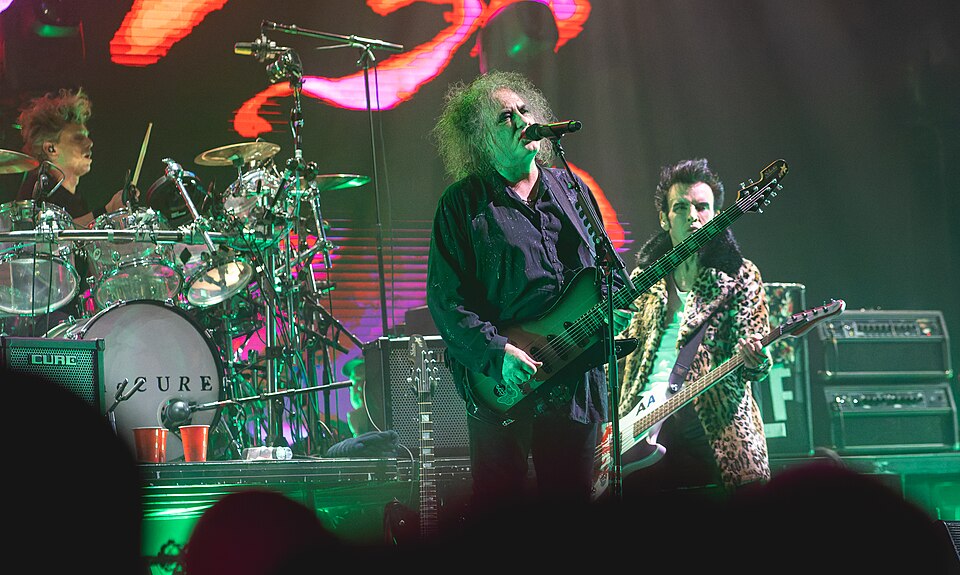
Pictured: The Cure
← Today’s issueThe daily of where sound came fromp. 16
Born 1979 · Bauhaus, "Bela Lugosi's Dead"
Gothic rock
Post-punk's morbid, theatrical wing — minor-key doom, funereal drums, and death-imagery romanticism where punk's anger curdled into something more gothic and glamorous. Goth split off from the rest of post-punk within the same UK scene, around one Bauhaus single.
See it on the map →How it started
 Siouxsie & The Banshees1976
 The Birthday Party1976
- The Cure1978
 The Chameleons1981
 The Last Dinner Party2021
Bauhaus's 1979 single "Bela Lugosi's Dead" — nine minutes of dub-cavernous bass, sparse guitar scratches, and Peter Murphy's vampiric drawl, named after the Dracula actor outright — is the genre's usual origin point, even though Bauhaus themselves aren't on the map here. Siouxsie and the Banshees and The Birthday Party arrived from the same UK post-punk scene at almost the same moment, both trading post-punk's angularity for something more theatrical and explicitly morbid, Nick Cave's Birthday Party detouring into outright blues-damaged menace.
David Bowie was probably the first artist that I felt was mine. He was singing to me.
The Cure crossed over from their own more angular post-punk beginnings into goth's defining mainstream statement, Disintegration (1989), while The Chameleons worked the same UK scene with less commercial reward and a more devoted cult following. The genre never stayed confined to the UK or the 1980s — Dead Can Dance took it toward neoclassical and world-music territory from Australia, and a 2020s London band, The Last Dinner Party, has recently picked the same theatrical instinct back up wrapped in chamber-pop orchestration.
Essential records
Start here
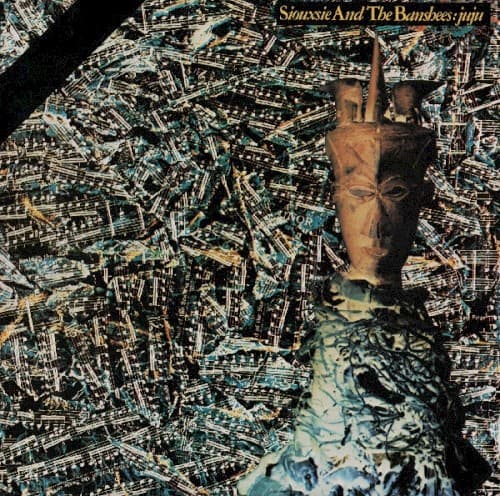
Juju
Siouxsie & The Banshees distilled everything that made their early records intense and made it more controlled and surgical — the guitars sharper, the arrangements darker and more theatrical. John McGeoch's guitar work is some of the most inventive post-punk playing ever committed to tape, moving between scraped percussive textures and full melodic leads within the same song. Juju established the template for gothic rock as a coherent aesthetic — dramatic, physical, and sophisticated.
No. 2
Disintegration
The Cure1989The album where the Cure's layered guitar aesthetic reached its fullest expression — Smith's acoustic and electric parts multiplied and panned into a shimmering density that fills the stereo image completely. 'Plainsong' opens with a synthesiser swell that takes ninety seconds to resolve into a song; 'Lovesong,' the closest the record comes to pop, reached number one in America against all odds. Disintegration defined an entire aesthetic register — big, sorrowful, beautiful — that the shoegaze generation built upon.
No. 3
Junkyard
A feral, blues-damaged racket built around Rowland S. Howard's serrated slide guitar and a young Nick Cave's unhinged howl, more chaotic and more violent than anything the goth scene it partly spawned would attempt. Recorded amid the band's own disintegration, it channels that collapse directly into the performances — nothing here sounds rehearsed or safe. 'Release the Bats' turned camp horror-movie imagery into a genuine art-punk anthem, its title becoming shorthand for an entire aesthetic. The band split within a year of its release, leaving Junkyard as their most extreme and complete statement.


Who plays it
The UK founding wave
The scene that actually invented the genre, all working out of the UK's late-70s post-punk moment — The Cure and Siouxsie and the Banshees crossing over from more angular beginnings, The Birthday Party pushing toward blues-damaged menace, The Chameleons working the same territory with a smaller audience.
Beyond the UK
Goth's theatrical instinct outliving its original scene by decades and continents — Dead Can Dance's neoclassical turn from Australia, The Last Dinner Party's 2020s London chamber-pop update.
Where it came from, where it went
- Garage rock1963
- Proto-punk1967
- Punk1976
- Post-punk1978
- Gothic rock1979
- Where it went