Tap any face to see why they're in the photo

Who shaped them

Talking Heads

Talking Heads

Since 1975 · United States

By the time the Talking Heads played their first proper gig at CBGB in 1975, they were already studying something most of their neighbours were deliberately not studying: musicology. Their story

See them on the map

Press ▶︎ to play

Loading…

It really plays! Press the middle

Who they shaped

Behind them, left to right: David Bowie, The Stooges, The Velvet Underground, Ramones.

In front, left to right: Sonic Youth, The Blue Nile, Arcade Fire, Spoon, MGMT, black midi, LCD Soundsystem, Pixies, Radiohead, Modest Mouse, Vampire Weekend.

Not in the photo: . Often assumed; they've said no.

The bigger the face, the stronger the proof: they said it themselvesreporteda critic, or widely accepted

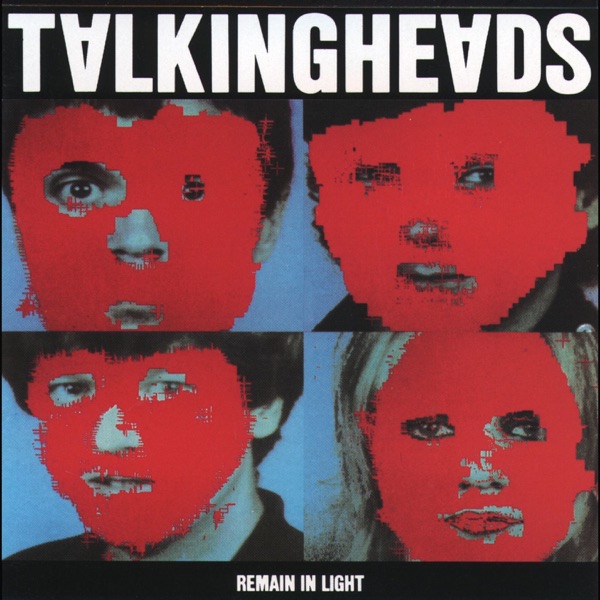
Remain in Light cover

Start here

Remain in Light (1980)

Brian Eno and David Byrne stripped the band's rhythms to their cellular components and rebuilt them from the outside in, layering polyrhythmic African guitar patterns over Adrian Belew's alien lead work and a rhythm guitar that functions more as percussion than harmony. 'Once in a Lifetime' — a talking-blues meditation on subconscious anxiety, delivered by Byrne like a televangelist losing his nerve — is the obvious touchstone, but 'Crosseyed and Painless' hits harder as a pure rhythmic proposition. The album invented a template for the post-punk dance floor and for indie rock's engagement with African music simultaneously.

Sleeve notes

Talking Heads

Remain in Light · 1980

By the time the Talking Heads played their first proper gig at CBGB in 1975, they were already studying something most of their neighbours were deliberately not studying: musicology. David Byrne, Tina Weymouth, Chris Frantz, and later Jerry Harrison had been to art school. They approached rock music as a form to be interrogated rather than inhabited, and their early singles — "Psycho Killer," "Love → Building on Fire" — have the quality of well-executed conceptual art: the anxiety is structural, not performed.

The Brian Eno collaborations expanded the vocabulary still further, grafting African polyrhythm, tape manipulation, and ambient drift onto new wave skeletons. Remain in Light (1980) practically invented what would later be called post-rock, world music crossover, and danceable art-rock simultaneously. Byrne's jittery baritone, always sounding like a man trying to describe an experience for which he has no frame, became one of rock's great vocal signatures. Their influence on every band that wants to be smart and physical at the same time is immense.

Since 1975 · United States

Played at

CBGB

New York · 1974–1977

On the bill

Art-school outsiders who played their first proper gig here in 1975; David Byrne has recounted Johnny Ramone handing them an opening slot with the endorsement "Sure, they're gonna suck, so no problem."

The whole scene