
Pictured: Aphex Twin
← Today’s issueThe daily of where sound came fromp. 70
Born 1992 · Warp's Artificial Intelligence compilation
IDM
Electronic music built for listening rather than dancing — knotty, deliberately inhuman rhythm programming applied with a composer's patience rather than a DJ's. IDM took techno's machinery and pointed it inward, chasing timbral detail and rhythmic complexity a dancefloor has no real use for.
See it on the map →How it started

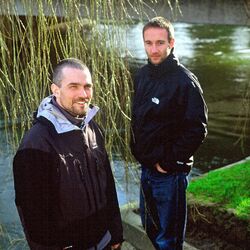


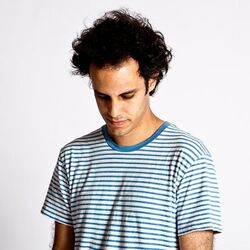

The name is a compromise nobody especially likes — "Intelligent Dance Music" implies everything else is unintelligent — but it stuck after Warp Records released the Artificial Intelligence compilation in 1992, pitching a set of British and American electronic producers as headphone music, chairs rather than a dancefloor. Warp had already built its reputation on rave-adjacent bleep techno; Artificial Intelligence was a deliberate turn toward the living room.
When I was first getting spun out by music, it was things like K-Rob, Kraftwerk's 'Tour de France'... and stuff like Jonzun Crew.
Aphex Twin (Richard D. James) became the genre's most visible and prolific figure almost immediately, releasing Selected Ambient Works 85–92 that same year and spending the next decade alternating between that record's title and a much harsher, more abrasive extreme. Autechre and Squarepusher pushed the same Warp-adjacent scene toward increasingly granular rhythm programming through the mid-90s, treating the drum machine itself as an instrument to be broken apart and reassembled rather than a beat to be kept.
Essential records
Start here
Selected Ambient Works 85–92
 Aphex Twin1992
Selected Ambient Works 85–92 collects tracks Richard D. James made largely alone, over several years, before electronic music had many established ambient conventions to draw on. "Xtal" opens the record on a hazy, pitched-vocal loop over a soft breakbeat, setting a tone — melodic, slightly melancholy, unhurried — that the rest of the album maintains without repeating itself. "Ageispolis" and "Green Calx" show the same instincts pushed into stranger, more abstract territory. Decades on, it still functions as a kind of entry point for ambient techno, precise and personal in a genre that can otherwise feel anonymous.
No. 2
Music Has the Right to Children
 Boards of Canada1998
Music Has the Right to Children sounds like a childhood half-remembered — warm analog synths deliberately detuned and wobbling, drum patterns that shuffle rather than snap, samples of children's voices surfacing and receding without context. "Roygbiv" is the clearest distillation, a short, major-key piece built from a simple bassline and a haze of pitch-bent chords that manages to feel both comforting and faintly wrong. "Aquarius" pairs a stuttering vocal sample with one of the duo's most memorable melodic hooks. The album's specific brand of hazy, nostalgic dread became one of the most widely imitated textures in electronic music over the following decade.
No. 3
Tri Repetae
 Autechre1995
Tri Repetae is the record where Autechre's early melodic electro hardened into something colder and more mechanical, rhythms built from clanking, industrial-sounding samples rather than conventional drum machines. "Second Bad Vilbel" rides a lurching, off-grid beat that never quite resolves into a stable pulse, forcing the listener to adjust to it rather than the other way around. "Dael" and "Rotar" push the same instincts into more abrasive territory, texture standing in for melody almost entirely. It's widely treated as a turning point in the IDM genre's move away from its more dancefloor-friendly beginnings.
No. 4
Hard Normal Daddy
 Squarepusher1997
Hard Normal Daddy is the record where Squarepusher's two obsessions — breakneck, digitally chopped breakbeats and genuinely accomplished jazz-fusion bass playing — sit most comfortably side by side. The rhythm programming is dense almost to the point of overload, drum edits arriving faster than a human drummer could physically play them, while Jenkinson's bass lines underneath sound completely live and melodically fluent. "Beep Street" is the clearest example of that tension working, virtuoso playing riding a breakbeat that refuses to settle into a groove. It remains one of the most technically demanding records to come out of the mid-'90s Warp/Rephlex scene, and one of the least imitated simply because so few other producers can play like Jenkinson does.
Who plays it
The Warp generation
The scene that actually built the genre in the 1990s, revolving around Warp Records and a small circle of British producers pushing rhythm programming toward the genuinely abstract.
IDM's folktronica turn
A later generation folded IDM's production complexity into warmer, more song-based and acoustic-adjacent material — the machinery stayed intricate, but the mood softened.
Where it came from, where it went
- Art rock1967
- Krautrock1968
- Synth-pop1978
- IDM1992
- Where it went