Tap any face to see why they're in the photo

Who shaped them

Sigur Rós

Sigur Rós

Since 1994 · Iceland

Sigur Rós formed in Reykjavík in 1994, and found their signature sound once vocalist Jónsi Birgisson began playing guitar with a cello bow, drawing out long, keening tones that blurred the line between voice and instrument. Their story

See them on the map

Press ▶︎ to play

Loading…

It really plays! Press the middle

Who they shaped

Behind them, left to right: My Bloody Valentine, Ride.

In front, left to right: 2814, Radiohead.

Not in the photo: . Often assumed; they've said no.

The bigger the face, the stronger the proof: they said it themselvesreporteda critic, or widely accepted

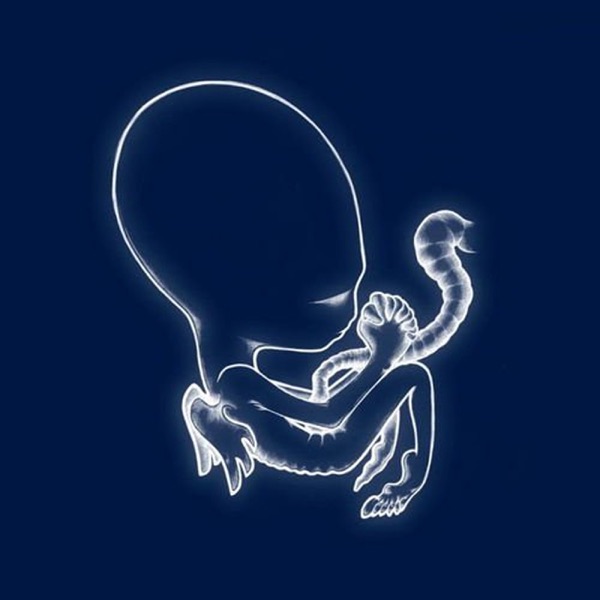
Ágætis byrjun cover

Start here

Ágætis byrjun (1999)

Ágætis byrjun moves at a glacial pace that makes its eventual swells feel genuinely monumental. "Svefn-g-englar" opens the album with a slow, bowed-guitar drone and Jónsi's falsetto rising out of it in a language of his own invention, the absence of comprehensible lyrics only heightening the sense of pure feeling. The song takes its time in a way almost no other album from the era dared, patient to the point of stillness before finally opening up. It's the record that established Sigur Rós's entire vocabulary — vast, wordless, indifferent to conventional structure — in one opening statement.

Sleeve notes

Sigur Rós

Ágætis byrjun · 1999

Sigur Rós formed in Reykjavík in 1994, and found their signature sound once vocalist Jónsi Birgisson began playing guitar with a cello bow, drawing out long, keening tones that blurred the line between voice and instrument. Birgisson's falsetto, often sung in an invented language the band nicknamed Vonlenska ("Hopelandic"), stripped away specific meaning in favor of pure emotional texture, letting the music's vast, glacial soundscapes carry the weight a conventional lyric might otherwise.

Ágætis byrjun (1999) was the album that brought the band international attention, its slow-building arrangements and Birgisson's wordless falsetto establishing a template — patient, enormous, indifferent to conventional song structure — that the band would return to and refine over the following decades. Their Icelandic origins and the stark, otherworldly landscape often invoked in descriptions of their music became inseparable from how the band was received abroad, even as the band members themselves resisted any single explanation of what the music was supposed to evoke.

Since 1994 · Iceland