Tap any face to see why they're in the photo

Who shaped them

Nobody on the map came before them: they're where this line starts.

Talk Talk

Talk Talk

Since 1981 · United Kingdom

Talk Talk formed in London in 1981 as a synth-pop act, but under the direction of singer and songwriter Mark Hollis the band moved steadily away from that sound across the decade, culminating in a pair of albums… Their story

See them on the map

Press ▶︎ to play

Loading…

It really plays! Press the middle

Who they shaped

In front, left to right: Radiohead, Slowdive, Grizzly Bear, Bark Psychosis, Do Make Say Think, Perfume Genius.

The bigger the face, the stronger the proof: they said it themselvesreporteda critic, or widely accepted

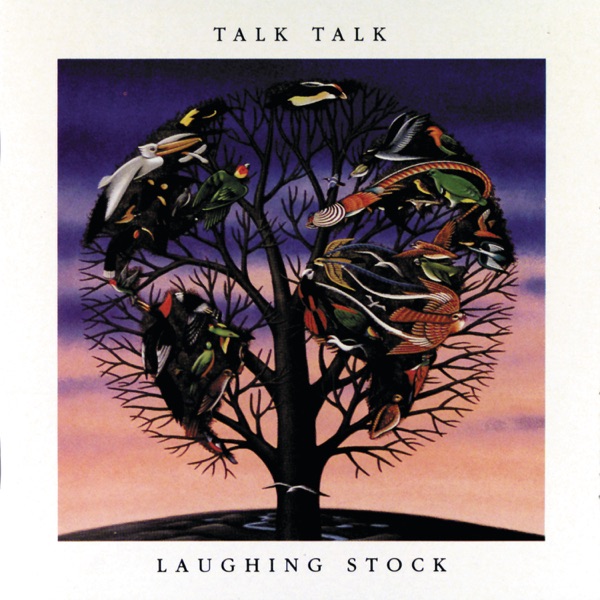
Laughing Stock cover

Start here

Laughing Stock (1991)

Laughing Stock treats silence as seriously as sound, built from extended improvised sessions edited down into spacious, unhurried pieces that rarely resemble conventional songs at all. "New Grass" drifts through shifting instrumental textures — organ, guitar, brushed drums — that seem to arrive and recede according to their own logic rather than any verse-chorus structure. Mark Hollis's hushed, fragmentary vocal treats words as just another texture in the mix rather than the song's focus. Barely noticed at the time, it's now recognized as one of the direct sources of the entire post-rock movement that followed it.

Sleeve notes

Talk Talk

Laughing Stock · 1991

Talk Talk formed in London in 1981 as a synth-pop act, but under the direction of singer and songwriter Mark Hollis the band moved steadily away from that sound across the decade, culminating in a pair of albums — Spirit of Eden (1988) and Laughing Stock (1991) — that abandoned conventional song structure almost entirely in favor of long, improvised sessions edited down into spacious, deeply atmospheric pieces. Hollis's famous dictum that silence was as important as any note played became the guiding principle of the band's late work.

Laughing Stock (1991), recorded through extended, largely improvised studio sessions with a rotating cast of musicians and edited into its final form afterward, pushed that philosophy to its furthest point, trading anything resembling a hook for slow-building dynamics and vast negative space. The album found almost no commercial audience on release, and Hollis effectively retired from music not long after, but its patient, spacious approach was gradually recognized as a direct forerunner of the post-rock movement that emerged in the years that followed, cited by numerous later bands as foundational listening.

Since 1981 · United Kingdom