Tap any face to see why they're in the photo

Who shaped them

Can

Can

Since 1968 · Germany

Can formed in Cologne in 1968 around Holger Czukay and Irmin Schmidt, both former students of Karlheinz Stockhausen, alongside guitarist Michael Karoli and drummer Jaki Liebezeit, a jazz musician whose metronomic precision became the band's defining instrument. Their story

See them on the map

Press ▶︎ to play

Loading…

It really plays! Press the middle

Who they shaped

Behind them, left to right: The Velvet Underground.

In front, left to right: Joy Division, The Fall, Stereolab, Swans, Coil, Portishead, Siouxsie & The Banshees, American Football, Four Tet, Black Country, New Road, Tame Impala, The Cure. And 9 more: Cabaret Voltaire, This Heat, Weyes Blood, Radiohead, Animal Collective, The Jesus and Mary Chain, Gary Numan, The Sound, Tortoise.

The bigger the face, the stronger the proof: they said it themselvesreporteda critic, or widely accepted

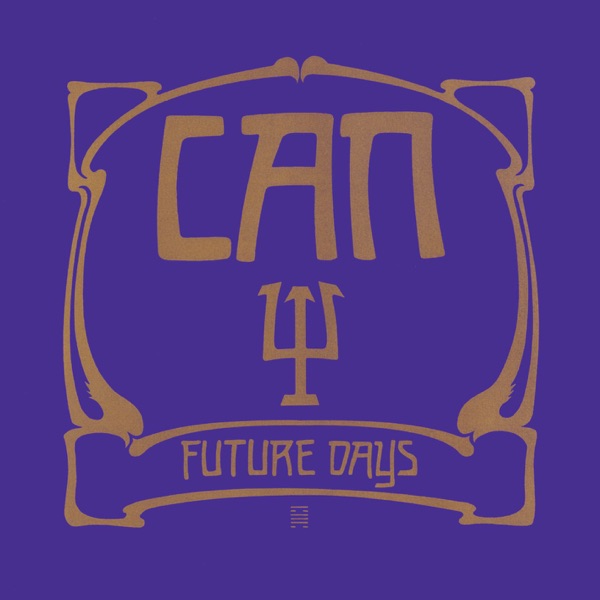
Future Days cover

Start here

Future Days (1973)

Can's third album with singer Damo Suzuki traded the sprawling improvisation of Tago Mago for something more atmospheric and dissolved — long, floating pieces built from Jaki Liebezeit's impossibly steady motorik pulse and Holger Czukay's tape-collage production. The title track drifts on shimmering guitar and synthesizer textures until it barely resembles a rock song at all; 'Moonshake' compresses the same instincts into something closer to a pop single. It was Suzuki's final record with the band before he left to become a Jehovah's Witness, and it stands as the most serene and most influential entry in a catalog that shaped ambient, post-rock, and electronic music for decades after.

Sleeve notes

Can

Future Days · 1973

Can formed in Cologne in 1968 around Holger Czukay and Irmin Schmidt, both former students of Karlheinz Stockhausen, alongside guitarist Michael Karoli and drummer Jaki Liebezeit, a jazz musician whose metronomic precision became the band's defining instrument. Early vocalist Malcolm Mooney, an American sculptor, gave way in 1970 to Damo Suzuki, a Japanese street musician the band discovered busking in Munich and invited on stage that same night — he sang with Can for the next three years without ever properly rehearsing a lyric.

Tago Mago (1971) is the sprawling, avant-garde landmark most listeners meet first, built from tape edits and extended improvisation; Future Days (1973), Suzuki's final album with the group, moved toward something calmer and more atmospheric before he left to become a Jehovah's Witness. Ege Bamyasi (1972) sits between the two. Can never had a hit and rarely toured outside Europe, but Liebezeit's motorik drumming and Czukay's tape-collage production techniques run directly through post-punk, ambient, and electronic music — David Bowie and Brian Eno both named them as a formative influence.

Since 1968 · Germany

Played at

Düsseldorf–Cologne

Düsseldorf · 1968–1974

On the bill

The Cologne end of the corridor and the oldest of the three, working from a conservatoire background rather than a rock one, with a rhythm section precise enough to make improvisation sound composed.

The whole scene