Tap any face to see why they're in the photo

Who shaped them

The Jesus and Mary Chain

The Jesus and Mary Chain

Since 1983 · United Kingdom

On the evidence of "Upside Down" (1984), their debut single on Creation Records, it seemed possible that the Jesus and Mary Chain were doing a single, spectacular thing… Their story

See them on the map

Press ▶︎ to play

Loading…

It really plays! Press the middle

Who they shaped

Behind them, left to right: Can, The Stooges, The Velvet Underground, New York Dolls.

In front, left to right: Pixies, My Bloody Valentine, Slowdive, Black Tambourine, Mogwai, Destroyer, The Stone Roses.

Not in the photo: . Often assumed; they've said no.

The bigger the face, the stronger the proof: they said it themselvesreporteda critic, or widely accepted

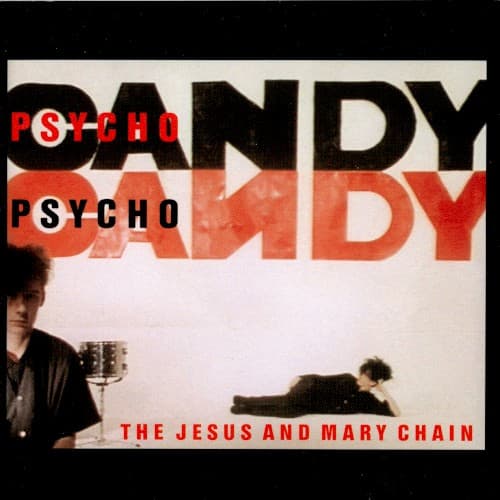
Psychocandy cover

Start here

Psychocandy (1985)

The Jesus and Mary Chain buried the most straightforwardly melodic songwriting impulses in British music under a wall of feedback and cassette-quality distortion — and the melodies are good enough to survive the treatment. 'Just Like Honey' carries one of the decade's most immediately affecting vocal melodies on a drum-machine thump and feedback wash; 'Never Understand' demonstrates the more aggressive pole. It created the template for noise-pop — aggressive sound design as a vehicle for romantic songwriting — that My Bloody Valentine and two decades of indie bands would inherit.

Sleeve notes

The Jesus and Mary Chain

Psychocandy · 1985

On the evidence of "Upside Down" (1984), their debut single on Creation Records, it seemed possible that the Jesus and Mary Chain were doing a single, spectacular thing: they had placed the Velvet Underground's most abrasive noise behind a Phil Spector girl-group song and turned the volume up until the relationship became something genuinely new. Jim and William Reid played twenty-minute sets with their backs to the audience, generated feedback that caused walkouts and press features in equal measure, and seemed to be proving a point about the concealed violence in pop.

Psychocandy (1985) is where the argument crystallized into art: feedback as texture, as melody, as the medium through which the sweetness of the songwriting is filtered. The album practically invented shoegaze's central aesthetic move — the guitar-noise veil over vulnerable emotion — and did so with a kind of bruised elegance that subsequent practitioners rarely matched. Their later albums — Darklands, Automatic, Honey's Dead — refined the palette in different directions, discovering new balances between aggression and tenderness. Nearly every guitar band of the late eighties owes them something.

Since 1983 · United Kingdom