
Pictured: Sufjan Stevens
← Today’s issueThe daily of where sound came fromp. 98
Born 2004 · Sufjan Stevens and Iron & Wine
Indie folk
Folk's traditional forms filtered through indie rock's dynamics, DIY recording, and a generation raised on lo-fi as much as on the Greenwich Village folk revival. Indie-folk keeps folk's acoustic core but adds a rock band's structure, texture, and volume.
See it on the map →How it started
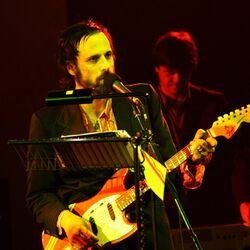


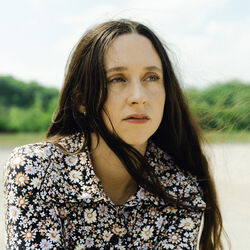
Silver Jews' American Water (1998) and The Mountain Goats' early boombox-recorded records had already found a plainspoken, literate register between folk and indie rock years before the genre had a name — David Berman's and John Darnielle's songwriting drawing as much on rock lyricism as on folk tradition. The genre itself dates to 2004, once Sufjan Stevens' and Iron & Wine's records (the latter outside this map) made the combination legible as its own thing: hushed, acoustic-based songwriting recorded with an indie band's studio ambition rather than a folk revivalist's minimalism.
I always had a dream to be that sort of student of Neil Young, one of those people who can sit down and write a song and have it be this full statement and sound good.
Bon Iver's For Emma, Forever Ago (2007), recorded alone in a Wisconsin cabin, became the genre's most influential single record, and a wide 2010s–2020s generation — Big Thief, Phoebe Bridgers, Waxahatchee, Kurt Vile — built distinct, individual variations on the same basic promise: real folk songwriting, indie rock's studio and dynamic range.
Essential records
Start here
For Emma, Forever Ago
 Bon Iver2007
Recorded alone in a Wisconsin cabin over a single winter, For Emma, Forever Ago sounds exactly like its origin story: close-mic'd, heavily reverbed, built from layered falsetto vocals that read as private even when the words aren't fully intelligible. "Skinny Love" pairs a simple chord progression with a vocal performance that cracks and strains in ways a more polished record would have smoothed over. "Flume" opens the album on a similarly exposed note, alone with an acoustic guitar and almost no other instrumentation. Its hushed, isolated aesthetic became one of the most imitated sounds in American indie music of its decade.
No. 2
Illinois
 Sufjan Stevens2005
Illinois piles up banjos, horns, and layered vocal arrangements into something closer to a folk-orchestral pageant than a conventional singer-songwriter record, moving from state history to serial killers to personal faith without ever losing its warmth. "Come On! Feel the Illinoise!" swings from a jaunty title into a hushed second half addressing Carl Sandburg directly, a structural pivot the whole album favors. "Casimir Pulaski Day," by contrast, strips everything back to banjo and a plain account of loss. Few records manage that range of scale and still feel like a single, coherent statement.
No. 3
Punisher
 Phoebe Bridgers2020
Punisher builds on the hushed folk-rock of Bridgers's debut with denser, more orchestral arrangements that still leave room for her conversational, deadpan delivery. "Kyoto" pairs a genuinely upbeat horn arrangement with a lyric about a strained relationship with her father, the mismatch between sound and subject becoming the song's whole point. "I Know the End" builds slowly from acoustic guitar into a full-band scream, the album's emotional release saved for its very last minutes. It's a record that treats irony and sincerity as compatible rather than opposed.
No. 4
Dragon New Warm Mountain I Believe in You
 Big Thief2022
Recorded across four different studios and stitched into a single sprawling double album, Dragon New Warm Mountain I Believe in You moves between hushed acoustic songs and looser full-band takes without ever feeling like two separate records. "Simulation Swarm" rides a loping, slightly off-kilter groove while Lenker's lyrics drift between the concrete and the cosmic. "Certainty" and "Change" show the quieter end of the record, close-mic'd and unpolished in a way that reads as intentional rather than accidental. It's an album built on the idea that imperfection and intimacy are the same thing.
No. 5
The Sunset Tree
The Sunset Tree was Darnielle's first album recorded in a proper studio, and he used the clearer sound to tell a directly autobiographical story about his difficult childhood with unusual candor. "This Year" turns a specific, dread-filled adolescent memory into an anthem, its repeated refrain — "I am gonna make it through this year if it kills me" — landing as both a survival strategy and a genuine declaration of hope. "Dance Music" pairs a bright, upbeat arrangement with a scene of real domestic conflict, the mismatch entirely deliberate. It's a record that turns unflinching honesty about a difficult childhood into something that reads as triumphant rather than merely bleak.
No. 6
American Water
 Silver Jews1998
American Water is generally considered the high point of Silver Jews' run, Berman's deadpan baritone paired with Stephen Malkmus's guitar work across loose, unhurried arrangements that never rush toward a hook. "Random Rules" opens the album with one of Berman's sharpest lines — "in 1984 I was hospitalized for approaching perfection" — delivered as flatly as a weather report, the melody wandering pleasantly underneath. "Smith & Jones Forever" and "Federal Dust" show the same dry wit applied to stranger, more surreal territory. It's a record built entirely on the tension between plainspoken delivery and genuinely odd, memorable songwriting.

Who plays it
Pre-genre roots
Working before indie-folk had a name of its own — a plainspoken, literate register closer to indie rock's lyricism than to folk-revival earnestness.
The 2000s–2020s wave
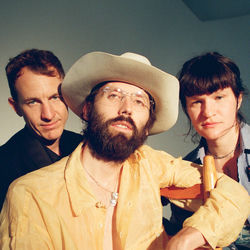
The generation that grew up with the genre already named — five distinct, individual answers to the same basic promise of folk songwriting inside indie rock's dynamic range.

Where it came from, where it went
- Singer-songwriter1967
- Indie folk2004
Nothing on the map has grown out of it yet.