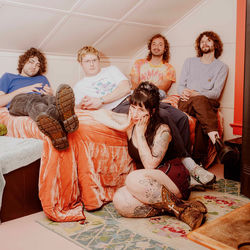
Pictured: Lucinda Williams
← Today’s issueThe daily of where sound came fromp. 94
Born 1990 · Uncle Tupelo, No Depression
Alt-country
Country's twang and storytelling run through indie rock's guitars and volume — a reaction against Nashville's slick mainstream, named for the magazine that chronicled it. Alt-country keeps country's plainspoken narrative sense while trading pedal-steel polish for distortion, tape hiss, or shoegaze haze.
See it on the map →How it started
 Lucinda Williams1979
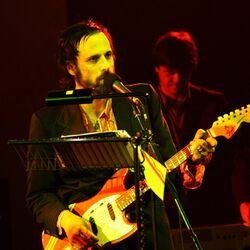 Silver Jews1989
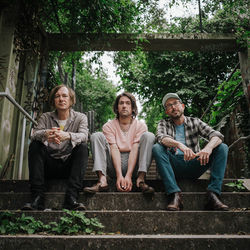 Bright Eyes1995
 Drive-By Truckers1996
 Songs: Ohia1996
 Angel Olsen2010
The genre takes its name from the same source twice over: Uncle Tupelo's 1990 debut No Depression (itself named for a Carter Family song), and the alt-country fanzine that later took its own name from that album. Uncle Tupelo, outside this map, fused punk volume and DIY recording with straight country songwriting, rejecting Nashville's polished mainstream in favor of something rougher and more indebted to Gram Parsons' original cosmic-American-music fusion.
It didn't bother me at all. I loved the combination of the electric with the folk. Nobody had done that at the time.
Lucinda Williams and Drive-By Truckers carried the same instinct through the 1990s and 2000s as Southern rock's own more literate wing, while Bright Eyes and Angel Olsen brought it into indie rock proper — country's plainspoken narrative voice delivered with an indie singer-songwriter's confessional intensity. A newer generation, MJ Lenderman and Wednesday, grew up around the same North Carolina scene and pushed the sound toward lo-fi distortion and shoegaze haze respectively, without losing the genre's storytelling backbone.
Essential records
Start here
Car Wheels on a Gravel Road
 Lucinda Williams1998
Car Wheels on a Gravel Road moves between country, blues, and rock without ever settling fully into any of them, Lucinda Williams's plainspoken, road-worn voice holding the shifting arrangements together. "Right in Time" turns a frank account of desire into one of the record's most disarming moments, its steady groove giving Williams room to sound both vulnerable and completely in control. The songwriting favors specific, physical detail over abstraction throughout. It remains the album most responsible for establishing her as a defining voice in modern American songwriting.
No. 2
Magnolia Electric Co.
 Songs: Ohia2003
Magnolia Electric Co. trades Songs: Ohia's stripped-down isolation for a fuller, classic-rock-indebted band sound without losing Jason Molina's stark, weather-beaten worldview. "Farewell Transmission" stretches past seven minutes on a repeated, mantra-like refrain, "the whole place is dark," that turns simple repetition into genuine dread. The record functions as both an ending and a beginning, closing out one project's name while opening the next. It remains the album most responsible for Molina's lasting reputation as one of the era's most unflinching songwriters about endurance and loss.
No. 3
American Water
 Silver Jews1998
American Water is generally considered the high point of Silver Jews' run, Berman's deadpan baritone paired with Stephen Malkmus's guitar work across loose, unhurried arrangements that never rush toward a hook. "Random Rules" opens the album with one of Berman's sharpest lines — "in 1984 I was hospitalized for approaching perfection" — delivered as flatly as a weather report, the melody wandering pleasantly underneath. "Smith & Jones Forever" and "Federal Dust" show the same dry wit applied to stranger, more surreal territory. It's a record built entirely on the tension between plainspoken delivery and genuinely odd, memorable songwriting.
No. 4
Southern Rock Opera
Southern Rock Opera tackles Southern identity as a sprawling, self-aware concept record, using Lynyrd Skynyrd's story as scaffolding for a much wider argument about growing up in the region's contradictions. "Let There Be Rock" turns teenage devotion to arena rock into a genuine coming-of-age anthem, Patterson Hood and Mike Cooley's dual guitars and dual songwriting voices trading off without ever competing. The record never lets its historical ambition crowd out actual hooks. It remains the album that defined the band's mix of Southern-rock muscle and literary self-scrutiny.
No. 5
I'm Wide Awake, It's Morning
 Bright Eyes2005
Recorded with a rotating cast of guest musicians including Emmylou Harris, I'm Wide Awake, It's Morning leans into pedal steel and acoustic arrangements more fully than any previous Bright Eyes record, giving Oberst's quavering voice a warmer, more countryish frame. "First Day of My Life" pairs a plainly stated love song with just acoustic guitar and strings, one of the most unguarded moments in his catalog. "Landlocked Blues" turns political frustration into something closer to a duet, trading verses with Harris. It's the record where Oberst's Dylan-indebted songwriting found its most settled, fully realized form.
No. 6
Burn Your Fire for No Witness
 Angel Olsen2014
Burn Your Fire for No Witness moves between raw, distorted full-band rock and stripped-back acoustic balladry without any sense of the two modes being in tension, Olsen's voice — capable of a wounded murmur or a full-throated wail — the through-line either way. "Shut Up Kiss Me" rides a driving, almost garage-rock riff toward a chorus that reads as both plea and demand. "White Fire" shows the record's quieter extreme, seven minutes of hushed intensity built on almost nothing but voice and guitar. It's a record that refuses to pick a single register and is stronger for it.
No. 7
Manning Fireworks
 MJ Lenderman2024
Manning Fireworks pairs MJ Lenderman's dry, deadpan sense of humor with genuinely aching guitar-driven songwriting, never letting one undercut the other. "She's Leaving You" turns a specific, almost embarrassingly detailed scene into something both funny and quietly devastating, Lenderman's unhurried vocal delivery selling the joke and the heartbreak in the same breath. The arrangements stay loose and unpolished without ever sounding unfinished, guitars left ragged rather than sanded down for the studio. It's the record that established him as a distinct songwriting voice rather than simply Wednesday's guitarist.
No. 8
Rat Saw God
 Wednesday2023
Rat Saw God pairs Wednesday's thick, distorted shoegaze guitar wall with Karly Hartzman's plainspoken, almost novelistic Southern storytelling. "Bull Believer" spends most of its long runtime as a slow, patiently building tension before erupting into a screamed, cathartic finale that earns its length by refusing to rush toward it. The lyrics favor sharp, specific detail over vague sentiment throughout, giving the noise something concrete and lived-in to hang onto. It remains the album that fully merged the band's atmospheric, shoegaze-indebted instincts with Hartzman's increasingly literary songwriting.

Who plays it
The Americana generation
The genre's first two decades — Southern rock's literate wing meeting indie rock's confessional intensity, all working under the same No Depression banner.
The North Carolina revival
A newer generation from the same regional scene, pushing alt-country's twang toward lo-fi tape distortion and shoegaze haze while keeping its narrative backbone intact.