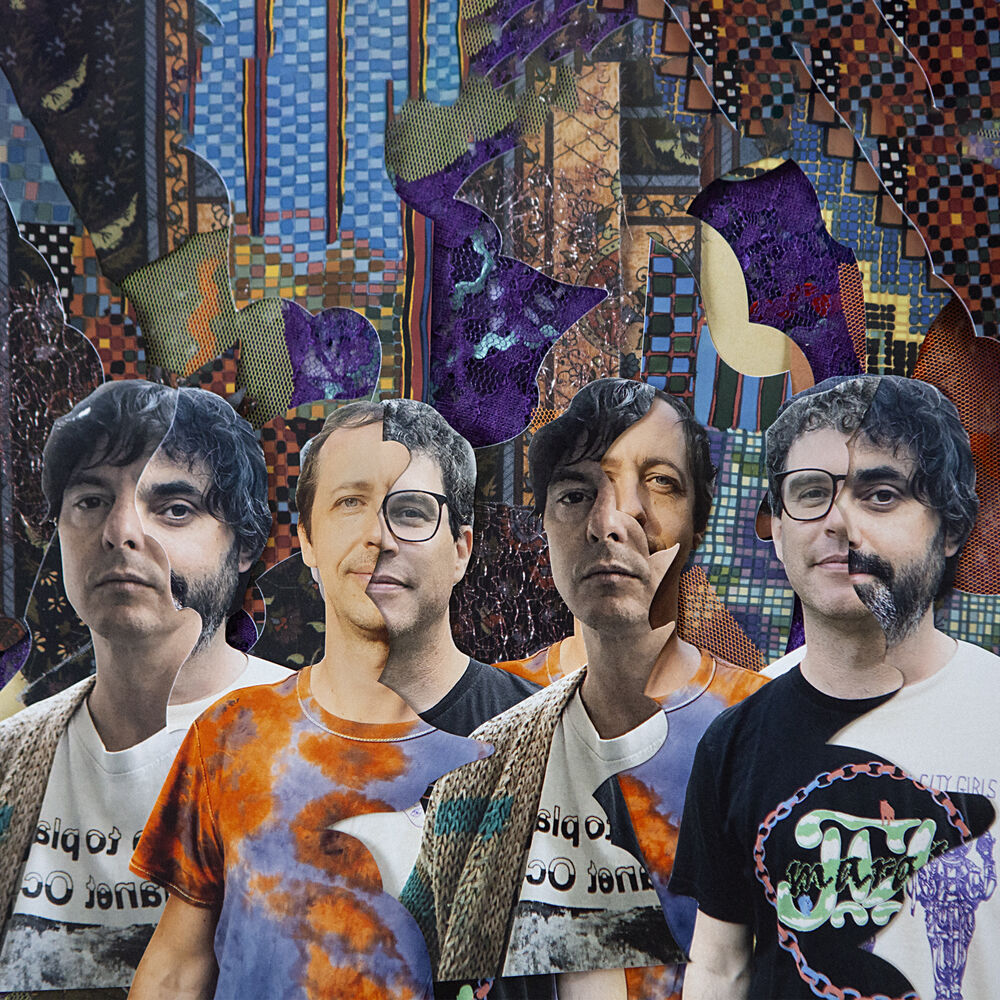
Pictured: Animal Collective
← Today’s issueThe daily of where sound came fromp. 96
Born 2003 · Devendra Banhart and Joanna Newsom
Freak folk
Folk's mystical, psychedelic wing — harp and banjo drone, communal outsider aesthetics, and a deliberate embrace of the strange over the plainspoken. The name was coined in 2003 for a specific early-2000s scene built around Devendra Banhart, who isn't on this map but whose records are the reason the genre has a name at all.
See it on the map →How it started


Devendra Banhart's earliest records — recorded lo-fi, steeped in outsider folk and a self-consciously backwoods aesthetic — gave critics a term to reach for by 2003, the same year Joanna Newsom's harp-based, asymmetrically melodic songwriting arrived as the movement's other defining voice. Newsom's Ys (2006), a five-song, orchestrally arranged record built on her own harp playing, pushed the genre's ambition well past the loose, campfire informality its name suggests.
That and Aphex Twin really changed the course of my musical life.
Bonnie Prince Billy's I See a Darkness predates the coined term by four years, but Will Oldham's craggy, plainspoken Appalachian-gothic songwriting was absorbed into the freak-folk conversation almost immediately once the label existed — an elder influence claimed retroactively rather than a founding member by chronology. Animal Collective took the same communal, outsider spirit toward something stranger and more electronic — Merriweather Post Pavilion (2009) folds freak-folk's hand percussion and layered vocal harmony into dense, psychedelic pop production. Vetiver, Devendra Banhart's frequent collaborator, worked the same circuit from close to its center — another real freak-folk act sitting outside this map's current roster.
Essential records
Start here
Ys
 Joanna Newsom2006
Ys consists of just five songs, several running past ten minutes, each a dense, orchestrated journey arranged by Van Dyke Parks around Newsom's harp and increasingly assured voice. "Emily," written for and about her sister, moves through years of memory and astronomy within a single unbroken structure, never settling into anything as simple as a chorus. "Monkey & Bear" tells something closer to a fable, sung with a directness that cuts through the record's formal complexity. It remains one of the most ambitious folk albums of its decade, built on a scale almost no one else was attempting.
No. 2
I See a Darkness
I See a Darkness strips songwriting down to voice, acoustic guitar, and unflinching subject matter, mortality and dread delivered without a trace of melodrama. The title track sits at its center, a plainspoken meditation on depression and death delivered in a voice too frail and unguarded to read as performance. That refusal to dress up the bleakness is what gives the record its power — nothing here asks to be admired, only heard. It remains the album most responsible for establishing Oldham as a foundational voice in confessional and freak-folk songwriting alike.
No. 3
The Winter Ray
The Winter Ray is the duo's first sprawl on the scale they would become known for -- a self-released double album of twenty-five pieces that moves between two-minute fragments and seventeen-minute drones without ever changing its weather. Mehdi Ameziane and Solange Gularte record everything at home, and the tape hiss and room noise are part of the composition rather than a limitation of it. "Dead Horses" and "I Was Always Cold" are the long pieces the record is built around, while "Overture" and the title track work as the brief clearings between them. Issued in a tiny hand-assembled edition, it established the method every later Natural Snow Buildings record refines.
No. 4
Merriweather Post Pavilion
Merriweather Post Pavilion layers dense, synthesizer-heavy production under vocal hooks catchy enough to anchor the whole record. "My Girls" builds a warm, pulsing bassline into a wash of overlapping vocal harmonies, the arrangement's density never burying the song's genuine emotional directness — a plainspoken statement about wanting security for a family. The album balances the band's experimental instincts with an accessibility their earlier, noisier records had mostly avoided. It became the record most responsible for bringing Animal Collective's dense, freak-folk-inflected electronic pop to a much wider audience.


Who plays it
A small, deliberately strange lineage
Devendra Banhart's early records gave the scene its name in 2003, and Joanna Newsom's harp-driven ambition, Bonnie Prince Billy's Appalachian-gothic elder status, and Animal Collective's electronic-psych turn show just how wide the genre's actual range runs.