
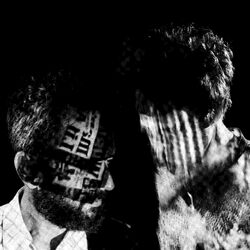
Pictured: Neutral Milk Hotel
← Today’s issueThe daily of where sound came fromp. 74
Born 1966 · The Beach Boys and Beatles turn psychedelic
Psychedelic pop
Pop songcraft turned inward and strange — the Beach Boys' and Beatles' mid-60s studio experiments, reinterpreted across six decades by anyone chasing a bright melody through a haze of studio effects, backwards tape, or electronic production. Psychedelic-pop keeps pop's hooks while treating the studio itself as a hallucinogen.
See it on the map →How it started
 Incredible String Band1965
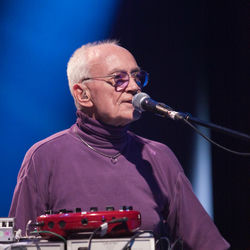 Silver Apples1967
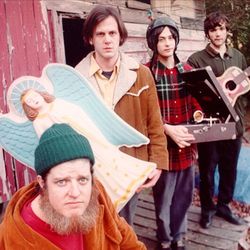 Neutral Milk Hotel1989
 Olivia Tremor Control1992
 of Montreal1996
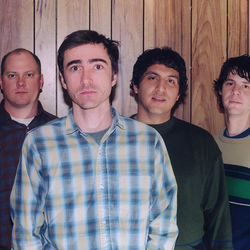 The Shins1996
1966 is the hinge year on both sides of the Atlantic — the Beach Boys' and Beatles' own studio turn (both outside this map) proved a pop song could carry orchestral ambition and backwards, treated sound and still function as a single. The Incredible String Band took the same impulse toward British folk-psychedelia that same year, while Silver Apples, working in New York, arrived at a stranger, purely electronic version of the same idea a couple of years later — oscillators and homemade synthesizers standing in for a full band.
That and Aphex Twin really changed the course of my musical life.
The Elephant 6 collective picked the thread back up in the 1990s (Neutral Milk Hotel, Olivia Tremor Control, of Montreal), consciously chasing 1960s studio techniques on a fraction of the original budget, and a wider 2000s indie generation — The Shins, MGMT, Animal Collective, Tame Impala — brought the sound to festival scale. Its most recent wing runs through electronic production entirely: Caribou and Mid-Air Thief arrive at psychedelic-pop's disorientation through sampling and production rather than guitars and tape.
Essential records
Start here
Merriweather Post Pavilion
Merriweather Post Pavilion layers dense, synthesizer-heavy production under vocal hooks catchy enough to anchor the whole record. "My Girls" builds a warm, pulsing bassline into a wash of overlapping vocal harmonies, the arrangement's density never burying the song's genuine emotional directness — a plainspoken statement about wanting security for a family. The album balances the band's experimental instincts with an accessibility their earlier, noisier records had mostly avoided. It became the record most responsible for bringing Animal Collective's dense, freak-folk-inflected electronic pop to a much wider audience.
No. 2
In the Aeroplane Over the Sea
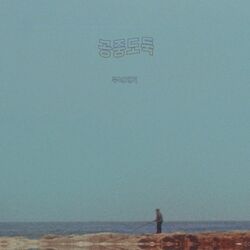
In the Aeroplane Over the Sea fuses Jeff Mangum's raw, distorted lo-fi production with a lyrical intensity that reads as genuinely overwhelmed rather than merely poetic. The title track lays acoustic guitar and horns under images that never fully resolve into a clear narrative, yet land with the emotional force of one — the album's central inspiration, reportedly Anne Frank's diary and Mangum's fixation on somehow rescuing her across time, is never named outright but shapes everything on the record. Nothing about the arrangements is conventionally pretty, and that roughness only deepens the intensity. Barely noticed on release, it became one of the most influential and most emphatically cited albums in American indie rock's history.
No. 3
Currents
 Tame Impala2015
Currents trades Tame Impala's earlier guitar-driven psychedelia for synthesizer-heavy, groove-forward production closer to disco than to rock. "The Less I Know the Better" rides a slinky, funk-inflected bassline into a chorus about jealousy and self-doubt delivered with a warmth that undercuts the lyric's discomfort. Kevin Parker's total control over every element of the production gives the record a singular, cohesive feel despite its stylistic distance from his earlier work. It remains the album most responsible for bringing Tame Impala's psychedelic sensibility to an audience far outside rock's usual boundaries.
No. 4
Dusk at Cubist Castle
Dusk at Cubist Castle alternates fully arranged pop songs with disorienting tape-collage interludes, treating melody and noise as tools from the same box rather than opposing instincts. "Jumping Fences" leans into the pop side of that equation, its bright, layered harmonies carrying real 1960s psych-pop craft even as the production stays gleefully lo-fi. The album's structure — song, then experiment, then song again — makes the whole record feel like a single continuous experience rather than a sequence of tracks. It stands as one of the most complete statements of the Elephant 6 collective's dual love of pure pop and genuine sonic strangeness.
No. 5
Oracular Spectacular
 MGMT2007
Oracular Spectacular wraps genuinely strange psychedelic production choices inside some of the most immediate hooks of the era. "Time to Pretend" turns a cynical account of manufactured rock-star excess into an anthem catchy enough to undercut its own irony, synths and vocal harmonies pushing the song toward pure pop even as the lyrics stay knowing and detached. The record's glam and psych-rock roots are audible throughout, filtered through a bedroom-pop sensibility the band never fully abandoned. It became one of the definitive indie-crossover albums of the late 2000s, launching a career that immediately moved away from repeating it.
No. 6
The Hangman's Beautiful Daughter
The Hangman's Beautiful Daughter moves through more instruments and moods than most albums attempt in a whole career, sitar and gimbri sitting next to acoustic guitar without any sense of novelty for its own sake. "A Very Cellular Song," its closing epic, drifts through several distinct movements over more than thirteen minutes, ending on a repurposed hymn that has nothing obvious to do with what came before it. "Koeeoaddi There" packs an entire childhood's worth of imagery into five minutes. It's a record built on the idea that a song doesn't need to resolve to be complete.
No. 7
Silver Apples
 Silver Apples1968
Built entirely from Simeon's homemade oscillator rig and Danny Taylor's steady, near-martial drumming, Silver Apples sounds like a rock record beamed in from a future nobody else had reached yet. "Oscillations" opens the album on a burbling, insistent pulse that functions as both melody and rhythm section — a sound with no real analog in 1968 outside experimental electronic music. "Program" pushes the duo's minimalism further, letting repetition stand in for the hooks a conventional band would have reached for. It's a record built from constraint — two men, one drum kit, one bank of oscillators — that still sounds stranger than most music made with unlimited resources.
No. 8
Crumbling
 Mid-Air Thief2018
Crumbling layers acoustic guitar, field recordings and warped electronic production into a dense, headphone-rewarding collage that rewards repeated listening more than any single pass. "These Chains" folds a genuinely pretty vocal melody into a constantly shifting bed of samples and texture, never settling long enough to feel predictable. The whole album favors accumulation over hooks, treating each song as a small, detailed world rather than a single statement. It remains the release most responsible for building Mid-Air Thief's reputation as one of psychedelic pop's most quietly ambitious voices.


Who plays it
1960s originators
The two founding directions, a couple of years apart — the Incredible String Band's British folk-psychedelia and Silver Apples' stranger, purely electronic answer to it.
Elephant 6 psych-pop
A 1990s Georgia-based collective consciously chasing 1960s studio techniques on a fraction of the original budget — homemade orchestration, tape collage, and a shared, porous roster of musicians.
2000s indie psych-pop
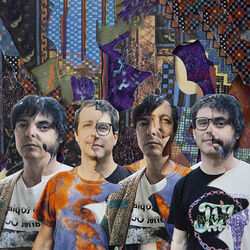
The sound brought to festival scale — five artists, otherwise unconnected, who each found their own way to pop hooks wrapped in studio haze.
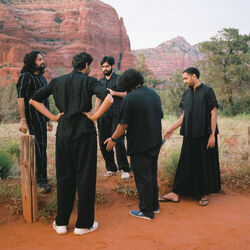
Electronic-adjacent psych-pop
Psychedelic-pop's most recent wing, reached through sampling and electronic production rather than guitars and tape.
Where it came from, where it went
- Psychedelic pop1966
- Where it went
Nothing on the map came before it: this is where its road starts.