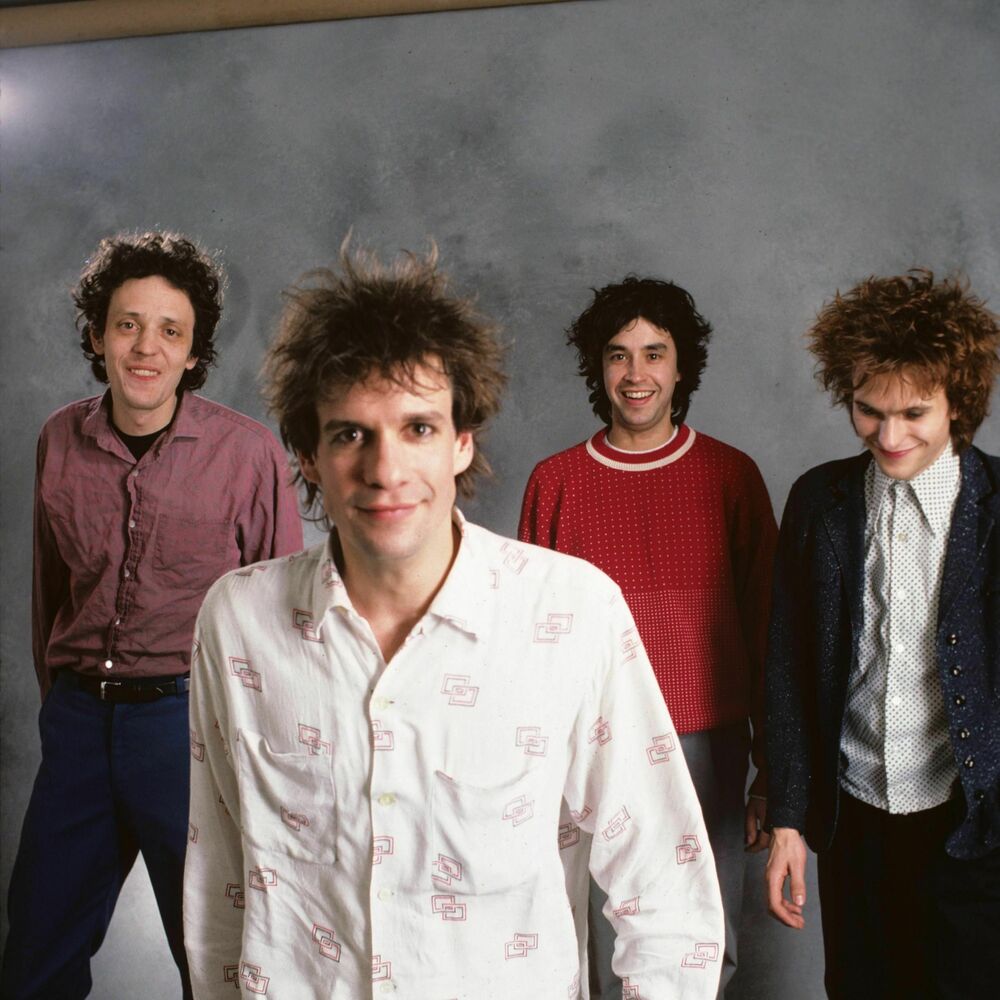
Pictured: The Replacements
← Today’s issueThe daily of where sound came fromp. 76
Born 1972 · Big Star, #1 Record
Power pop
British Invasion melody and Beatles-scale hooks run through a harder, more economical rock band — verse-chorus-bridge discipline, big vocal harmonies, and almost no interest in a guitar solo outstaying its welcome. Power-pop is one of this map's oldest root genres, and its own direct descendant, jangle-pop, gets a full page of its own.
See it on the map →How it started

Big Star's #1 Record, released in Memphis in 1972, set the template over a decade before most of the genre's later names arrived: Alex Chilton and Chris Bell married Beatles-descended melody to real rock crunch, to almost no commercial notice at the time and full canonization only in retrospect. The name itself was applied retroactively, to a scattered handful of bands who'd been chasing the same hooks-first instinct independently.
I never travel far without a little Big Star.
Buzzcocks, forming in Manchester in 1976, ran the same melodic discipline through punk's speed and confrontation, proving the hooks-first approach could survive a much faster tempo. The Replacements, arriving from Minneapolis a few years later, folded power-pop's economy into a rawer, more chaotic college-rock sensibility — a lineage that runs from Memphis through Manchester to Minneapolis with barely any direct contact between the three scenes. The genre's own most direct descendant, jangle-pop, split off in 1983 to chase one specific piece of that toolkit — the ringing, arpeggiated guitar tone — and gets its own fuller page.
Essential records
Start here
#1 Record
 Big Star1972
Alex Chilton and Chris Bell wrote every song in a kind of British Invasion dream — jangling guitars and melancholic harmonies with a distinctly American warmth — yet the album was commercially invisible on release, distributed so poorly it barely circulated outside Memphis. 'Thirteen' is the most nakedly beautiful teenage love song of the decade; 'In the Street' launched a dozen later bands before The Strokes rediscovered it. What the record established, though audiences didn't hear it in time, was the template for every college-radio and jangle-pop scene that followed.
No. 2
Singles Going Steady
 Buzzcocks1979
Singles Going Steady collects the run of non-album singles and B-sides that made Buzzcocks the most melodically minded band to come out of Manchester's first punk wave. "Ever Fallen in Love (With Someone You Shouldn't've)" is the clearest distillation of Pete Shelley's gift for turning romantic confusion into a hook that lodges instantly, its chiming guitar riff carrying real heartbreak at breakneck speed. The whole collection moves at a similar pace without repeating itself, each song finding a new angle on desire and disappointment. It set the template for pairing pure pop songwriting with punk's velocity that pop-punk would spend the next two decades reworking.
No. 3
Tim
 The Replacements1985
The Replacements' most polished record was also their most fully realized — Tommy Stinson's bass locked in tighter than on any previous release, Paul Westerberg's songwriting reaching a clarity of emotional expression that the band's characteristic sloppiness had previously obscured. 'Bastards of Young' is the manifesto, a mid-tempo anthem about generational disappointment that became the unofficial anthem of disaffected mid-80s American youth; 'Left of the Dial' is the tender pole, a tribute to college radio delivered with a directness Westerberg rarely allowed himself. It remains the entry point through which most listeners discover the band.
Who plays it
Memphis to Manchester to Minneapolis
Three scenes, decades apart in reach but barely in contact with each other directly — Big Star wrote the template in Memphis, Buzzcocks ran it through punk's speed in Manchester, and The Replacements folded it into college-rock chaos in Minneapolis.
Where it came from, where it went
- Psychedelic pop1966
- Power pop1972
- Where it went