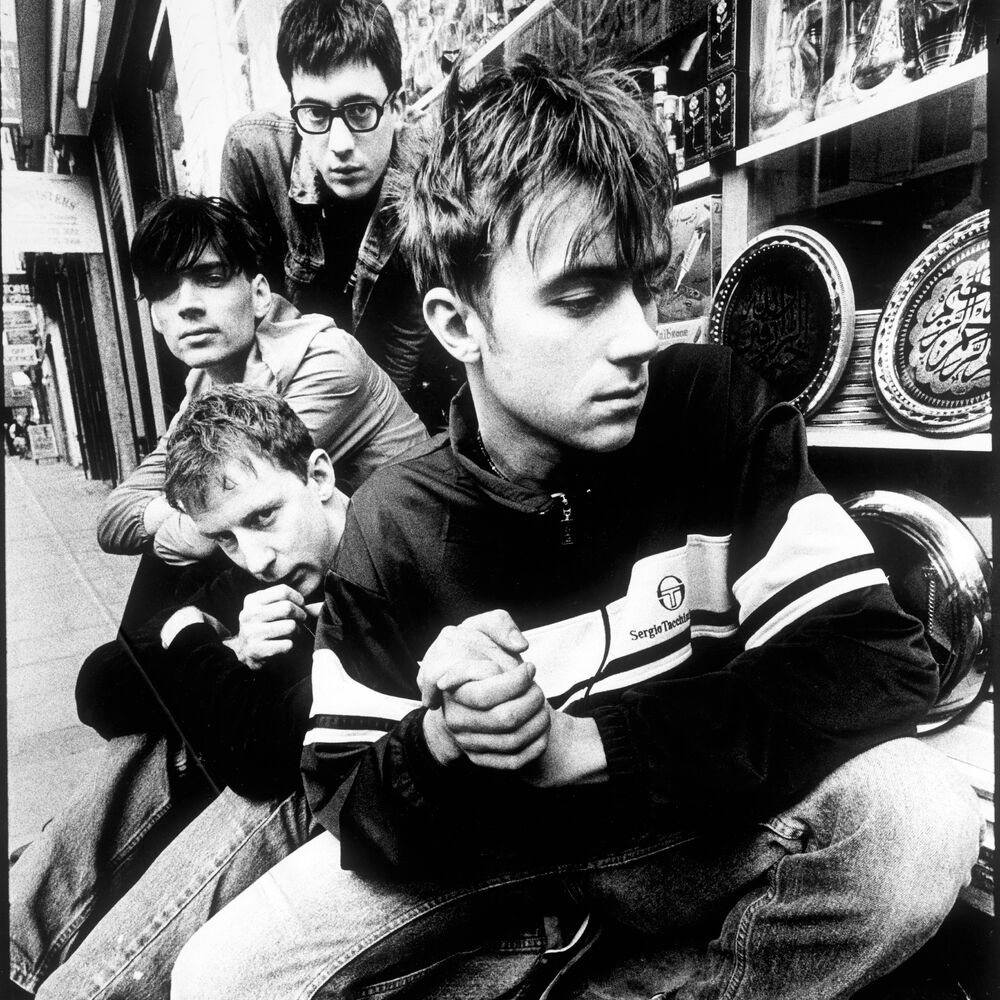
Pictured: Blur
← Today’s issueThe daily of where sound came fromp. 82
Born 1994 · Blur's Parklife and Oasis' Definitely Maybe
Britpop
Mid-90s British guitar-pop, self-consciously English in its reference points and its accent, arriving as a direct answer to American grunge's chart dominance. This map covers only its arty, lyrically observational half — Britpop's biggest chart-topping names sit outside its current scope.
See it on the map →How it started


Suede's 1993 debut is often credited with sparking the movement, but Britpop crystallized as a named phenomenon in 1994, when Blur's Parklife and Oasis' Definitely Maybe both arrived within months of each other, each claiming a very different version of English identity — Blur's arch, observational suburbia against Oasis' widescreen, working-class swagger. Pulp, already a decade into an overlooked career by that point, found their commercial moment a year later with Different Class (1995), Jarvis Cocker's class-conscious character studies giving the movement its sharpest lyrical eye.
Things like Robert Wyatt, Van der Graaf Generator and The Velvet Underground really excited me.
Blur and Oasis' rivalry became the era's defining spectacle, reaching a head in August 1995 when both bands released singles on the same day — a chart event British tabloids covered as a genuine culture war. Elastica brought a more angular, Wire-indebted edge to the same scene, and Oasis themselves became Britpop's biggest global export by some distance; both, along with Suede, sit outside this map's current roster, which covers only Blur and Pulp.
Essential records
Start here
Parklife
 Blur1994
Damon Albarn's sharply observed vignettes of English life, set to music ranging from music-hall pastiche to synth-driven dance-pop, made Blur the defining band of Britpop's mainstream. 'Girls & Boys' turned package-holiday hedonism into a synth-disco hit, while 'This Is a Low' closes the record on a note of genuine, unguarded melancholy. Graham Coxon's guitar work quietly undercuts the album's cheekier moments with real dissonance and noise. It won the era's tabloid-fueled chart battle with Oasis and became the commercial and cultural peak of the Britpop movement.
No. 2
Different Class
 Pulp1995
Different Class pairs Jarvis Cocker's wry, class-conscious lyricism with the sharpest, most danceable arrangements Pulp had yet attempted. "Common People" builds a driving synth-and-guitar pulse under a lyric that turns a specific social observation into a genuine pop anthem, the tension between the song's bitterness and its infectiousness never resolving. The album's mix of satire and real craft set it apart from much of the Britpop it's often filed alongside. Decades later, it remains the record most identified with Pulp's brief run at the center of British pop culture.
Who plays it
Where it came from, where it went
Nothing on the map has grown out of it yet.