Tap any face to see why they're in the photo

Who shaped them

Hüsker Dü

Hüsker Dü

Since 1979 · United States

Hüsker Dü's achievement was to make hardcore punk melodic without making it soft, and to make that melodic quality feel like a formal choice rather than a commercial concession. Their story

See them on the map

Press ▶︎ to play

Loading…

It really plays! Press the middle

Who they shaped

Behind them, left to right: Joy Division, Ramones, Buzzcocks.

In front, left to right: Unwound, The Flaming Lips, Dinosaur Jr., Lush, The Jesus Lizard, Bonnie Prince Billy, Cat Power, Brand New, Pixies.

The bigger the face, the stronger the proof: they said it themselvesreporteda critic, or widely accepted

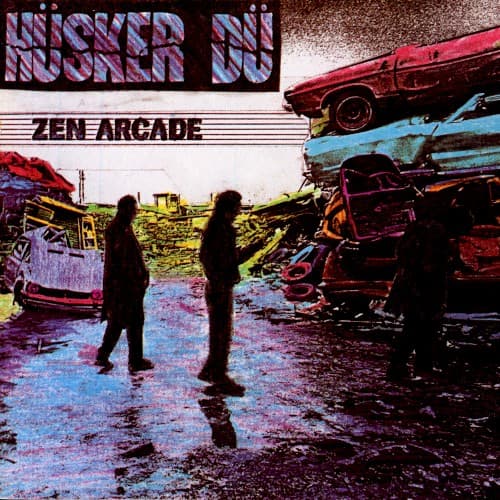
Zen Arcade cover

Start here

Zen Arcade (1984)

Hüsker Dü's double album came from a continuous recording session, largely improvised and self-produced, which gives it an urgency no major-label production could have achieved — the songs feel captured rather than constructed. Bob Mould and Grant Hart are equal songwriting forces across 23 tracks, Mould pushing toward melody and Hart toward emotional directness, including Hart's 'Pink Turns to Blue,' a devastating account of a friend's overdose. It effectively ended hardcore as the dominant mode of American underground music by demonstrating that its energy could accommodate complexity.

Sleeve notes

Hüsker Dü

Zen Arcade · 1984

Hüsker Dü's achievement was to make hardcore punk melodic without making it soft, and to make that melodic quality feel like a formal choice rather than a commercial concession. Bob Mould and Grant Hart — both songwriters, their contributions in more or less equal balance across the catalog — had different approaches that created a band richer than either would have made alone: Mould's melodic fury and Hart's more formal, Beatlesque pop instincts met in songs that were brief, fast, and full of genuine tunes.

Zen Arcade (1984), a sprawling double album of hardcore, folk interludes, and something approaching psychedelia, was the formal statement. New Day Rising (1985) and Flip Your Wig (1985) were the refinements: songs that could have been Top 40 singles if they had been produced with any interest in accessibility. Their Warner Bros. albums — Candy Apple Grey (1986), Warehouse: Songs and Stories (1987) — found them making records that sounded like they were about to break commercially, before the band broke personally instead. The template for melodic punk runs through Hüsker Dü.

Since 1979 · United States

Played at

SST Records

Los Angeles · 1978–1990

On the bill

Signed in from Minneapolis, plugging a Midwest band into a Los Angeles-run circuit and helping prove SST's network extended well past California.

The whole scene