Tap any face to see why they're in the photo

Who shaped them

Nobody on the map came before them: they're where this line starts.

NoMeansNo

NoMeansNo

Since 1979 · Canada

NoMeansNo formed in Victoria, British Columbia, built around brothers Rob Wright (bass, vocals) and John Wright (drums), whose rhythmic interplay was unusually sophisticated for a hardcore-adjacent band… Their story

See them on the map

Press ▶︎ to play

Loading…

It really plays! Press the middle

Who they shaped

In front, left to right: Sunny Day Real Estate, Converge, Mr. Bungle.

The bigger the face, the stronger the proof: they said it themselvesreporteda critic, or widely accepted

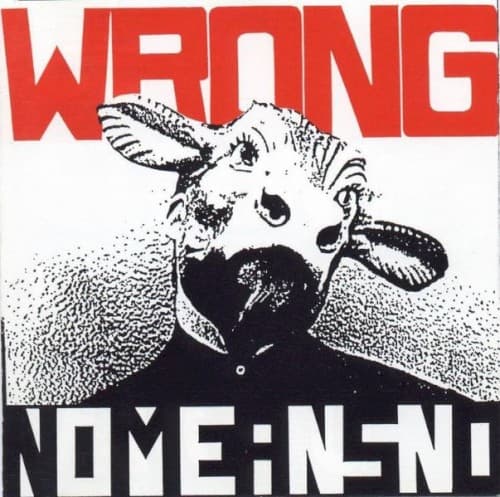
Wrong cover

Start here

Wrong (1989)

Wrong is post-hardcore built on a rhythm section sophisticated enough to make the genre's usual power chords feel almost beside the point. "It's Catching Up" rides Rob Wright's lead-melodic bassline through shifting time signatures that never lose the song's forward momentum. John Wright's drumming moves with a jazz musician's sense of space rather than hardcore's usual battering. It's an album musicians reach for more often than casual listeners do, and its influence runs deeper than its profile ever suggested.

Sleeve notes

NoMeansNo

Wrong · 1989

NoMeansNo formed in Victoria, British Columbia, built around brothers Rob Wright (bass, vocals) and John Wright (drums), whose rhythmic interplay was unusually sophisticated for a hardcore-adjacent band — informed as much by jazz and progressive rock as by punk's speed and aggression. The band spent years touring relentlessly outside the American hardcore mainstream, building a reputation among musicians as a kind of hidden reference point even as wider recognition remained elusive.

Wrong (1989), with guitarist Andy Kerr rounding out the lineup, is generally considered the band's high-water mark: technically demanding arrangements delivered with a physical intensity that never let the musicianship overshadow the songs' urgency. NoMeansNo continued recording and touring for decades, developing a reputation as a band's band — cited by musicians across hardcore, post-hardcore, and math rock more often than by casual listeners, its influence felt in bass-driven, rhythmically unconventional records that came long after.

Since 1979 · Canada